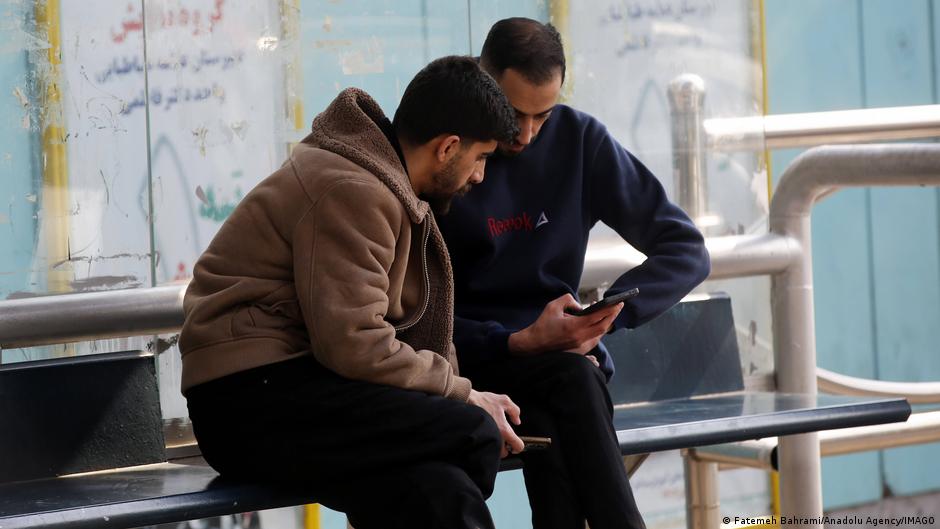
Iran imposed a near-complete communications blackout for the first time on the third day of protests in the country in January, and sanctions were further tightened after the outbreak of war with the United States and Israel.
It is a familiar tool deployed by the clerical regime in Iran, which has a history of shutting down the internet to suppress protests and silence dissent: in 2019, during demonstrations against rising fuel prices; In 2022, during the “Women, Life, Freedom” movement following the custodial death of Zina Mahsa Amini; And then in January this year, when anti-government protests spread from Tehran to towns and cities across the country.
Iran also cut off communications with Israel during the 12-day war in the summer of 2025, citing national security.
The regime resorted to the same strategy at the outbreak of the current war, which began on 28 February. More than six weeks later, it remains in place and has become the longest internet blackout in Iran’s history, leaving most Iranians with nothing but access to state-controlled home networks and state media.
Cloudflare data showed that Internet traffic dropped to almost zero during the January shutdown, while Netblocks and other monitors say the blackouts imposed since the US-Israeli attacks began have kept connectivity at only a small fraction of normal levels.
The government’s reasons are familiar: Regime supporters say foreign agents, Israeli Mossad spies and government opponents are going online to send videos and images of sensitive military and state sites abroad.
But the sanctions have had far broader consequences than protecting national security or silencing dissent. They have left businesses unable to function, cut families off from each other and trapped large parts of the country in a censored information system that most of the Iranian public has little or no trust in.
The era of ‘digital apartheid’
Some people still managed to connect to the global web, but only through increasingly risky and expensive solutions.
At the height of the protests in January, reports emerged that Elon Musk’s Starlink had become a vital lifeline for some users, even as Iranian authorities stepped up jamming and other efforts to disrupt the service.
As the crackdown has deepened, black market access to Starlink equipment has reportedly become difficult and expensive.
Residents inside Iran say the economics of access have become absurd. Starlink kits that once sold for about $1,000 (about €844) on the black market are now selling for more than $5,000, according to multiple people who spoke to DW.
Virtual private networks (VPNs) are still available, but often at prices that most Iranians cannot afford. One source described paying up to 1 million tomans ($12.60 or €10.68 to $16.00 or €13.57) per gigabyte for unstable filtered access.
In a country where the minimum monthly wage is around 16 million tomans, Internet access has become a luxury unavailable to most Iranians.
An Iranian resident told DW that the country has entered an “era of digital apartheid.” He said that the state had effectively turned connection with the outside world into one of privilege distributed by class and loyalty.
“If you’re a university teacher, a pro-government journalist or part of an online propaganda project, you have access to the Internet,” he said. “If you’re rich, you buy an expensive VPN. But if you’re ordinary, you have your share of the national internet and high walls of censorship.”
online work has disappeared
A Tehran resident who ran an online shop on Instagram told DW that the shutdown has effectively ended his business. “Because of the Internet outage, I can’t work anymore,” he said. “My savings are gone, and it’s also affected my life with my wife, because she also uses Instagram to advertise her work.”
Buying a VPN will no longer solve the problem, the source said, because customers themselves are often unable to get online. “There’s no point,” he said. “Even if I manage to connect, my customers can’t.”
This reflects the deeper problem of prolonged Internet shutdowns: They don’t just prevent a person from working, they break the networks of relationships that enable online work in the first place.
Economist Hassan Mansour told DW that the scale of the economic damage is already huge. He said official Iranian figures put daily losses from the shutdown at about $37.7 million.
He said revenue from Instagram, Telegram and WhatsApp was estimated at $185 million in January alone, and that about 70% of businesses in Iran have been affected in some way by internet disruptions.
“Revenues for online businesses are projected to decline by between 50 and 90%,” he said, adding that some businesses have disappeared entirely.
Chinese model – without Chinese infrastructure
The Iranian state argues that the domestic intranet is sufficient and people can still communicate on local platforms. But that argument has faced deep public skepticism.
Many Iranians say they do not trust government-backed messaging apps, fearing they are monitored or directly accessed by security services. That mistrust is reinforced by repeated accounts of arrests linked to digital surveillance.
Digital rights activist and network security instructor Saeed Sozangar wrote on Twitter that intelligence agents had access to his WhatsApp chats when they were arresting him. “When they were beating me, they said: ‘What did you want to say when you said it? Let’s go from here to Telegram? You thought it was safe there?’ He alleged.
Mansour argues that Iran is trying to copy China’s closed internet model while lacking the technological ecosystem to replace the open web.
“Unlike China, Iran does not have strong domestic search engines, cloud systems or national social platforms,” he told DW. This leads to the state trying to force people onto an internal network that is weaker, less reliable, and much less functional than the global Internet it is supposed to replace.
The result is not digital autonomy in the Chinese sense – it is digital deprivation.
Isolation, anger and a shrinking public sphere
The shutdown has also changed the way people access information inside Iran.
As global Internet access has disappeared, satellite television has become one of the few remaining ways that many families can still receive outside news. Additionally, interference from satellite signals has also made that route less reliable.
Some Persian-language media outlets abroad have responded by reviving shortwave broadcasting, a reminder that in moments of deep censorship, technology can move backward as well as forward.
Lack of access will have political consequences. This makes it harder for Iranians to verify claims, harder for outside media to hear directly from people on the ground, and easier for the state to impose its narrative.
The government says the blackout is necessary for national security. But for many Iranians, the shutdown has become another sign that the regime is willing to do anything to protect its own security, even at the expense of the Iranian people.
Edited by: Carl Sexton