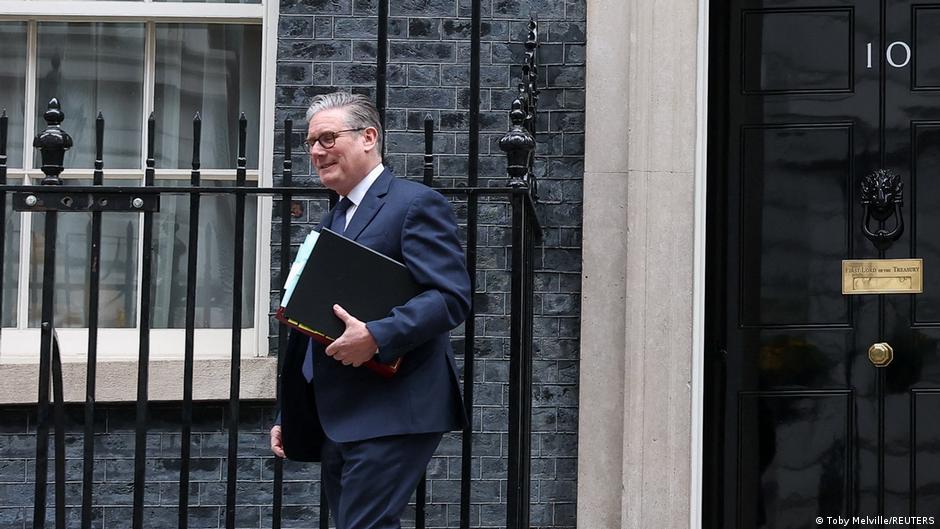
British Prime Minister Keir Starmer appears to be unable to put the scandal surrounding the appointment of Peter Mandelson behind him, despite several weeks of concerted effort.
On Friday, Starmer expressed outrage that he was “furious” that he was not informed about the fact that Mandelson had failed a crucial background check before being appointed ambassador to the US.
“I was not told that Peter Mandelson had failed security checks when he was appointed,” Starmer said on Friday.
“Not only was I not told, no minister was told, and I am absolutely furious about that.”
Starmer, who has faced repeated calls to resign over the matter, said on Friday, “I intend to go to Parliament on Monday to lay out all the relevant facts with true transparency so that Parliament has the full picture.”
Jeffrey Epstein haunts international politics from the grave
The Prime Minister claimed on Friday that he had no knowledge that the Foreign Office had rejected the security officials’ recommendation to reject Mandelson’s appointment.
Ollie Robbins stepped down as the UK Foreign Office’s top civil servant on Thursday as a result of the ongoing scandal.
At issue is Mandelson’s cozy relationship with Jeffrey Epstein – the now deceased, disgraced former financier and convicted sex offender.
Mandelson’s close friendship with Epstein was well known and his potential appointment as ambassador was always considered a risky bet.
Now its anger has blown up in Starmer’s face and ultimately he has been threatened with removal from office.
Starmer’s chief secretary, Darren Jones, confirmed that the Foreign Office had ignored the intelligence community.
Jones said background checks are carried out by the UK Security Vet Office, “Financial, personal, sexual, religious and other types of background information are checked, and that’s why it’s kept extremely private on a portal that only a few people have access to.”
Starmer has insisted that “due process” was followed before appointing Mandelson – a former EU trade commissioner and one the Starmer government thought could deal with US President Donald Trump, who himself had very close ties to Epstein.
Starmer’s risky bet on Epstein friend Mandelson threatens to end his premiership
Mandelson took up his post in February 2025, just days after Trump returned to the Oval Office.
Initially, the move seemed like a good idea, with Mandelson deftly negotiating a special trade deal with the US at the same time Trump was imposing punitive tariffs on countries around the world.
However, six months later, Starmer fired Mandelson after evidence of the extent of her relationship with Epstein became publicly known.
Despite Starmer’s claims then and now, documents that Parliament forced the government to release in March show that Starmer ignored numerous red flags before appointing Mandelson.
It added to the shock of the document released in February by the US Justice Department, which, among other things, showed the close relationship between Epstein and Mandelson – who remained a close friend of the American financier even after he was convicted of sex crimes with a minor in 2008.
Mandelson is also accused of sharing sensitive UK government information with Epstein in 2009, while Mandelson was part of then Prime Minister Gordon Brown’s government.
Mandelson, who was arrested on February 23 on charges of misconduct in public office, has maintained his innocence in the case and has not been accused of sexual misconduct.
The opposition described Starmer’s claim as ‘completely absurd’ and insisted he resign
Despite Starmer’s insistence that he is innocent in the matter, calls for his resignation have grown with each new revelation in the ongoing saga.
Kemi Badenoch dismissed Starmer’s claims as “completely absurd” in an interview with the BBC on Friday.
“This story is unacceptable. The prime minister is treating us as fools. All paths lead to resignation,” said Badenoch, leader of the opposition Conservative Party.
Ed Davey, leader of the centrist Liberal Democrats, also said that if it was proven that Starmer had lied to the British public and Parliament then he “must go”.
Edited by: Wesley Dockery