There are plans to make cryptoasset management a mandatory technical subject.
Specialists presented accounting, tax and money laundering prevention aspects.
Venezuela no longer only uses crypto assets to survive; Now it seeks to understand them from scientific and regulatory rigor. Under this premise, the Simón Rodríguez National Experimental University (UNESR) mobilized its 24 centers throughout the country to dissect a financial reality that has redefined national savings and consumption.
An academic meeting, held this April 20, 2026, marks a milestone in public education by recognizing the digital economy as a strategic area of research and risk control.
The institution organized the “1st National Digital Economy Research and Knowledge Conference” under the title “Perspectives on the use and adoption of cryptoassets in Venezuela.” The activity, which had its epicenter at the rectoral headquarters of El Valle, in Caracas, achieved an unprecedented live connection with the coordinators and academics of the 24 centers distributed throughout the national territory.
The rector Ana Alejandrina Reyes Páez and the vice-rector Ana Endrina Gómez Durán led this academic deployment together with a team of experienced specialists. Through the voices of Aarón Olmos (economics), Jan Domínguez (accounting), Dany Colmenares (compliance) and Pavel García (Sunacrip), the the pillars that support digital adoption in the countryevaluating everything from the regulatory framework to the financial impact.
Something never seen before was done at the Simón Rodríguez University, which has the peculiarity of connecting all the states of Venezuela through the nuclei that they manage and the reach they have is incredible. In fact, the 24 coordinators were connected remotely watching the 4 presentations.
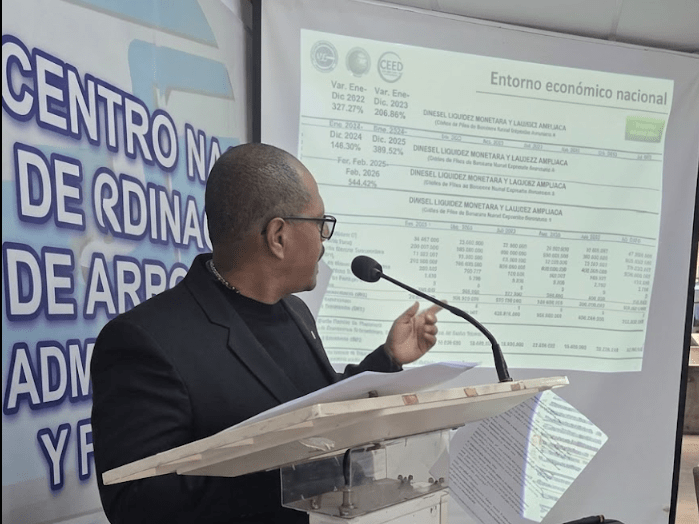
Aaron Olmos.
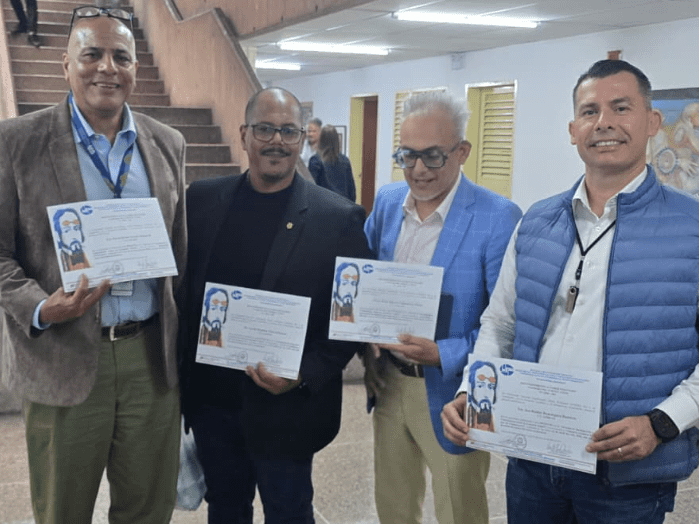
In exclusive statements for CriptoNoticias, the speakers detailed the key points of the day.
They pointed out that the urgency of this analysis on cryptocurrencies in Venezuela is supported by data that Olmos described precisely: an inflation of more than 540% between February 2025 and 2026 that has displaced the use of the bolivar towards stablecoins such as USDT (Tether), a fact also previously reported by CriptoNoticias.
To face this reality, Domínguez recalled the validity of the BA-VEN-NIF standard No. 12 and clarified that, although these transactions do not generate VAT, the enrichment derived from them is subject to Income Tax (ISLR). In this context, the Cointable application was presented, an application that allows accounting for cryptocurrency transactions and offers a technical solution for the transparent registration of operations.
On the other hand, financial transparency was the focus of Dany Colmenares’ presentation, who linked the use of cryptoassets to international protocols. money laundering. As Venezuela is part of GAFILAT, Colmenares emphasized the need for both companies and citizens to apply traceability analysis and designate compliance officers, as required by the National Financial Intelligence Unit (UNIF).
Additionally, the legal architecture that governs the sector, detailed by Pavel García, includes a compendium of 55 active regulations and rulings from the Supreme Court of Justice, a framework that grants a moderate risk rating to the local ecosystem under the supervision of Sunacrip.
Cryptocurrencies: new academic standard
This deployment of knowledge left an institutional seed since UNESR already has plans to incorporate elective subjects and postgraduate programs on digital economy in its training offer, according to Domínguez.
We were pleasantly surprised that the professors, vice-rectors and dean very much welcomed this training and many of them were interested in generating undergraduate and graduate programs, as well as elective subjects on the use of cryptoassets.
Jan Dominguez.
This activity demonstrates that what began as an economic emergency mechanism could now be transformed, through the university, in a technical discipline subject to global standards of control.
The event was closed by the academic and administrative vice-rector, Ana Endrina Gómez Durán, who recognized the strategic importance of the topic for the country and the university. He announced that more conferences of this type will be held by the CDCHT-UNESR.