Venezuela has become the scene of a financial transformation that developed powers still observe with caution. Boosted by the recent General License 57 of the United States Office of Foreign Assets Control (OFAC), the country has left behind a prolonged isolation to become an operational board where neobanks and bitcoin (BTC) firms are already preparing their landing. This openness has allowed a silent local infrastructure to achieve that 80% of the national banks today act as the transactional arm of digital assets.
Indeed, that is what describes the current reality of the Venezuelan financial system. After the entry into force of General License 57, the country becomes an operational board where neobanks, exchanges and firms of bitcoin (BTC) and foreign cryptocurrencies already They prepare their landing to integrate with the banks and fintech local.
While international attention has focused on the return of Venezuelan crude to global markets, there is another wealth that Washington and the private sector are closely observing in a society that, by necessity, has become one of the largest adopters of crypto assets on the planet.
The infrastructure that already works with cryptocurrencies
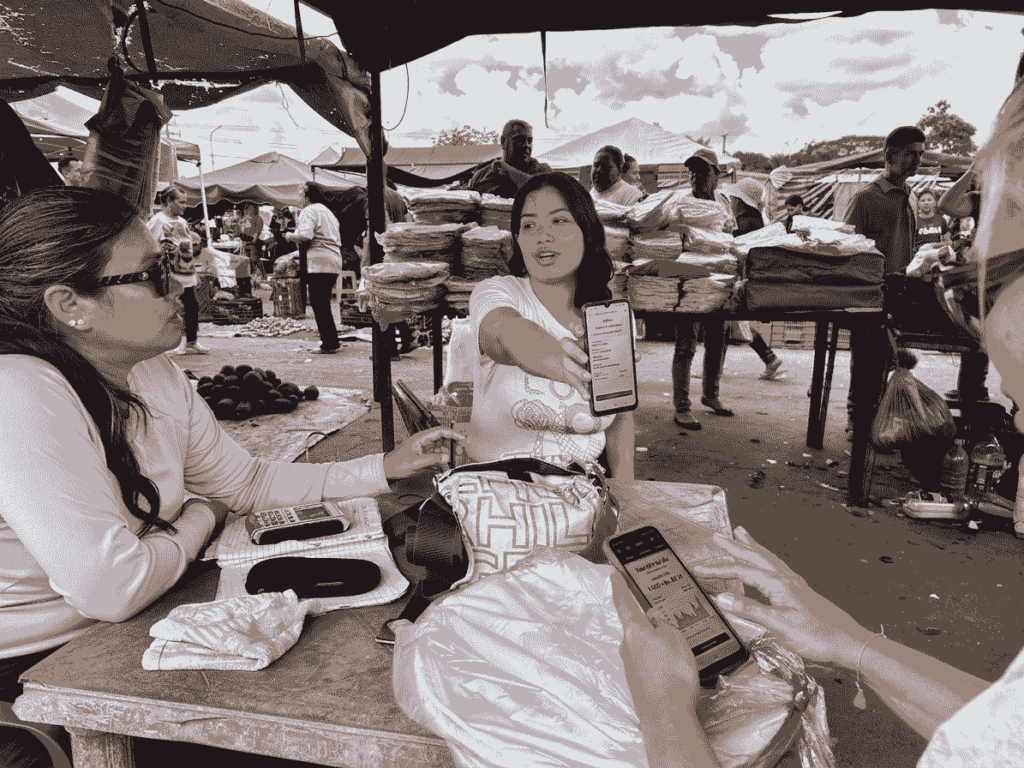
“Today, banking is already integrated with our platform,” said Dany Colmenares, representative of Crixto Venezuela. What Colmenares described in conversation with CriptoNoticias is part of a daily operation where Venezuelans transform bolivars into stablecoins such as USDT in just three seconds through the use of programming interfaces (API) connected to the Mobile Payment service.
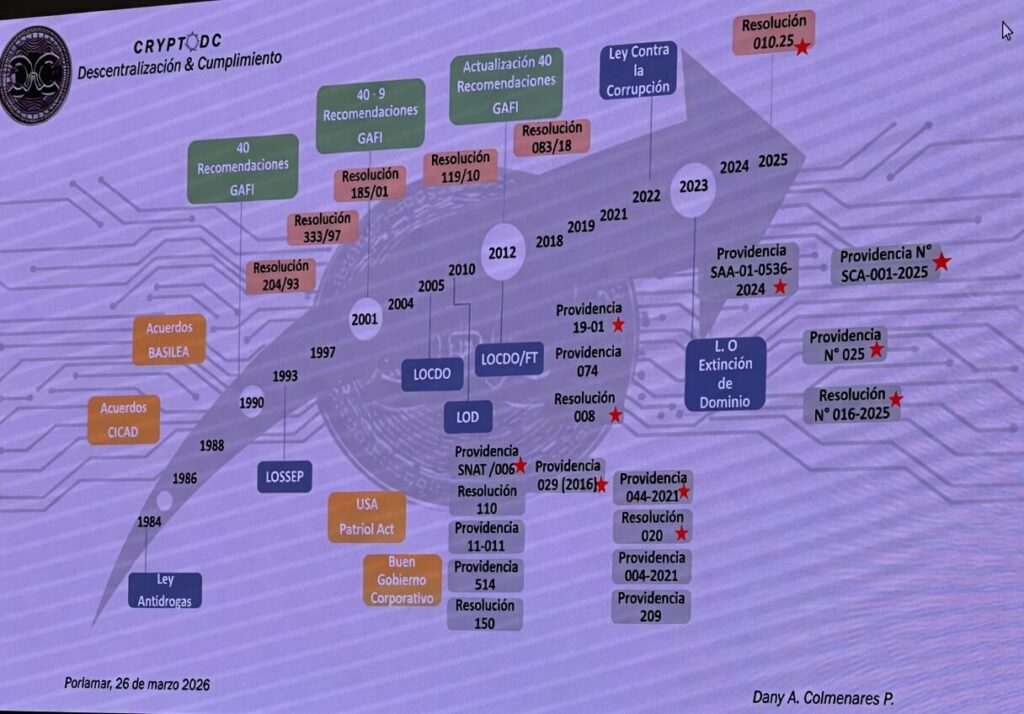
Colmenares described, in a recent talk, the roadmap that allows the integration between banking and crypto assets, which is supported by a dense compliance network that has evolved from the FATF recommendations to the recent ones. Providencias SCA-001-2025 and Resolution 016-2025.

These regulations act as the instruction manual that allows Venezuelan banks to apply financial intelligence and risk management protocols, standardizing local operations with the standards of Basel and the Inter-American Commission for the Control of Drug Abuse (CICAD).
Unlike the historical tensions in countries like Panama, Colombia and Chili —where regulatory fear has sometimes caused the closure of accounts of cryptocurrency firms—, in Venezuela a bridge of need has been consolidated: The bank provides liquidity in bolivars, while technology companies are in charge of the digital asset and its custody.
This symbiosis is the result of what Jhon Montesinos, CEO of the Network of Cryptofinance Enthusiasts (RECripto), defines as a survival process: “with a local currency that lost its strength and inflation, the Venezuelan became ‘crypto-native’ out of survival instinct.”
And he added: “More than a technological fad, cryptocurrencies became the lifeline to protect savings and be able to buy everything from a coffee to an appliance.”
According to their analysis, this user base is already real and does not require complex educational processes, which places Venezuela in a position of technological advantage born of economic pressure.

This “crypto-native” user base that Montesinos speaks of has, however, a pragmatic nuance that could condition the future of the sector. For analyst Antonio Rusoniello, a consultant in the cryptoasset area at the Andrés Bello Catholic University in Caracas, the Venezuelan’s relationship with digital assets is deeply seasonal and is linked to the failures of the conventional system.
«Venezuelans remember cryptocurrencies when there is an economic event, when cash is needed or liquidity is lacking; But as soon as these problems begin to be solved, the use of USDT begins to decrease,” explains Rusoniello.
According to his vision, the main motivation has been the limitation of the traditional financial world – access to currencies and the protection of value against inflation – which suggests that if the macroeconomic situation stabilizes, the prominence of cryptocurrencies could be reconfigured.
Pressure for a more active banking role
The panorama in Venezuela contrasts with that of the United States, where since 2025 regulators such as the OCC and the SEC have eliminated key barriers, allowing greater integration between traditional banks and custody of crypto assets. This difference highlights the unique character of the Venezuelan case, driven by practical necessity rather than by an explicit favorable regulatory framework, which, although it exists on paper, in practice operates under extreme caution.
However, for some sectors, banking being just a “corridor” for money is not enough. «Banks in Venezuela already have to sell cryptocurrencies directly. They are being left out of service and the flow of capital is going that way,” says Richard Ujueta, president of the Venezuelan Chamber of Electronic Commerce (Cavecom-e).
For Ujueta, the fact that Venezuela ranks 18th in global cryptocurrency adoption (according to Chainalysis) is a sign that financial institutions are missing a historic business opportunity.
This vision coincides with the analysis of Montesinos, who maintains that Venezuela is the ideal place to test systems that work where the traditional model fails. «With its successes and many mistakes, there is already a learning curve. You are not starting from scratch, and that is worth gold in technology,” he adds.
Between corporate advancement and institutional silence
Additionally, there is the fact that 30% of Venezuelan businessmen use cryptocurrencies, as economist Aarón Olmos warns. But, despite this business optimism, there is a wall of government silence. Recently, Rodolfo Gasparri, one of the architects of the Mobile Payment system, noted in 2025 that work is being done to bring USDT and other stablecoins to the country’s banking system.
This advance could be the “next level” of Venezuelan financial sovereignty, allowing transactions between banks without the need for intermediaries international. However, the topic is taboo in official spheres.
Sources linked to the sector, who preferred to remain anonymous, confirmed off the record to CriptoNoticias that, although development continues, Sudeban (the banking regulator) strictly prohibits making public announcements.
This secrecy is an understandable response after the intervention of SUNACRIP in March 2023, when the Pdvsa-Cripto case that involved alleged embezzlement of billions of dollars, imposed a prolonged government silence on the cryptoasset ecosystem.
But beyond official secrecy, technical reality faces its own limits. Montesinos is emphatic by pointing out that, to be a global model, desire is not enough:
«It is difficult to talk about a 100% digital economy when the power goes out or the internet constantly fails in several regions. “Without electrical stability, the system crashes.”
Jhon Montesinos.
Added to this infrastructure drama is the legal fragility and historical distrust of citizens. For Montesinos, “rebuilding trust in any system, whether government or private, is a monumental task” after years of abrupt changes in the rules of the game.
For this reason, he believes that the success of Venezuela as an adoption model will depend on whether this “survival experiment” manages to transform into a solid scheme that offers, in addition to code, security and stability for its people.