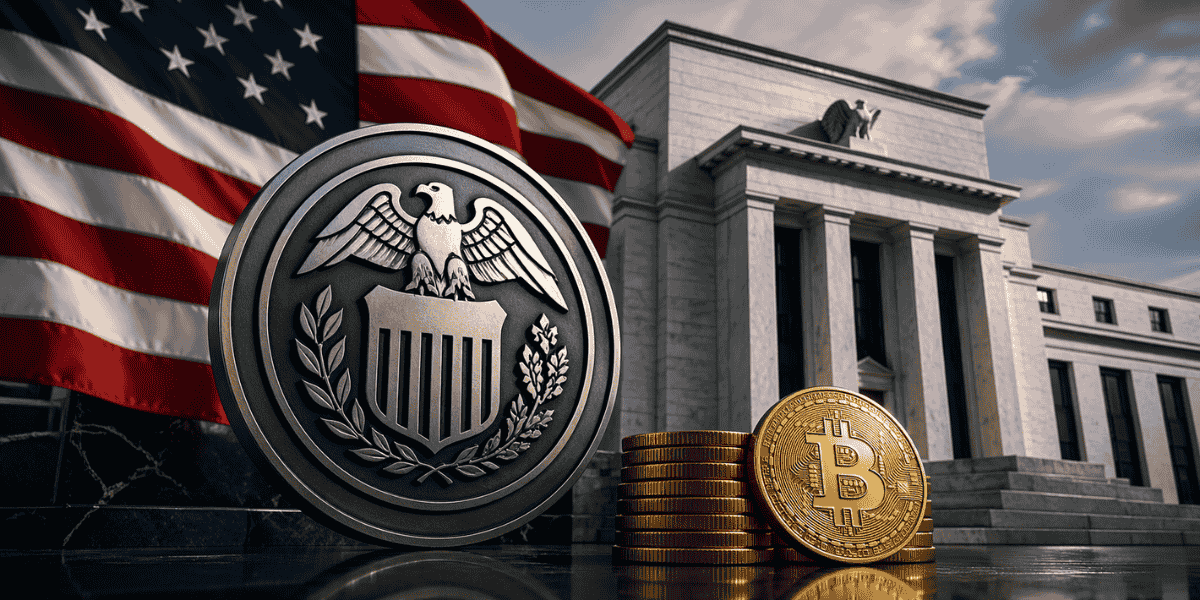
The United States Congress received a bipartisan bill on April 21, 2026 called Payments Access and Consumer Efficiency (PACE), promoted by Representatives Sam Liccardo and Young Kim, which seeks to modernize the country’s payments infrastructure and allow regulated access for fintech and cryptocurrency companies to the Federal Reserve’s payment systems.
The proposal, which is just in the process of presentation and allocation, arises in a context of growing debate about the inefficiencies of the current payment system in the United States..where digital transfers often go through multiple intermediaries before being completed, resulting in delays and higher costs for users and businesses. The legislators pose that this structure limits competitiveness and delays the adoption of faster payment solutions.
The PACE Act establishes a simplified federal registration framework for qualified payment companies, which would allow certain providers Get direct access to Federal Reserve payment systems under supervision of the United States Office of the Comptroller of the Currency (OCC). The project also requires that user funds be fully backed, kept segregated from companies’ assets, and cannot be reused or exposed to operational risk.
Among its provisions, the initiative includes a reinforced supervision scheme with regular audits by federal regulators, as well as consumer protection mechanisms in the event of insolvency, prioritizing the return of funds. In addition, it contemplates the possibility of direct access to certain federal payment rails for approved entities that meet the established requirements.
The proposal has the support of organizations in the fintech sector and the cryptocurrency industrysuch as the Blockchain Association and the Financial Technology Association, which highlight their potential to reduce costs and improve the efficiency of payments in the United States.
The advancement of the PACE Act is part of a debate already underway about the access of fintech and cryptocurrency companies to the Federal Reserve’s payment infrastructure, an area in which the central bank itself has explored mechanisms such as calls payment accounts (payment accounts), a figure that would allow non-banking entities to have limited and supervised access to federal payment systems.