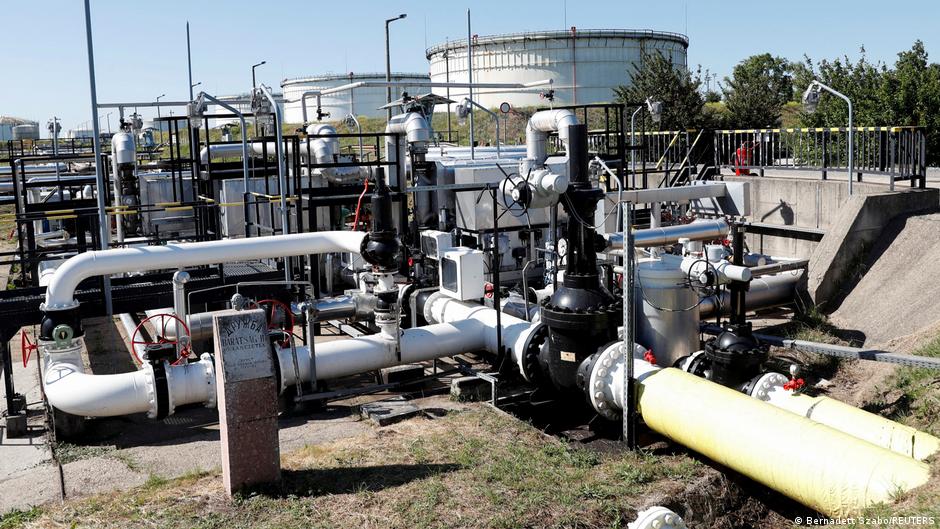
Oil bound for Hungary and Slovakia from Russia via the Druzhba pipeline, which first passes through Belarus and Ukraine, began flowing again on Wednesday after several months of blockage.
The stoppage was a source of serious tensions between Ukraine and Hungary and Slovakia, which intensified amid additional pressure on energy prices due to the war with Iran and the wider Middle East.
The resumption of supplies should also allow for a massive €90 billion EU loan to Ukraine, originally agreed in December, which Hungary and Slovakia put on hold at a recent EU leaders’ summit because of oil supply disruptions.
Landlocked Hungary and Slovakia have been exempted from EU sanctions on Russian oil deliveries since the full-scale invasion of Ukraine due to their apparent dependence on Moscow as a supplier.
What did the three countries say on the situation of oil distribution?
Hungarian oil group MOL said in a statement on Wednesday that the pipeline’s Ukrainian operator Uktransnafta had informed it that it had started receiving crude from Belarus.
“MOL expects the first shipments of crude oil to reach Hungary and Slovakia by tomorrow following the restart of the Ukrainian section of the pipeline system,” MOL said.
Similarly, the AFP news agency quoted an unnamed Ukrainian energy industry source as saying that “oil transit was initiated and pumping began” shortly after noon local time. President Volodymyr Zelensky also said a day earlier that oil flows would resume soon.
Slovak Economy Minister Denisa Sakova said on Facebook on Wednesday that the government in Bratislava expected the first deliveries of crude oil from Russia to reach the country by Thursday.
Why does reactivating the Druzhba pipeline pave the way for EU financial support for Ukraine?
Oil deliveries were halted in January this year after Ukraine said the pipeline was damaged by a Russian drone attack and meant lengthy repairs were necessary.
In particular, Hungarian Prime Minister Viktor Orbán, but also Slovak Prime Minister Robert Fico, questioned Ukraine’s version of events. In March, the two leaders refused to approve the launch of an EU multi-year, €90 billion (about $105 billion) loan package for Kyiv, which was originally canceled in December.
He said he would only approve the funding, which would require unanimous authorization from the heads of state or government of EU member states if oil supplies could resume.
EU diplomats met on Wednesday to try to finalize details of activating badly needed financial aid for Kiev.
The war in Iran has sent oil prices higher than they have been in recent years, a huge boon for Russia’s war economy and a serious headache for Kiev, which has stepped up attacks on Russian energy facilities.
A change of government is imminent in Budapest after years of strained relations with Kiev
The complete repair and reactivation of the Druzhba (or “Friendship” in English) pipeline also coincides with the upcoming change of government in Hungary.
Longtime leader Orban, arguably the EU and NATO leader who has maintained the closest ties to the Kremlin and Vladimir Putin during the war in Ukraine, lost in a landslide defeat to Peter Magyar earlier this month.
It is not yet clear what changes this might bring to bilateral relations between Hungary and Ukraine, as Magyar is only due to take office next month. In any case, Orbán has said he will not stand in the way of an EU loan package as soon as oil deliveries resume.
Edited by: Shawn Sinico