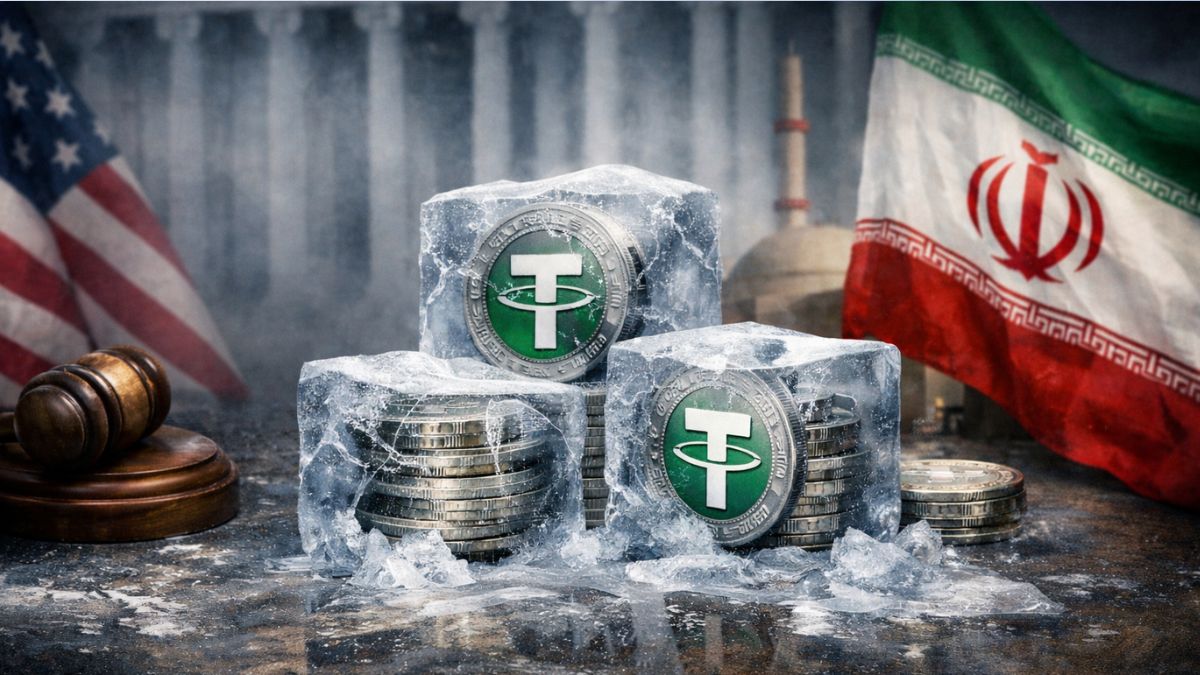
The United States government and the Tether company froze yesterday, April 23, 2026, a total of $344 million in the USDT stablecoin.
According to a report of the American network CNN, these funds are linked to international sanctions evasion networks. The measure was carried out jointly, the USDT issuing company reported.
The USDT restriction was carried out “after the identification of the addresses, thus preventing any subsequent movement of funds,” explained the company, although in its official statement it avoided mentioning specific countries.
The blockade responds to reports provided by various US authorities on financial operations linked to illicit conduct. The company explained that “when wallets connected to sanctions evasion, criminal networks or other illicit activities are identified, Tether may restrict those assets” to prevent their use.
“We work closely with law enforcement agencies worldwide to identify and, if requested, freeze assets linked to illegal activities,” the firm detailed.
Tether abides by the guidelines of the Office of Foreign Assets Control (OFAC). This entity of the United States Treasury manages the list that groups together individuals and companies with blocked assets.
Paolo Ardoino, CEO of Tether, explained that “when credible links to sanctioned entities or criminal networks are identified, we act immediately and decisively” to protect the integrity of the market. The company, in this way, seeks to ensure that USDT is not used as a tool for cross-border transfers that violate current laws.

The use of stablecoins by sanctioned nations such as Iran, Russia and Venezuela is a recurring phenomenon to liquidate oil exports, as CriptoNoticias has reported. These entities use this type of cryptocurrencies to move capital outside the traditional banking system, thus attempting to circumvent economic restrictions imposed by the United States.
In this context, the Secretary of the Treasury Department, Scott Bessent, ratified on April 21 the position of the current administration. The official indicated that he will continue to “apply maximum pressure to systematically degrade Tehran’s ability to generate, move and repatriate funds.”
This blockade occurs in a climate of high political tension between the United States and Iran. The move comes as fragile diplomatic efforts persist to reach a definitive agreement to end the war and hostilities between the two nations.