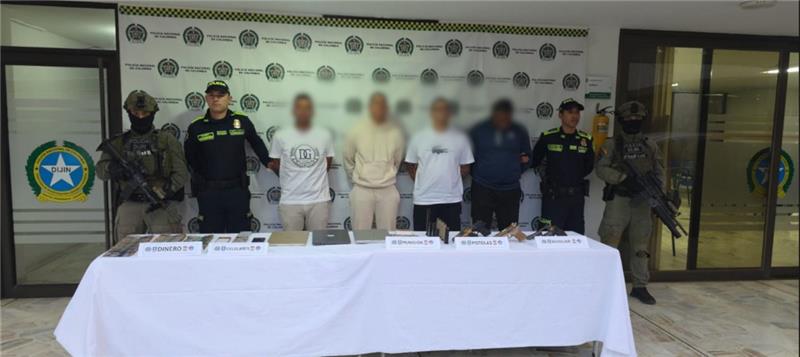
The authorities of Colombia and the United States managed to dismantle a network allegedly dedicated to money laundering associated with the Jalisco New Generation Cartel (CJNG).
According to reports published by the media El Tiempo, this structure would have channeled more than 190 million dollars in cryptocurrencies since 2023, which once again puts the focus on the use of digital assets within financial crime schemes.
The CJNG is considered by various international authorities as one of the most influential criminal organizations in the region. Its possible relationship with a network of this type adds complexity to regulatory efforts and combats money laundering, especially in the ecosystem, where technological innovation and financial risks converge.
So far, no specific details have been revealed about which cryptocurrencies would have been used, which platforms participated, or how many people would be involved in arrests or formal charges. The exact mechanism of concealment or conversion of the funds has also not been precisely explained. However, they found different wallets and cashhighlighted The Time on April 22.
In this case, what is relevant is not only the type of technology used, but the magnitude of the flow detected, which suggests an operation sustained over time and with the capacity to operate on a transnational scale. However, cryptocurrencies still have legitimate uses in payments, investments and international transfers, although regulatory agencies have noted their use by criminal organizations due to their global reach and the speed with which they allow capital to be moved.
In general terms, Money laundering with digital assets usually relies on strategies such as the fragmentation of fundsthe use of multiple wallets, transfers between different jurisdictions and conversion between tokens to make tracing difficult. Although ecosystem technology offers transparency in transactions, illicit actors are constantly seeking methods to exploit regulatory loopholes or obfuscation techniques.