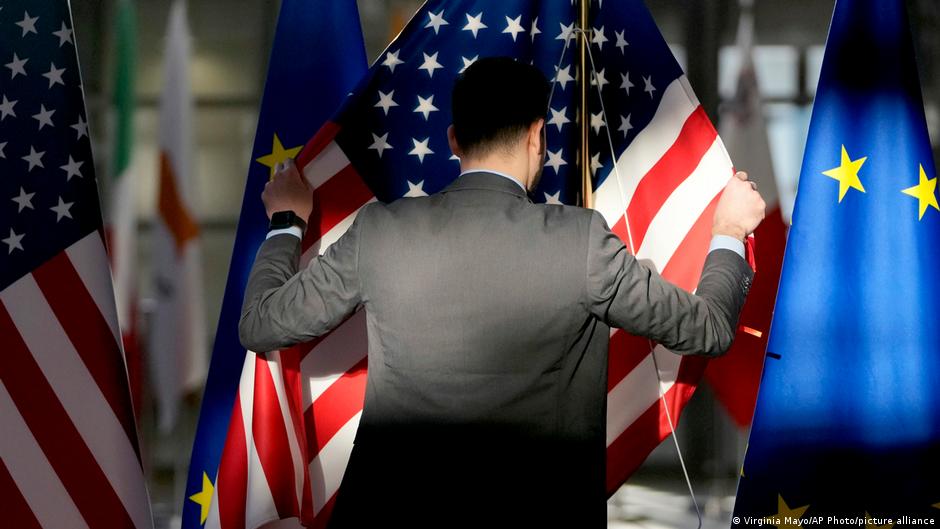
The European Union is working on a controversial new agreement with the United States that could give US authorities access to sensitive data held in police databases across Europe.
At the center of the talks is the Enhanced Border Security Partnership. Washington has made agreement to the program a prerequisite for countries wishing to remain in the US Visa Waiver Program, which allows citizens of participating countries to travel to the US for up to 90 days without a visa.
Most EU member states are part of the scheme, except Bulgaria, Cyprus and Romania, whose citizens still need to apply for a visa. While the ESTA (Electronic System for Travel Authorization) application allowing visa-free travel is usually a quick and automated process, it allows US authorities to pre-screen travelers and potentially deny entry based on security or immigration concerns.
The European Commission confirmed that the US has set a December 31, 2026 deadline for implementing the agreement. This leaves the EU with limited room for manoeuvre. For most member states, losing visa-free travel to the US would be a major drawback. Critics argue that the condition Washington has imposed is coercion rather than partnership.
“The way we see it is a clear case of blackmail,” said Dutch MEP Raquel Garcia Hermida-van der Walle, who is part of a small group of deputies urging the Commission to halt the process.
Will the EU share biometric data?
Exactly what type of data can be shared is one of the most sensitive questions.
Police databases often contain biometric information such as fingerprints and facial photographs. Depending on the national system, they may also include data on people who have never been convicted of a crime. This may include suspects, asylum seekers and, in some cases, people involved in police actions during protests.
“If you’re in the police database, it doesn’t mean you’re guilty. You can just be a suspect,” German surveillance researcher and activist Matthias Monroy told DW.
The distinction matters because US officials say the data will be used for border screening and identity checks. Critics fear that police arrests in Europe could have consequences far beyond criminal investigations inside the group, including decisions about whether a person can fly or enter the United States.
The US Mission to the EU did not respond to DW’s requests for comment by the time of publication.
Deal could normalize broad access to data
“We are very concerned about the impact on the security of European citizens,” García Hermida-van der Walle said. He warned that peaceful protesters could be trapped in the system. He questioned whether negotiations should continue “until the United States takes appropriate responsibility for basic fundamental rights.”
European supporters of the plan argue that trans-Atlantic data sharing is nothing new, with EU countries and US agencies already exchanging information in criminal cases. But existing processes are generally narrower and more formal, often requiring a request, a legal basis and, in some cases, judicial authorization.
Privacy experts say the new arrangement risks normalizing broader and more routine access.
How mutual is the deal?
Monroy also questioned whether the promised reciprocity is realistic, meaning EU countries should also be able to access the same data as the US.
“There is no such…database [in the US] As we have in Germany,” he said, referring to the centralized data network of Germany’s federal and state police authorities. “This is a clear signal that this agreement is not for both sides; It’s a one-way track.”
The European Data Protection Supervisor, the bloc’s independent supervisory authority, has already warned that the proposed deal would set a significant precedent as it could become the EU’s first agreement involving the large-scale sharing of personal data, including biometric data for border and immigration controls, by a third country. The watchdog has called for a full fundamental rights impact assessment and said any data processing should be strictly necessary and proportionate.
There are also concerns about how such data might be used once transferred, with Monroy pointing to the growing role of big data tools in policing and migration control in the US.
“The United States can now use that data to track immigrants and any groups that will be discriminated against next,” he said. “It could be leftists, it could be liberals, it could be people in support of prisoners or something else and I would call it a fascist system.”
Edited by: Davis Van Opdorp