“There are reasons to think that the national economy is going to do well,” he said.
The exchange gap has decreased as a result of greater intervention by the BCV, according to Pérez.
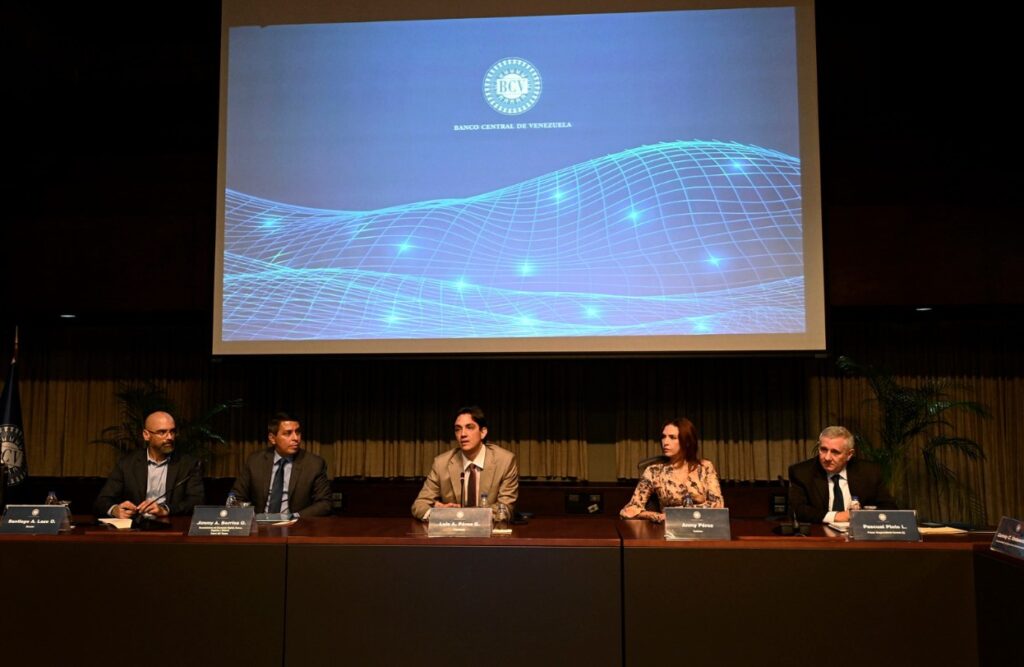
The Central Bank of Venezuela (BCV) is working on the design of actions and mechanisms to facilitate natural and legal persons to buy and sell foreign currency through banks and exchange houses.
This was announced by the president in charge of the issuing entity, Luis Pérez González, during a meeting held last Friday, April 24, with representatives of public and private banking and the Vice Ministry of Digital Economy.
The head of the BCV did not give details of such a mechanism, but clarified that it will continue to encourage transactions in the domestic market to be carried out in bolivars.
“It is time to start thinking about instruments that make it easier for natural and legal persons to continue increasing their preferences for maintaining the use of the bolivar,” pointed out.
According to the banker, are advancing in a “price stabilization stage” in which, he assures, “we will reinforce the importance of the national currency in transactions by increasing trust in it.”
According to Pérez González, the entity is committed to maintaining a “constant review” of the monetary and exchange policy instruments. “And we will make decisions at the time deemed appropriate,” he said.
The announcement of this new method joins a long list of schemes that have attempted to regulate the flow of foreign currency in the oil-producing country. The system in force until now relies mainly on currency auctions through public and private banking, complemented with exchange tables and the direct intervention of the BCV.
This model has attempted to leave behind much more restrictive mechanisms that marked recent economic history. Among the most notable antecedents is the defunct Foreign Exchange Administration Commission (Cadivi), which for more than a decade centralized the granting of dollars at fixed rates.
Subsequently, variants such as Sicad (I and II) and Simadi emerged, systems that introduced staggered auctions and slight flexibility, later converging on Dicom, an auction scheme with public and private bidding that preceded the relative liberalization of bank exchange desks that began in 2019.
The exchange gap began to decrease
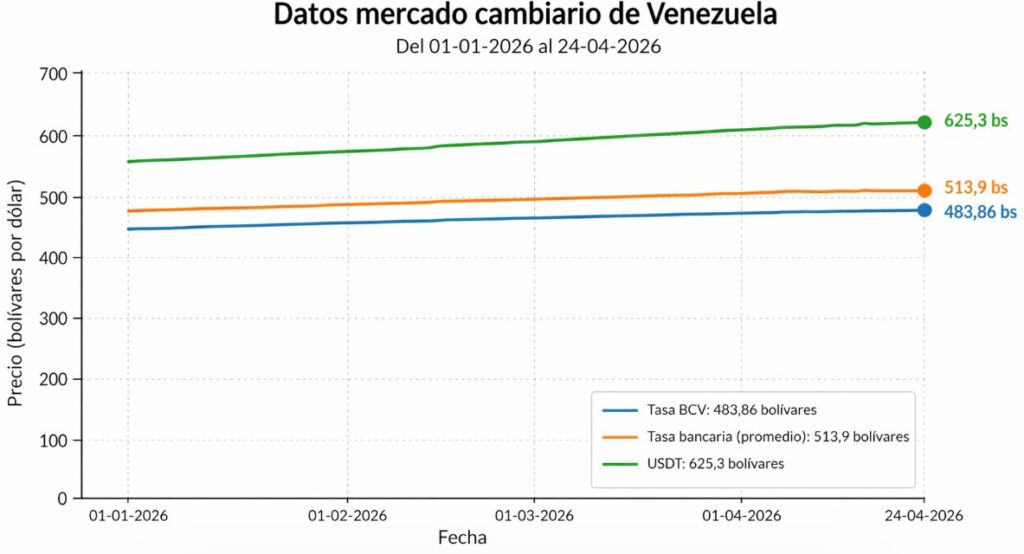
Regarding exchange rate policy, Pérez González highlighted that the gap between the official and unofficial exchange rate has been reduced to 29%. This is as a consequence of a more active intervention by the BCV in the market, which has reached USD 3,000 million injected into the national banks so far this year.
He did not mention it, but the gap to which Pérez González referred is the result between the dollar established by the BCV auction mechanism and the price of the currency in the open market — which has been referenced through the stablecoin linked to the dollar, USD Tether (USDT), in recent months.
Such a gap, in fact, is 29% on average. At the close of this report, the auction rate averages 510-520 bolivars, while the USDT price is around 615-625 bolivars, approximately.
CriptoNoticias has documented that, in Venezuela, USDT has become part of daily commerce, since its price in peer-to-peer (P2P) markets has served as a guide to know the free price of the North American currency. Businesses – especially informal ones – apply the self-proclaimed “Binance rate” to refer to USDT and thus mark the prices of their products.
Daniel Arráez, an economist specialized in cryptocurrencies, remembers that the Venezuelan market has adopted the digital asset USDT as its main reference of value and that the 29% gap “is the opportunity cost that the market pays for having immediate liquidity, without operational restrictions and outside the inspection radar.”
In dialogue with CriptoNoticias, he explains that the USDT “comes in the Venezuelan DNA” and that, therefore, the BCV will probably maintain the traditional exchange scheme while the “real economy” will continue to operate with this digital asset.
“USDT will continue to be the quick and frictionless escape route for the ordinary citizen of retail commerce (…) the true marker of the free market in Venezuela is USDT, it is the crypto dollar,” he points out.

Between external normalization and the risk of hyperinflation
The head of the BCV also reported on the beginning of a normalization process in its relations with international organizations. Pérez González confirmed that the country has resumed contacts with the International Monetary Fund (IMF), correspondent banks and the Federal Reserve (FED) of the United States.
He even mentioned that the country’s resources abroad are being audited by independent firms hired by both the governments of Venezuela and the United States to guarantee impartiality.
In the midst of his optimism, the president in charge of the BCV assured that “there are reasons to think that the national economy will do well in the coming quarters.” Also, to believe that inflation “is going to decrease.”
However, today’s economic reality is far from the estimates of the leader of the monetary entity. Asdrúbal Oliveros, economist and business consultant, warned that the inflation data for March, located at 13%, places the annual variation at 650%, which leads the country to a hyperinflation scenario.
“It is urgent and peremptory for the authorities to act and present an economic plan that will allow inflation to be quickly reduced,” explained Oliveros, who stated that this phenomenon is the “main enemy” of Venezuelan citizens and companies.
If the announcements of the president in charge of the BCV materialize, it is likely that there will be a progression in the country’s economic improvement, but as long as the exchange rate issue and inflation are addressed, which, to the detriment of Venezuelans, is returning to 2018 levelswhen the Caribbean nation faced the worst economic crisis in its history. As usual, we have to wait and see.