The coalition of protocols and actors in the decentralized finance (DeFi) ecosystem, DeFi United, presented on April 27, 2026 the technical implementation plan to restore support for rsETH and normalize market operations.
He aim central is remedy the impact of exploit occurred last April 18which compromised the integrity of the Kelp DAO token and created a liquidity crisis in lending protocols like Aave.
This plan is divided into two operational axes: the restoration of collateral support and the controlled liquidation of positions linked to the attacker.
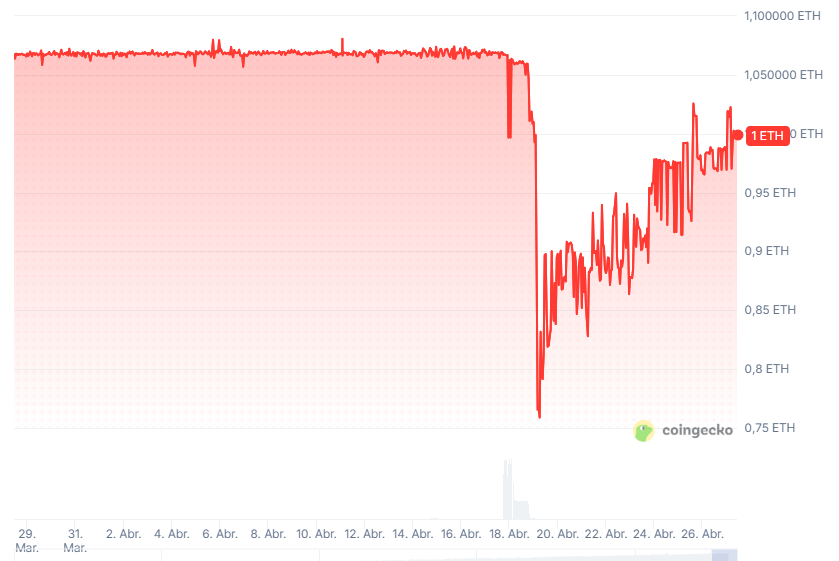
To recover operation, rsETH value needs to align back to its nominal exchange ratio of 1.07 ETH. According to the published document, DeFi United has secured the capital commitments necessary to cover the shortfall.
Final execution depends on governance approvals and the signing of definitive agreements. The technical process will consist of converting the committed ETH into rsETH through progressive tranches. These funds will be deposited in the contract corresponding to the bridge. Once completed, the bridge will be able to safely resume functions.
In parallel, the coalition will address the attacker’s active positions. Currently, seven addresses associated with the attack hold approximately 107,000 rsETH as collateral in Aave (Ethereum and Arbitrum) and Compound.
The plan includes a controlled liquidation sequence:
- Oracle Setting: The rsETH oracle price will be temporarily modified to allow for efficient settlement.
- Recovery in Aave: It is expected to recover about 13,000 ETH from the excess collateral in Aave.
- Recovery in Compound: DeFi United will provide the liquidity necessary to liquidate positions in Compound, with an estimated recovery of 16,776 ETH.
Once the collateral is secured, the recovered rsETH will be exchanged for ETH via the standard Kelp DAO procedure to cover the shortfalls of the affected markets.
The final phase of the plan includes the unfreezing, by Aave, of the WETH and rsETH reserves in the Ethereum, Arbitrum, Base, Mantle and Linea networks. Additionally, the original loan-to-value (LTV) ratios will be restored.
However, DeFi United warned about three critical risks:
- Governance– The plan is strictly dependent on the approval of proposals on Ethereum and Arbitrum.
- Interference: The attacker could attempt to manipulate positions to make it difficult to fully liquidate the deficit.
- Security validation: Although LayerZero and Kelp implemented additional measures, the security of the bridge must be validated in production during the sectional deposition phase.
The original incident, which resulted in the drain of 116,500 rsETH (about $292 million), caused the ETH utilization rate on Aave to reach 100%, blocking withdrawals for thousands of users, as explained by CriptoNoticias.