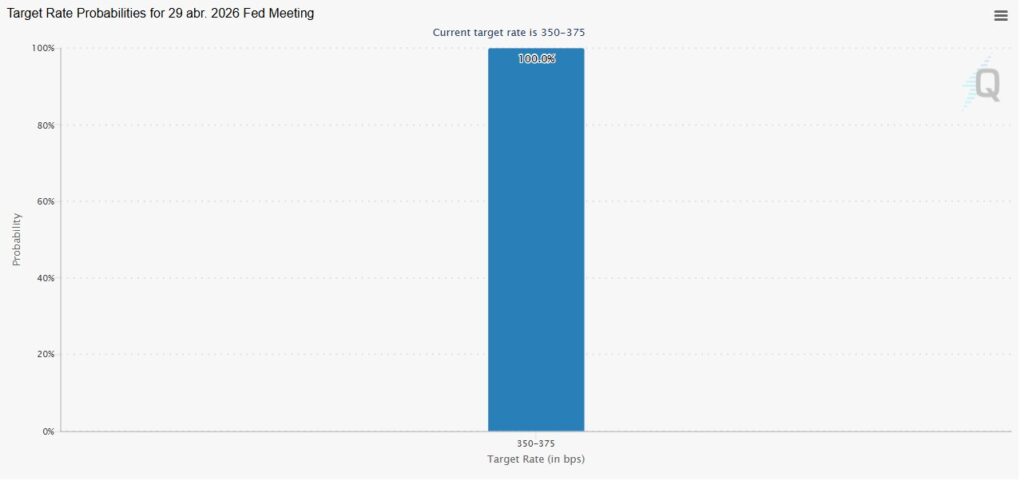
There is a 100% chance that the FED will maintain interest rates.
Kevin Warsh, nominated by Donald Trump, will assume the presidency of the FED.
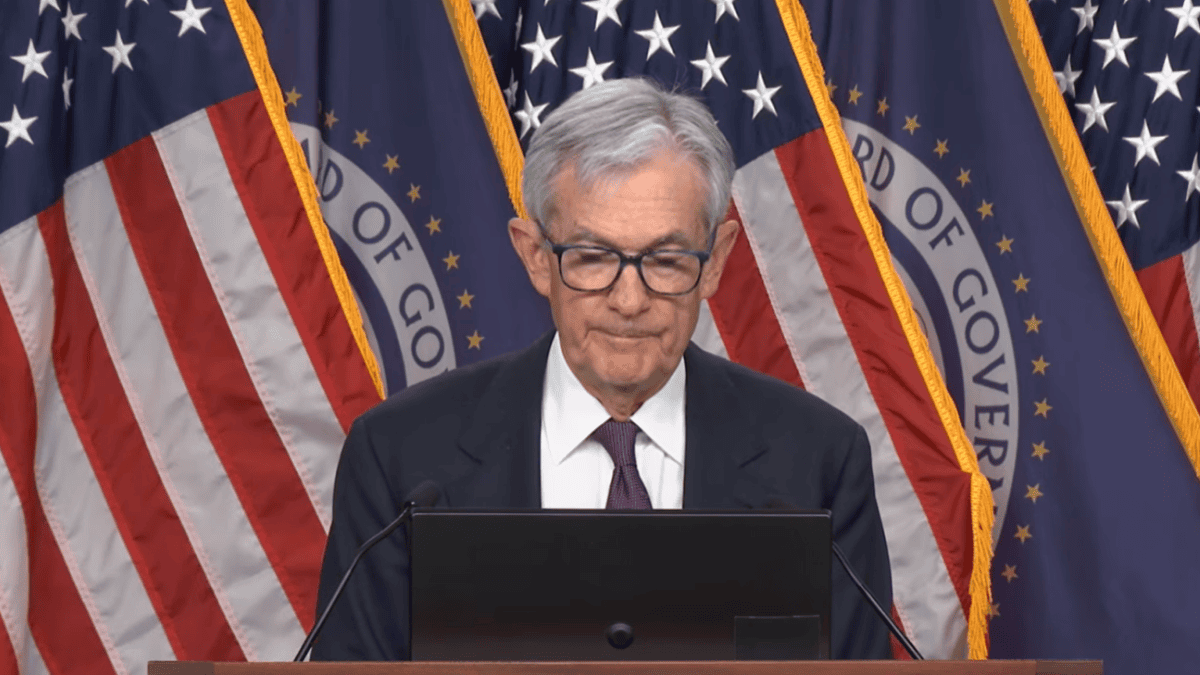
The United States Federal Reserve (FED) will conclude its monetary policy meeting tomorrow, April 28, under a broad consensus that it will maintain interest rates and will mark the beginning of the farewell of its current president, Jerome Powell.
The Federal Open Market Committee (FOMC), in charge of deciding on rates, will end the meeting with the expectation of maintaining the current range of rates between 3.50% and 3.75%, a scenario to which the CME Group’s FedWatch indicator gives, so far, a 100% probabilityas seen in the graph.
This cautious stance on the part of the FED responds to a critical geopolitical context in the Middle East. The regional conflict, aggravated by the closure of the Strait of Hormuz by Iran, has sent the price of oil soaring above $110 in April (Brent barrel). This increase in the cost of energy generates inflationary pressures that, in practice, limit the FED’s room for maneuver to reduce interest rates in the short term.
This closing of Powell’s cycle takes on a historical nuance, since represents the last session led by Powell before his term ends in mid-May. Powell’s departure is not a fortuitous process due to the end of his mandate, but the result of a tense political relationship. The president of the United States, Donald Trump, was looking for a different profile to lead the entity and, after years of trying to publicly discredit Powell’s management, he had to wait until his term expired to name a successor.
Trump has appointed economist Kevin Warsh with the aim of having someone more aligned with his monetary policy strategy, as reported by CriptoNoticias. However, the exact stance Warsh will take is still unknown. What is certain is that, Once he assumes command, he will enjoy the institutional independence that protects the position of direct external pressures.
Beyond the institutional relief, investors’ immediate attention will focus on the tone that Powell adopts in his last press conference. Your words will act as a thermometer for the markets, functioning as a catalyst that could accelerate volatility in assets considered “risky” for certain sectorslike bitcoin (BTC).
A restrictive tone from Powell, with emphasis on persistent inflationary pressures could generate corrections in bitcoin. Instead, any hint of possible cuts or an optimistic message could be interpreted as a bullish factor for bitcoin and cryptocurrencies.
Under this transition scenario, economists such as Hugh Johnson have stressed that Warsh’s arrival could redefine the strategy of the central bank’s balance sheet. However, the market expectation is that technical autonomy will be preserved, ensuring that monetary decisions continue to be based on macroeconomic data and not on political emergencies.