Visa already had support for Ethereum, Solana and Avalanche, among others.
The program reached USD 7 billion annualized, a growth of 50% in one quarter.
Visa announced today, April 29, the incorporation of five cryptoasset networks to its Global Stablecoin Settlement Pilot Program: Polygon, Base, Arc, Canton and Tempo. With these additions, the program goes from four to nine networks available for Visa partners (issuers and acquirers) to settle stablecoin transactions.
According to Visa’s statement, the program achieved an annualized rate of USD 7,000 million in the first quarter of the year, a growth of 50% compared to the previous quarter. This initiative already had support for Ethereum, Solana, Avalanche and Stellar.
As explained by the Visa team, the expansion responds to a specific demand from partners. “Our partners are building in a multi-network world and expect their choices to reflect that reality,” said Rubal Birwadker, global head of growth products and strategic partnerships at Visa.
The addition of new networks allows partners to choose the infrastructure that best suits your needswhile Visa operates as a common settlement layer.
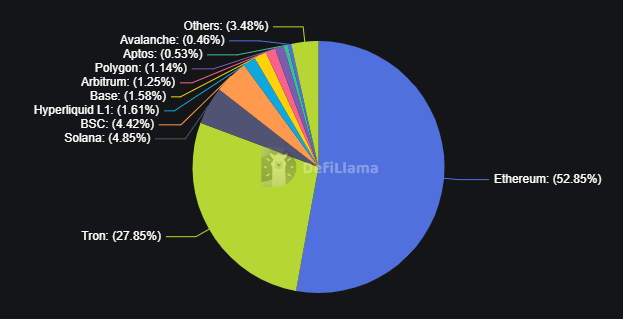
Among the five new networks incorporated, Base and Polygon are the ones that They have the largest volume in the stablecoin marketwith 1.58% and 1.14% of the total volume, respectively.
At the time of writing this article, Ethereum, also within the Visa program, is the “queen of stablecoins”, with almost 53% of the total volume, according to DeFiLlama.
One more step in Visa’s strategy with stablecoins
The expansion announced today by Visa is part of a strategy that the company has been building since 2024. As reported by CriptoNoticias, in July of that year Visa announced partnerships with Paxos and PayPal to use the stablecoins USDG and PYUSD in settlements, and incorporated the Stellar and Avalanche networks to process payments in USDC.
In that same instance, Visa began to settle transactions in EURC, Circle’s euro stablecointhe first non-dollar-denominated asset within its on-chain settlement infrastructure.
In this way, with the nine networks now available, Visa consolidates a settlement infrastructure that seeks to operate as a bridge between the traditional financial system and the digital asset ecosystem.