
The Ethereum Foundation finalized the sale at an average price of $2,292.15 per token.
Bitmine is the publicly traded company with the largest holdings of ETH.
The Ethereum Foundation made a new over-the-counter sale of 10,000 ETH to BitMine, a company linked to Tom Lee, on May 1. This is an operation that consistently continues a series of treasury sales.
According to information revealed by the foundation through X, The sale was completed at an average price of $2,292.15 per tokenwhich implied revenues of $22.9 million. The transfer originated in a multisignature wallet controlled by the Ethereum Foundation.
The transaction follows the line of another sale carried out in March, when the Ethereum Foundation placed 5,000 ETH to BitMine at a price close to $2,042 per unit, which generated revenues of approximately $10.2 million.
With this new purchase, BitMine Immersion Technologies consolidates itself as one of the most active institutional players in the acquisition of ether directly from the foundation’s treasury. In addition, it accumulates around 10% of all the ETH that is staked, as reported by CriptoNoticias.
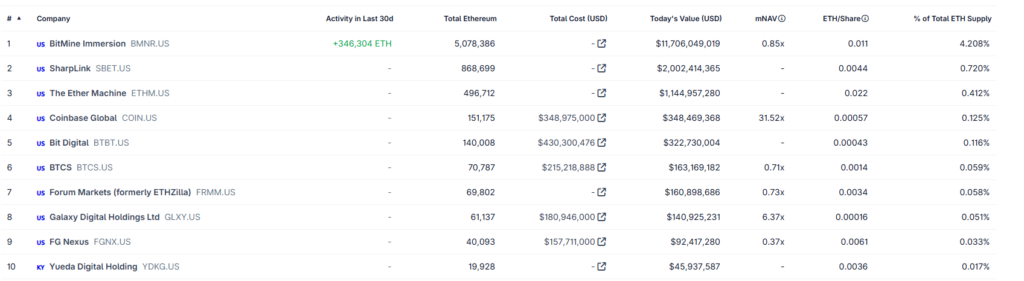
This behavior reflects a broader trend: while bitcoin has historically dominated corporate treasury strategies, some companies are beginning to consider Ethereum as a strategic asset for its role in decentralized finance, tokenization and smart contracts.
The repetition of purchases suggests a sustained investment thesis, rather than specific operations, which reinforces the narrative of progressive institutional adoption of the Ethereum ecosystem.
On the seller’s side, The operation is part of the treasury management policy from the Ethereum foundationthrough which it periodically converts part of its ETH reserves to fiat currency. This strategy seeks to guarantee liquidity for its operation and reduce the impact of direct sales in public markets.
This type of movement is not new within the Ethereum ecosystem. The foundation has for years resorted to partially selling its holdings to fund key activities such as protocol development, technical research, ecosystem growth, and community grant programs.