Whether the great Chinese warrior Hua Mulan, France’s patron saint Joan of Arc or the pirates Mary Reed and Anne Bonny, history offers many examples of women who adopted male garb to circumvent prescribed gender roles that restricted their freedom – and many other cases remain undocumented.
Markus Schlenzer’s film “Rose”, a historical drama set in the 17th century, imagines the life of one of these women who hides her gender.
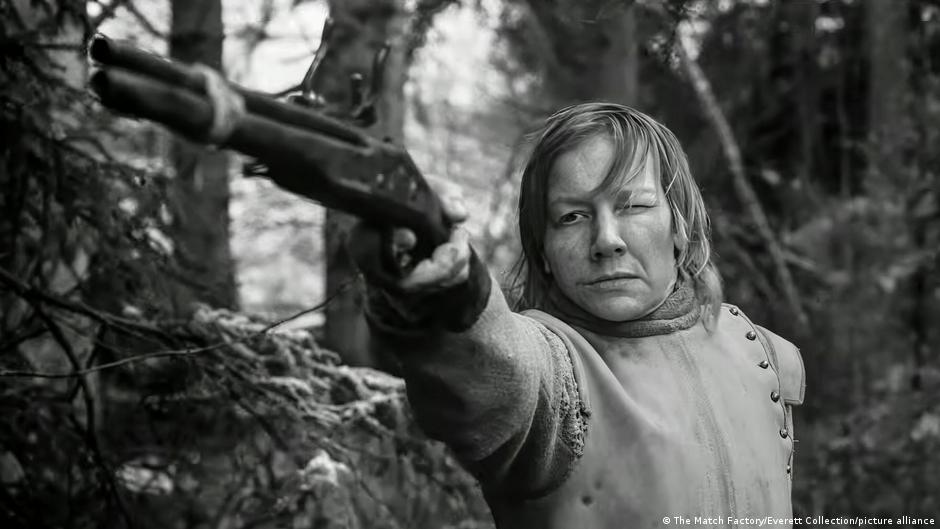
Starring Sandra Hulser in the title role, Rose appears as a wounded soldier returning from the Thirty Years’ War to an isolated community, and claims to be the heir to a long-abandoned farmstead.
Following its premiere at the Berlinale, “Rose” will open in German theaters on April 30, and will also be distributed internationally by Mubi later this year.
search for freedom
When filmmaker Marcus Schlenzer turned 50, a friend told him that exactly 250 years before he was born, a woman who had presented as a man for most of her life was executed for sodomy.
Sentenced to death by King Frederick William I of Prussia in 1721, Catharina Margaretha Link became the last person to be executed for lesbian sexual activity in Europe.
Link lived an unconventional life. In addition to wearing men’s clothing and having sex with other women, he also fought as a soldier and spent some years with an unorthodox religious group claiming to be a prophet. She was known as Rosenstengel (rose stem).
That intriguing story led Schlenzer down a rabbit hole of research on women who adopted a male persona throughout history; He became fascinated with “what drives people to step into another identity to live something that’s not given to them,” the filmmaker told DW.
A variety of reasons led women to immigrate to men: “Often it was about escaping forced marriage as a young woman, or escaping violence in general, especially domestic violence, whether from her father, employer, or husband,” Schlenzer says.
But there were also many cases of women who tried to support themselves after the death of their spouses.
For some, the motivation was simply to accompany their husbands into battle – which was something only male soldiers could do.
In other cases, families aim to preserve their honor if a son does not want to fight in a conflict; They will send a courageous daughter instead.
Beyond these different motivations, Schlenzer says, “All of these women had the same goal: independence.”
“The fate of all these people affected me deeply,” says the filmmaker. As a queer person himself, he has always explored queer identity and history in his work: “So, from the beginning, writing this screenplay was a political endeavor for me.”
Mentioning that she was raised entirely by women, the filmmaker further adds that she believes “the only thing that can save us right now is if there is more feminism in the world, and return to the basic principles of feminism.”
Women’s inequality remains a persistent global issue, gender-based violence is on the rise, and transgender rights are one of the most polarizing issues in current political discussion. For the filmmaker, even though “Rose” is a historical drama, “in reality, it also tells a story about the current times we live in.”
“Rose” is a story that shows “how people are deprived of things that are completely logical for others to survive.” The question for the filmmaker is why have he been deprived of these rights?
Sandra Hulser delivers a muscular performance
“Rose” is Schlenzer’s third feature film, following “Michael” (2011), a critically acclaimed but deeply disturbing fictional portrait of a pedophile, and “Angelo” (2018), which tells the story of a boy kidnapped from Africa and brought to Europe in the 18th century.
In addition to his work as a filmmaker, Schanzer is also a casting director who has worked on several of Michael Haneke’s films, among other projects. The influence of Haneke’s Palme d’Or-winning “The White Ribbon” (2009), another black-and-white historical drama recognized for its deliberate ambiguity, can certainly be felt in “Rose.”
Markus Schlenzer’s experience as a casting director has also influenced his writing; Early in the process of developing “Rose” he envisioned Sandra Hulser for the lead role.
One of Germany’s best-known actors, Hülser has gained international recognition in recent years, especially after starring in “The Zone of Interest” and “Anatomy of a Fall” in 2023.
“It was very clear to me from the beginning that this character would be very complex,” explains the director, adding that the challenge was to reveal Rose’s depth without any big monologue, but rather through “a lot of silence”.
Schlenzer says, it’s a character who constantly embraces different layers at the same time: Rose’s own identity as a woman, her personality as an impostor, but also “all the radars that are constantly being activated to figure out if people know about her deception.”
Hülser, who conveys all these layers simultaneously through her precise and sensitive acting, won the Silver Bear for Best Leading Performance at the Berlinale.
not classic hunting
The character’s moral ambiguity also sets “Rose” apart from other films about women who travel the world disguised as men; Many of these previous works star these figures.
But Rose is not an activist against patriarchy; She acts selfishly. She is far more complex than the classic victim; She becomes a criminal, as someone else becomes the victim of her secret. Rose is both strong and vulnerable – and that’s what makes her a compelling character.
“The biggest thing is that the film doesn’t want to preach,” Schlenzer says.
But it certainly inspires consideration of the long-standing structures and symbols that keep women in captivity to this day. At the end of the film, Rose is asked what caused her to violate her birthright. “There was more freedom in trousers,” she replies, adding: “It’s just a small piece of fabric.”
Edited by: Tenzin Sekhon