
Tether owns 74.26% of Adecoagro after investing more than 600 million dollars.
Urea is consolidated as a finite strategic asset, vital for global food security.
Tether, the issuer of the USDT stablecoin, shows that its next refuge is on the mainland of South America. In Argentina, it consolidated its control over Adecoagro, one of the main agro-industrial powers in South America, with key operations in Argentina, Brazil and Uruguay. And there, it tries to “anchor” its capital in breathing assets, although this strategy opens a new debate about the nature of digital support.
This metamorphosis was consolidated after an initial investment of 9.8% in September 2024, as reported by CriptoNoticias at the time. Since then, the firm’s participation progressively escalated until reaching 74.26% of Adecoagrothrough Tether Investments SA de CV.
The operation, closed for more than $600 million at the beginning of 2025, marks a paradigm shift. This, taking into account that the company is no longer limited to managing the interests of US Treasury bonds, but has decided to “anchor” its capital in productive infrastructure, prioritizing tangible assets over immediate liquidity.
But going beyond the financial statements, the story of Mariano Bosch brings the human face to this transaction. Bosch, who cut his teeth working on combine harvesters before leading this agro-industrial empire, has turned his company into the definitive bridge between the countryside and venture capital.
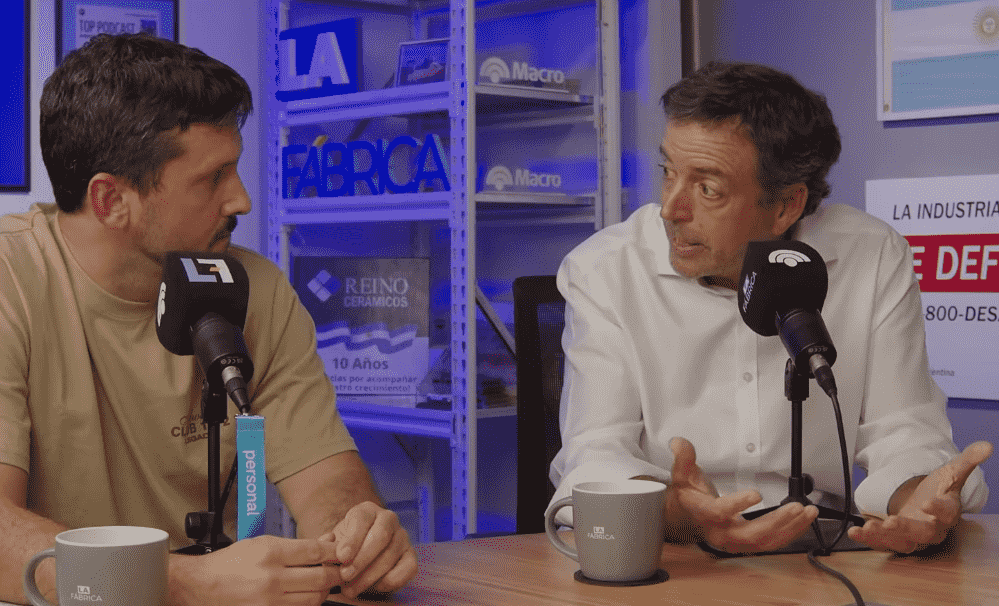
Speaking on a podcast on Monday, May 4, Bosch detailed the technical complexity that supports this business model:
We have three most important lines of business. One is sugar, ethanol and electricity, all of that in Brazil. Then we have what we call agriculture and food, which is rice, milk… and the third line of business is fertilizer, which is basically that we make urea where we transform the gas to fix the nitrogen from the air and make the urea balls that are spread on the field.
Mariano Bosch.
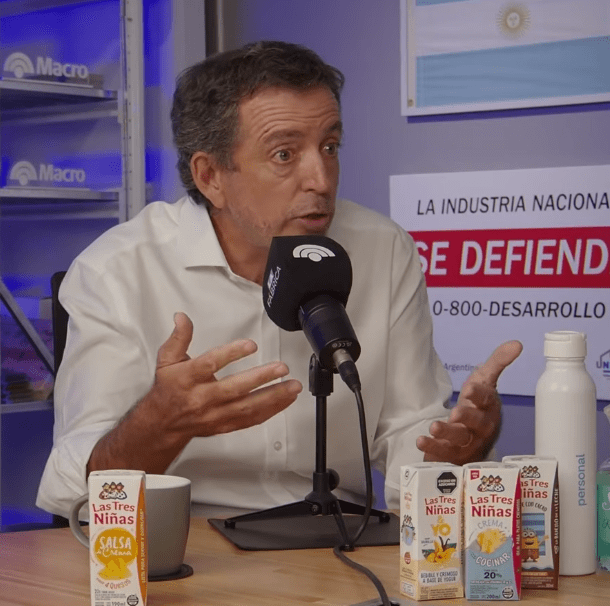
Bosch, who cut his teeth working on combine harvesters before leading this agribusiness empire, turned his company into the definitive bridge between the countryside and venture capital. Recalling its beginnings, when the idea of requesting $54 million for a project that the market did not yet understand seemed completely reckless, Bosch highlights the importance of technical conviction over initial skepticism.
That same determination It is the one that resonates with Tether’s strategy today. This is about audacity about the accumulation of scarce physical assets that guarantee sovereignty. As with digital gold, the firm understands that land and the capacity to feed it, such as urea production, are finite resources with intrinsic value.
Now, his vision has been validated by the traditional financial marketl. Institutions such as Bank of America (BofA) and Morgan Stanley have adjusted their recommendations on Adecoagro towards a purchase position, recognizing the solidity of a model that today leads the way towards the acquisition of 50% of Profertil (a leading company in Argentina dedicated to the production and marketing of nitrogen fertilizers).
The scarcity thesis: from bitcoin to urea
For Tether, the boldness lies not only in its accumulation of bitcoin, but in its pivot toward scarce physical assets.
This is where urea becomes the protagonist because its production does not depend on industrial will, but on the availability of a geopolitically sensitive resource such as natural gas. Being the critical input to fix nitrogen from the air and nourish the soil, urea is a strategic asset limited by high energy costs and environmental restrictions.
In this sense, it is understood that with a growing world population and finite arable land, urea guarantees food security. Just like bitcoin, has intrinsic value based on scarcitysince central banks cannot issue out of nowhere. For Tether, possessing the capacity to produce urea is possessing a “key” to the economy that does not depreciate with inflation.
However, the experiment raises a systemic question: what happens if the digital asset market demands a massive USDT redemption? Unlike Treasury bonds, the 200,000 hectares of Adecoagro or their urea production cannot be liquidated in seconds.
If suddenly billions of dollars worth of USDT were requested simultaneously (known as a bank run), Tether would have to quickly liquidate its reserves. Treasury bonds are sold in a matter of seconds, but selling 200,000 hectares of countryside, urea plants or shares of agribusiness companies is a process that can take months, and almost certainly at much lower prices in a panic scenario.
From a financial perspective, the risk appears mitigated by the scale of the operation. Although Tether has acquired approximately 74% of Adecoagro for an amount close to $600 million, this investment represents a minimal fraction of its total reserves, which exceed $191 billion.
For the firm, the priority has ceased to be immediate liquidity to focus on the resilience of assets that generate constant cash flow.
However, the real challenge for Tether now is in its responsiveness in the face of an extreme stress scenario such as a massive redemption.
Therefore, it is clear that Tether is carrying out an ambitious experiment such as going from highly liquid reserves to more profitable but considerably less liquid assets. The question that remains open is whether the capital born on the blockchain will be able to sustain the infrastructure of the traditional economy without compromising the trust and redemption that underpins its own stablecoin.