Stephen Flynn, the Westminster leader of the Scottish National Party, spoke with remarkable confidence:
“There’s going to be a constitutional shock on these islands,” he told a British broadcaster, adding that he hoped the SNP would prevail in Scotland and plaid Cymru would win in Wales.
While Welsh nationalists have not immediately committed to holding a referendum, plaid Cymru’s constitution states that its aim is to “secure independence for Wales in Europe”.
Could Wales, Scotland and Northern Ireland eventually go their own way – possibly leaving England behind and seeking EU membership?
Breaking up is hard to do
For all the noise, experts urge caution. Neither Wales nor Scotland is anywhere near Brussels – the numbers are not quite high yet.
“In Scotland, there is not enough support to ask the UK government to hold another referendum, because it is up to the UK Parliament to approve it. And in Wales, it is a reaction against the Labor government in London rather than a desire to secede from the UK,” Tim Bell of Queen Mary University of London told DW.
Tony Travers of the London School of Economics agrees that there will be no immediate challenge in Wales, adding that Scottish nationalists will be very careful about their timing. He said, after losing the referendum in 2014, he would like to avoid the risk of another defeat soon.
In Northern Ireland, Sinn Féin is committed to a united Ireland. However, under the terms of the Good Friday Agreement, this would require a border vote, which would require securing a majority in both Northern Ireland and the Republic of Ireland. Despite holding the post of First Minister for more than two years, Sinn Féin has not yet pushed for such a vote.
Political discontent is increasing in Britain
Nevertheless, wider political aftershocks are evident, and the projected victory of the nationalists poses a challenge to the UK government.
This reflects widespread dissatisfaction with both mainstream parties, Labor and Conservative. For Prime Minister Keir Starmer, the elections could also be a disaster.
As well as elections for devolved governments, there are also elections for councils across England – and for Labour, there could be massive losses. Over 2,000 Labor councilors are predicted to lose their seats.
Starmer’s popularity has declined sharply since his landslide victory less than two years ago. According to a recent poll, a majority of Britons described him as a “poor” or “terrible” Prime Minister.
He has not convinced voters that he is the right person to deliver the change he promised. The economy is stagnant, growth has failed to materialize and the cost of living crisis persists.
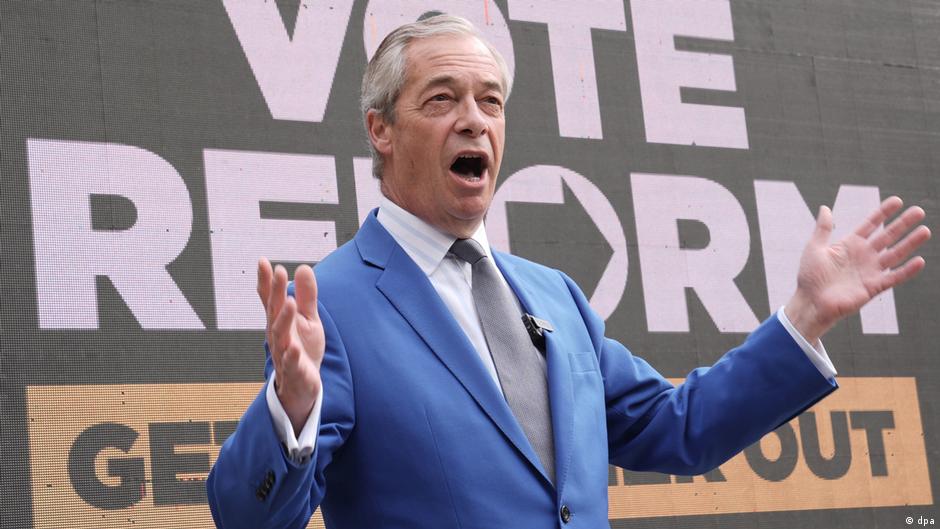
Meanwhile, the political landscape is becoming more crowded and more volatile. In addition to nationalists, smaller rebel parties are taking advantage of the discontent, such as the self-proclaimed “ecopopulist” Greens and Nigel Farage’s right-wing populist Reform UK Party.
Reforms have shaken up Britain’s political landscape
The Greens, who support wealth taxes to address the cost of living crisis, are hoping to take control of councils in major urban centres. He enjoys strong support among young voters.
Meanwhile, Reform is appealing to voters concerned about immigration, aiming to “deport all illegal immigrants” and proposing Trump-style internment camps — in areas that voted for the Greens.
Reform’s home affairs spokesperson Zia Yusuf posted on social media platforms
The recovery is leading in opinion polls, gaining ground in the former industrial areas of northern England and the Midlands – white working-class areas long considered Labour’s strongholds.
Will Starmer survive as prime minister?
For Prime Minister Starmer, this could be a fight for survival. A “Starmergeddon”, a leadership challenge, could loom, as many MPs question whether he is the right person to lead them into the next election. Tony Travers said, “It is the scale of the damage that will determine whether Starmer survives or not.”
The long shadow of Brexit is looming over all this. The vote of 10 years ago is important in explaining the fragmentation and current instability of British politics.
This has given new impetus to independence movements – Brexit is unpopular among the public, and the prospect of rejoining the EU is attracting large numbers of people.
But it also legitimized more radical voting options, Travers said. “The Brexit vote freed people to think they could vote in a way that had an impact. It pointed to disillusionment with mainstream politics and reassured some people that they could vote in a way that got their attention, in a way that always voting Labor or Conservative never did.”
So, is the United Kingdom “breaking up”? Not at all – at least not yet. But it is unquestionably more volatile, more politically fragmented and harder to govern than it was a decade ago. The seams are still holding, but the stress on them is increasing.
Edited by: Rob Mudge