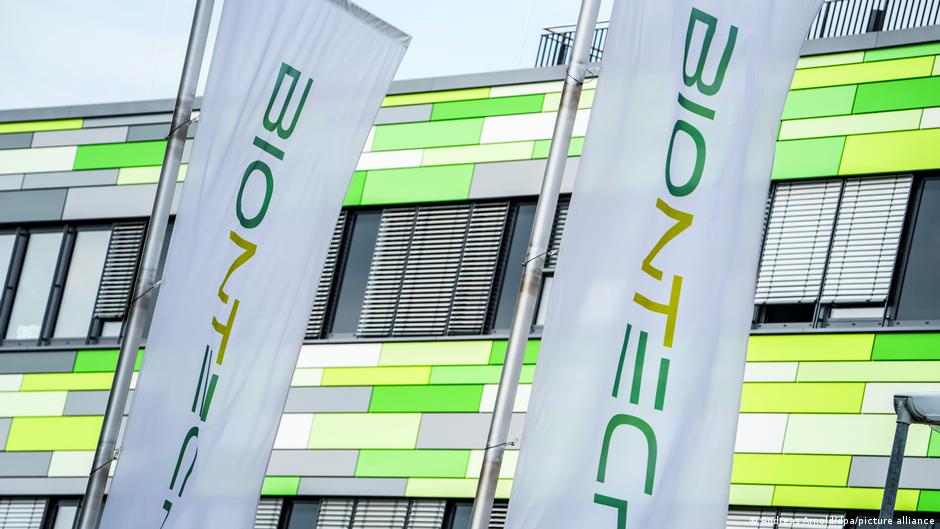
Six years ago, a virtually unknown German pharmaceutical company developed the first approved mRNA COVID-19 vaccine and changed the course of a global pandemic.
BioNTech, which had spent more than a decade developing mRNA for cancer with little commercial interest, partnered with Pfizer to produce its Comirnaty coronavirus vaccine in record time, catapulting the company and its founders to global fame.
However, today, the Mainz-based biotech firm is facing strong criticism.
The company announced Tuesday it is closing production sites in Germany and Singapore, cutting costs after a net quarterly loss of €532 million ($627 million) and bracing for the departure of its visionary founders, Ugur Sahin and Ozlem Tureci. In total, about 1,860 jobs are expected to be on the line.
The company that once produced billions of vaccine doses, was credited with preventing millions of COVID deaths and allowing shuttered economies to reopen, now risks being remembered as a one-trick pony.
Why is BioNTech in trouble?
Financial analysts say BioNTech’s problems stem from the anticipated end of a temporary COVID windfall that has delivered tens of billions of euros in revenue since the end of 2020.
The high-risk nature of research and development in the biotechnology sector, combined with Germany’s current economic problems – high labor and energy costs coupled with red tape – has shown how risky it is to rely on a single blockbuster product.
Demand for BioNTech’s Covid vaccine Comirnaty evaporated faster than expected, with revenue falling to €118 million in the first quarter of 2026, down 35% from the same quarter last year.
Announcing the results, the firm wrote that it “expects lower COVID-19 vaccine revenues than in 2025 due to declines in both the European and United States markets.”
Analysts say the company built too much production capacity during the boom and now faces idle plants. As a result, BioNTech says it will transfer all COVID manufacturing to Pfizer.
Bitterness remains after CureVac acquisition
The company also courted controversy over its $1.25 billion acquisition of rival CureVac in December 2025.
CureVac had developed its own COVID vaccine candidate, which showed low efficacy and was abandoned. But that didn’t stop it from suing BioNTech and Pfizer in 2022, claiming the Comirnaty vaccine infringed several of its mRNA patents.
By purchasing its rival – and its patents – BioNTech was able to end all litigation and avoid potential multibillion-euro losses.
But in a further humiliation, when BioNTech announced restructuring and closure this week, the former CureVac plant in Tübingen, near Stuttgart, was one of the targets on the chopping block.
Tübingen mayor Boris Palmer accused the company of pursuing a “buy first, then kill” strategy, and said the plant’s closure was a “huge blow” to the many highly qualified employees who had run CureVac for years.
The move was termed a “planned slash-and-burn approach” by the IG BCE trade union, which said it was based on “short-term financial reasons … that will harm the resilience of Germany’s biotech hub.”
The local chamber of commerce (IHK Reutlingen) warned in a statement that the plant closure would lead to “clever minds, patents and know-how resulting from research and development being lost”.
Can BioNTech thrive without its founders?
Sahin and Tureci, who in March announced their departure by the end of the year to launch an ambitious new biotech venture, weren’t just BioNTech’s founders, they were the driving force behind the company’s success.
In a sign of his important role, BioNTech shares fell nearly 18% after the announcement, with Leerink Partners, a Boston-based investment bank focused on health care, asking whether the company could maintain its innovative edge without him.
“Can the company effectively replicate and expand its approach without its founders’ knowledge of translational and clinical data?” Leerink analysts raised the question in a research note.
BioNTech is now focusing on late-stage mRNA treatments for cancer, including new therapies it is developing with Bristol Myers Squibb for breast, lung and other cancers.
In its latest quarterly update, the company said it expects to have 15 make-or-break Phase 3 cancer trials running by the end of the year.
Outgoing CEO Sahin said that BioNTech “will continue to focus on accelerating our key strategic programs as we remain steadfast on our vision of translating our science into survival for patients suffering from cancer.”
By handing over COVID vaccine production to Pfizer and closing some plants, BioNTech aims to save about €500 million a year by 2029.
The company says it will keep a small stake in a new startup being launched by its founders, which will work on next-generation mRNA technology.
Edited by: Tim Rooks