The SV2 protocol, focused on privacy and autonomy, regulates communication between miners and pools.
OCEAN pool miner Bitcoin Mechanic questioned the announcement’s decentralizing narrative.
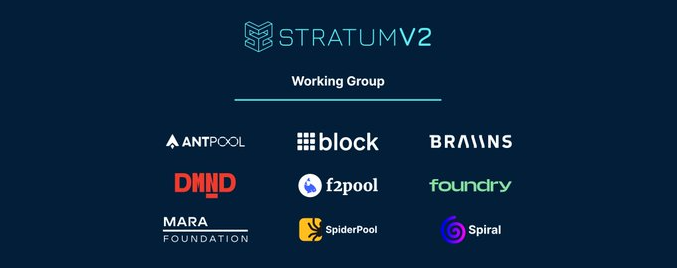
The Bitcoin mining pools Foundry, AntPool, F2pool, Block, MARA pool, SpiderPool and Demand Pool joined the Stratum V2 (SV2) Working Group on May 7, the consortium that develops the open standard of the communication protocol between pools and miners, as explained by the SV2 team.
The MARA Foundation described joining the Working Group as “a huge step towards the decentralization of mining” and they held that “this working group will help accelerate the adoption of the Stratum V2 protocol, an open standard that brings efficiency improvements, security with end-to-end encryption, and greater privacy to the entire ecosystem.”
In the same line, Foundry USAthe pool that contributes the most hashrate of all the pools (almost 32%), believes that “StratumV2 is helping build a faster, safer and more decentralized Bitcoin mining standard ».
The statement from the SV2 team and the Working Group expressed that keeping SV2 as a public and neutral specification allows the ecosystem to focus on miner efficiency, privacy, security and autonomy.
Stratum V2, launched in 2022 as reported by CriptoNoticias, is a protocol that regulates how mining pools coordinate work with individual miners.
SV2 incorporates other improvements compared to the SV1 version. For example, with the end to end encryption protects communication between the miner and the pool, preventing third parties from intercepting or manipulating data in transit. That also limits the pool’s visibility into miner activity, an advance in operational privacy that Stratum V1 did not offer.
In terms of efficiency, SV2 reduces latency in work transmission between pool and miner. In Bitcoin mining, where fractions of a second determine whether a block is won or lost to a competitor, this improvement has a direct impact on profitability.
A breakthrough for the decentralization of Bitcoin mining?
One of the main features of Stratum V2 is called job negotiation (job negotiation) and allows each miner build their own block templatethat is, you choose which transactions to include, instead of receiving them predefined by the team that manages the pool. Today, most pools centralize that decision.
Joining the Working Group, however, does not necessarily imply activating that function. Of the seven platforms mentioned, only Demand Pool has Job Negotiation enabled by defaultalthough joining the Working Group could be a preview that the rest could follow this path.
In contrast, a mining pool could adopt SV2 and continue delivering closed templates to its miners, without giving them control over the composition of the block.
From that distinction, Bitcoin Mechanic, a miner of the OCEAN pool, pointed out when questioning the decentralizing narrative of the announcement. According to his analysis, the fact does not improve decentralization as long as the labor negotiation does not guarantee the miner real freedom to build your own blocks without requiring authorization from the pool.
In such a way, SV2 does not decentralize the Bitcoin network on its ownbut rather it is an infrastructure that offers advanced options, but its impact depends on how each pool chooses to implement them.