
In Florianópolis, a city in southern Brazil known both for its colonial mystique and its thriving technology sector, a proposal is being developed that seeks to redefine the limits between state management and private innovation.
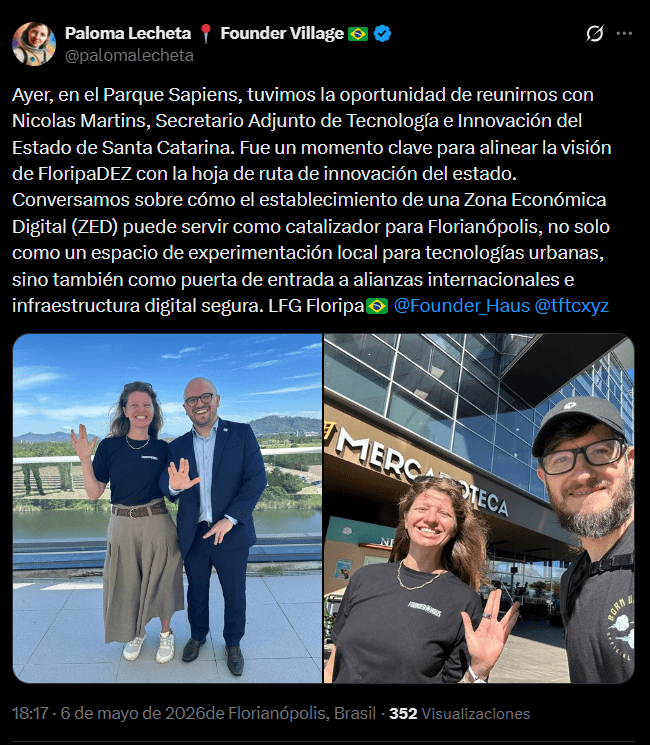
The idea is promoted by Paloma Lecheta, founder of Founder Village, and Nicolas Martins, deputy secretary of Technology of Santa Catarina, who met recently at Sapiens Park to discuss the future of FloripaDEZ. It is about a Digital Economic Zone (ZED) projected to act as a testing laboratory for cryptocurrencies on Brazilian soil.
The meeting responds to the fact that Brazil is one of the global leaders in the adoption of cryptoassets, but continues to lose talent and capital to jurisdictions with more flexible regulations.
For the promoters of the project, among whom is the technologist Nima Kaz, FloripaDEZ is a strategy to retain professionals in areas such as artificial intelligence and energy infrastructure, transforming the consolidated technical base of the city into a pole of attraction for foreign direct investment.
A governance model in favor of cryptocurrencies
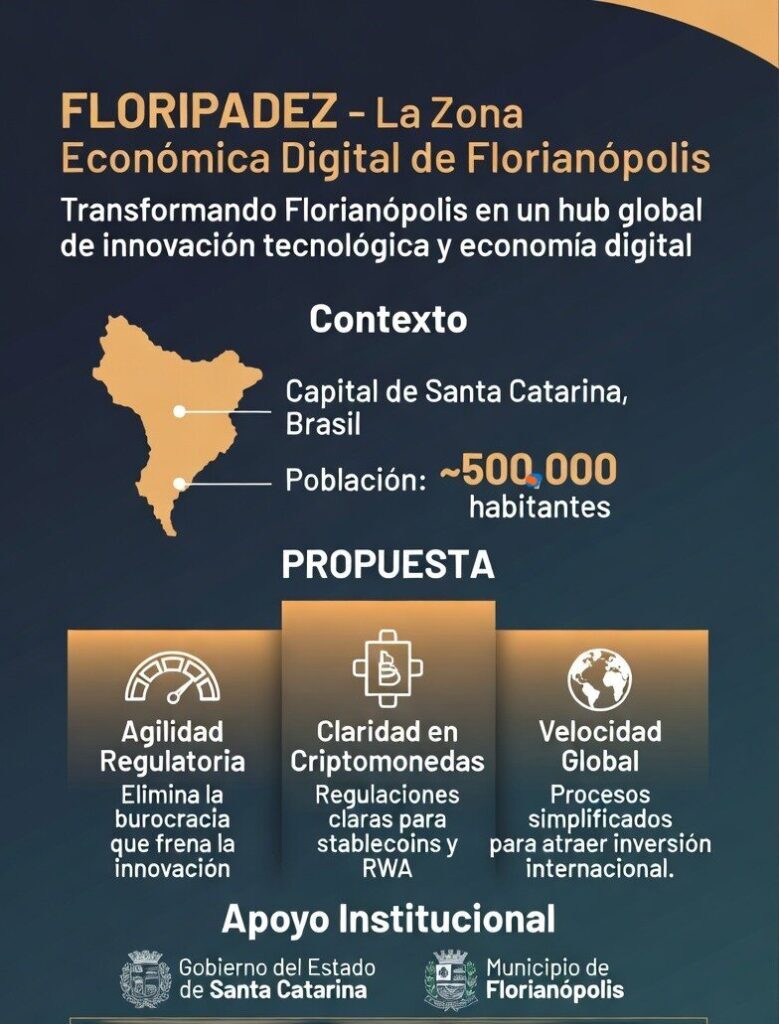
The central technical proposal is the creation of a sandbox regulatory. This mechanism would allow companies to experiment with stablecoins and the tokenization of real assets (RWA) under adapted supervision, different from conventional administrative processes.
Unlike bitcoin citadels, which are typically community organizations focused on the circularity of the currency created by Satoshi Nakamoto, FloripaDEZ aims to integrate digital assets into a broader state economic development model.
“It was a key moment to align FloripaDEZ’s vision with the state’s innovation roadmap,” said Lecheta, who maintains that regulatory agility is essential for the creation of technology to be the center of economic activityreducing bureaucratic management times.
However, the project It develops in a national context where the Central Bank of Brazil is tightening the authorization, governance and supervision requirements for cryptoasset service providers.
Additionally, analysts from the Inter-American Development Bank (IDB) and others often point out that zones with differentiated rules must balance regulatory agility with adequate control standards to protect investors and maintain financial stability.
Brazil’s history with incidents linked to digital assets forces the State to find a balance between promoting innovation and protecting against possible financial abuses. The reference to models such as Próspera, in Honduras, serves as reminder of the legal and political tensions that arise when the autonomy of a digital zone attempts integrate into the sovereignty of a national framework, a fact documented by CriptoNoticias.
At the moment, FloripaDEZ is in a phase of institutional articulation and public consultations. Its progress will depend on the ability of private actors to convince authorities that a special regulatory framework is, indeed, a safe path to growth.
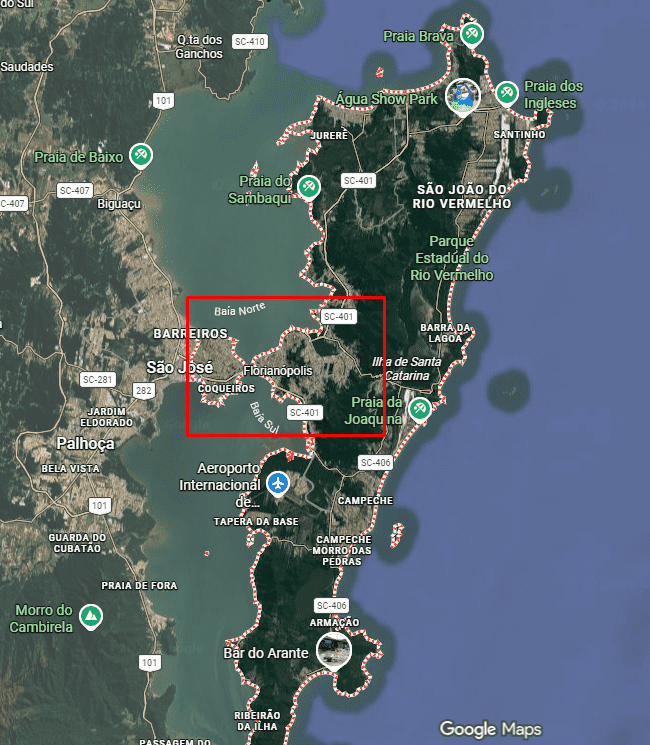
Far from being an exceptional case, the proposal falls within a global rise of special economic zones and the so-called ‘free cities’, models that seek to debureaucratize growth. The project thus reflects a trend in emerging economies that see digital infrastructure, and autonomous territorial frameworks, as the definitive tool to accelerate economic development.
In that sense, if FloripaDEZ manages to formalize, it could validate the thesis that local talent only requires a regulatory environment on par with technological speed to flourish.
However, it remains to be seen whether the institutions are prepared to integrate these experimental models permanentlyor whether the project will find a ceiling in the complexity of traditional legal structures. In the end, the question is whether innovation can be contained in a delimited space or if its nature requires a transformation that the system has not yet fully assimilated.