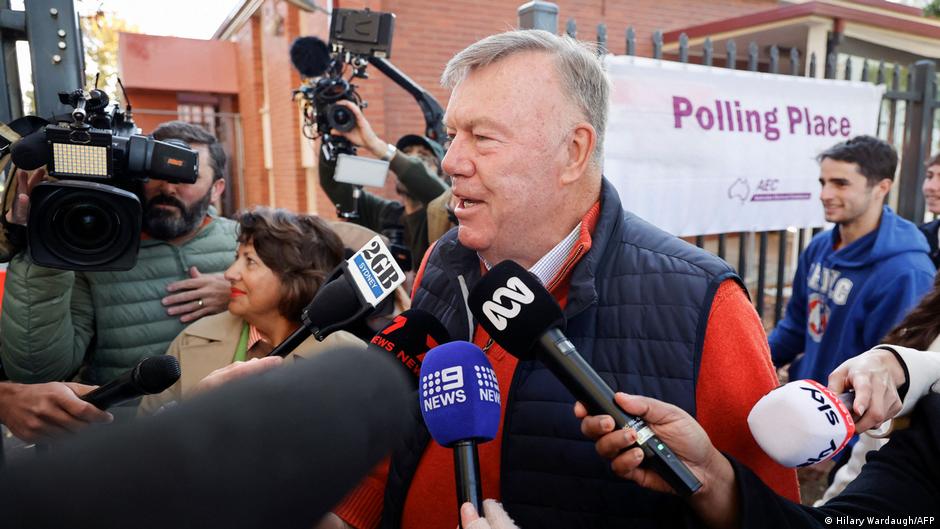
Australia’s far-right One Nation party won a key by-election on Saturday in a rural seat that has been held by traditional conservatives for more than half a century.
Preliminary results showed that its candidate, David Farley, was on track to win 59.1%, defeating the incumbent centre-right Liberal Party by a wide margin.
This is the first time One Nation has won a lower house seat in the federal parliament.
Farley, a former agribusiness executive, was the clear favorite in the contest for Farrar, a large farming constituency about 550 kilometers (340 mi) south of Sydney.
“We’re like masons with chisels and hammers, and we’re carving the letters into Australian democracy,” Farley told cheering supporters.
“A nation is at the end of its beginning – we are passing through the tipping point,” he said, promising to reduce the cost of living.
Why was he the hero of the by-election?
The seat became vacant when former Liberal leader Sussan Ley resigned in February as her party fell in the One Nation polls.
According to the ABC, Farley’s main rival, popular independent Michelle Milthorpe, was trailing in second place with about 40%, while Liberal candidate Raisa Butkowski received about 11% of the vote.
The ruling Labor Party did not contest the seat, which is considered unwinnable for a left-leaning candidate.
One Nation’s victory does not affect Labour’s parliamentary majority, which still has 94 out of 150 seats in the lower house.
What is a nation?
One Nation was founded nearly 30 years ago by Pauline Hanson, a long-time advocate of cutting immigration. He is one of One Nation’s four senators in the upper house.
Hanson said the result was “a win for Farrer but a big win for the nation.”
Liberal leader Angus Taylor said the by-election results held some “tough lessons” for his party, which is battling for second place with One Nation in the national polls.
Farrer’s result comes amid a surge in support for far-right parties globally. Britain’s ruling Labor Party suffered a major loss of seats in council elections this week.
Meanwhile in Germany, the far-right Alternative for Germany (AfD) is taking 41% of the pre-election vote in the eastern state of Saxony-Anhalt, potentially winning an outright majority in a regional parliament for the first time.
Edited by: Carl Sexton