When Friedrich Merz came to office in May 2025, corporate boardrooms were filled with hope. As soon as he takes over as chancellor, the leader of the conservative Christian Democratic Union (CDU) promised nothing less than an “economic turnaround.” He declared that under his leadership every political decision would be preceded by the question: Will it benefit Germany’s economic competitiveness?
It certainly seemed plausible. After all, before returning to politics, Merz had made his fortune in the business world. For four years, he served as chairman of the supervisory board of BlackRock in Germany, and he wrote the book “Dare to Embrace More Capitalism.”
As a candidate for chancellor, Merz promised that Germany would no longer have “leftist politics”, and soon after taking office, he called for greater economic efficiency. “We will not be able to sustain this country’s prosperity by relying solely on the four-day workweek and work-life balance.”
In mid-May 2025, entrepreneurs and managers celebrated his statement during the Economic Day, an event organized by the Economic Council of the CDU. With approximately 13,000 members of the business community, the Economic Council is not a party committee. It is a lobbying association that represents business interests and sees itself as an advisor to the CDU. From 2019 to 2021, Friedrich Merz himself served as Vice-President of the Economic Council.
Germany ‘under existential threat’ as center of industry
From an economic perspective, Merz has failed in his first year in office, delivering nothing of what he promised.
The Federation of German Industries reported: “Hardly any of the urgently needed structural reforms announced have been implemented. There is no overall plan of concrete reforms to boost growth and competitiveness.” It said Germany’s position as a center of industry was “under existential threat.”
The Association of German Chambers of Industry and Commerce, which represents mainly small and medium-sized enterprises, says: “Germany is now seen as a country with a complex and expensive bureaucracy. In many other countries, the conditions for investment and innovation are much better.”
Jörg Dietrich, president of the German Confederation of Skilled Crafts, spoke of “reform disappointment rather than economic recovery” in media interviews. The stress on everyday business tasks “tends to persist, in some cases even increase, but certainly not decrease.” A year after the new government took office, initial hopes for economic recovery have turned to “palpable disillusionment and, in many places, palpable frustration” across the skilled trade sector.
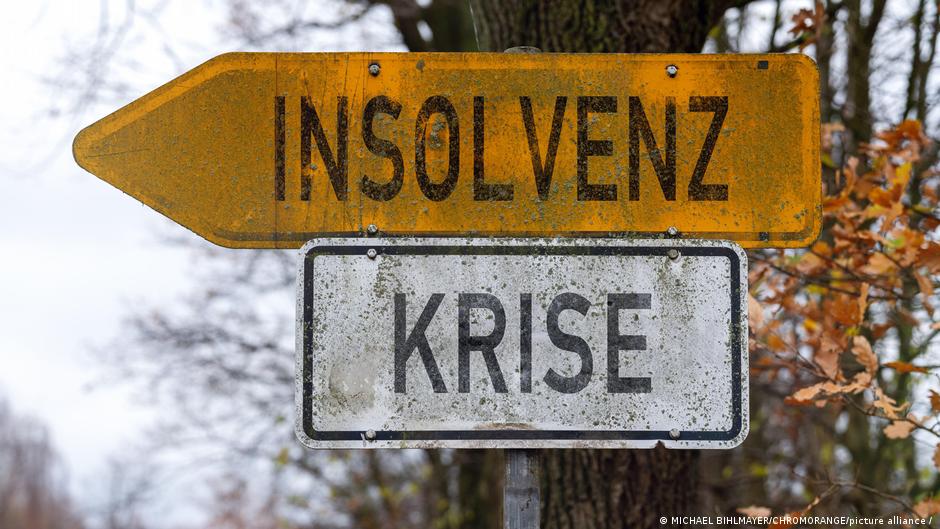
In fact, the last time so many bankruptcies were reported in Germany was more than ten years ago, following the financial and economic crisis. The economy is stagnant and growth is nowhere in sight. Confidence in the German economy is at its lowest level since the peak of the COVID-19 pandemic in May 2020.
Anniversary celebrated with lukewarm reception
Economic researchers at the IFO Institute regularly survey the level of confidence in the business community, and reports indicate that confidence is declining across all sectors. Expectations are pessimistic, largely due to the war in Iran and the ongoing crisis in the Middle East. Oil prices remain high, and jet fuel is also becoming scarce. The blockade of the Strait of Hormuz is disrupting supplies and increasing inflation in many areas. For now, any hopes of a rally are gone.
Chancellor Merz is well aware of all this, as is his widespread sense of despair. “I know the mood in the country is bad, in fact, it is extremely bad,” Friedrich Merz said at this year’s Economic Day in early May 2026. At the same place where they were celebrated a year ago. This time the reception was cold, the applause was slow. “I accept this state of mind. I accept it, and I take it very seriously.”
“Since World War II, there has probably never been a more challenging time for Germany’s federal government, society and economy,” he told the Chamber of Industry and Commerce in early May. Yes, he acknowledged, a lot still needs to change in Germany, and he said he understands the critical voices and impatience within the business community. “I also understand the widespread desire to do something today so that the problem can be solved tomorrow.” But what has been built over years and decades cannot be destroyed in the blink of an eye. “You don’t change a country in a week or a month.”
This is especially true when you have to rule in a coalition. As a partner of the centre-left Social Democratic Party (SPD), the CDU/CSU often finds itself at odds on issues such as the economy, labor and social policy. “Social Democrats often like to think in terms of larger groups, whereas we tend to think in terms of smaller, productive groups. Social Democrats believe more in redistribution. We believe more in the idea that you have to generate wealth before you can redistribute,” Merz told a CDU economic conference.
The Chancellor sees no viable alternative to a coalition with the SPD. He has also ruled out new elections. “We are committed to being successful with the coalition we have now,” he said at an Economy Day event. “I am determined to lead this alliance to success.”
But at least people believe Merz can do it. The latest ARD DeutschlandTrend survey shows that voter confidence in the rapid economic turnaround has declined. It appears the business community feels the same way. The Federation of German Industries notes: “If companies are investing at all, they are mainly investing abroad.”
This article was translated from German.