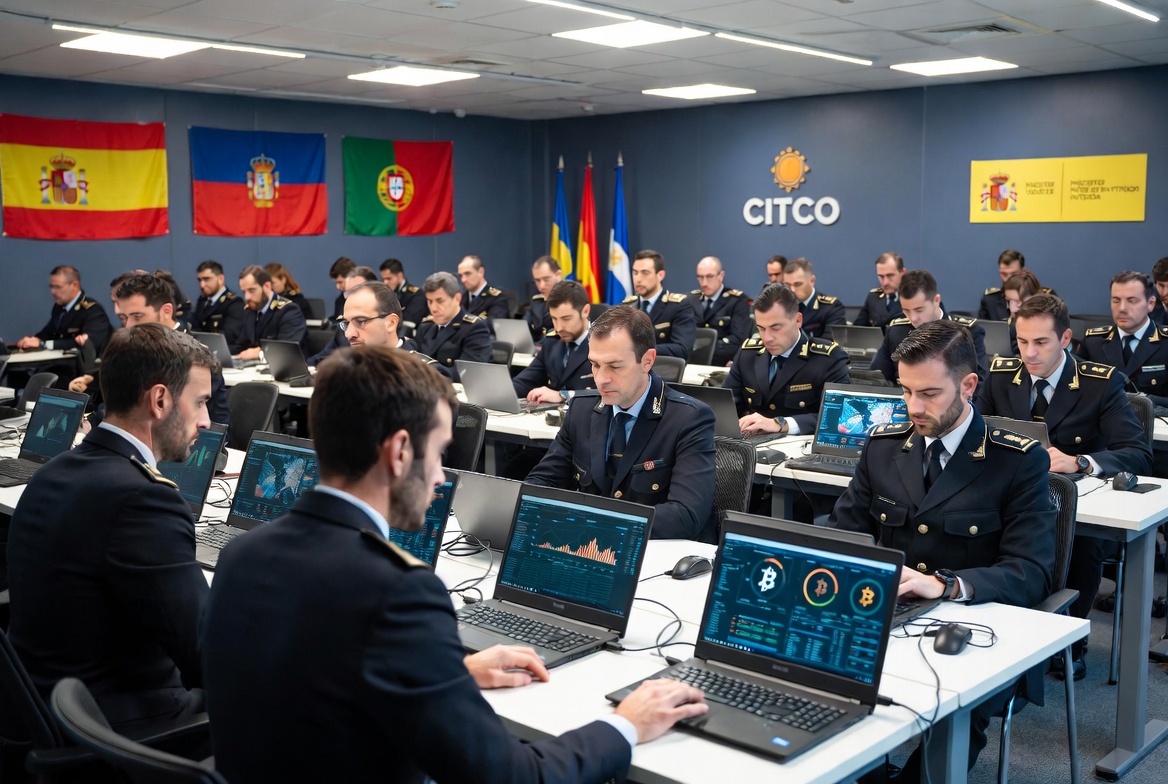
The Ministry of the Interior of Spain launched this Monday the ‘I Advanced International Course on Traceability and Seizure of Digital Assets’, an ambitious training initiative organized by the Intelligence Center against Terrorism and Organized Crime (CITCO).
The main objective is to strengthen the capacities of the security forces in the fight against illicit finances linked to organized crimeas reported on May 11.
The Secretary of State for Security, Aina Calvo, presided over the opening ceremony of the program, which brings together thirty top-level agents from Spain, Andorra and Portugal.
These specialists belong to operational units dedicated to combating organized crime, terrorism, tax fraud and money laundering.
According to the official statement from the Ministrythe course seeks to “provide them with the most advanced resources and knowledge” to anticipate emerging threats in the digital field.
During the training days, participants will receive specialized training in the latest technological trends related to cryptocurrencies, blockchain, transaction analysis and advanced digital asset tracking and seizure techniques.
The training has the collaboration of TRM Labs, one of the companies linked to the so-called “blockchain intelligence”, and the multinational company Telefónica.
It is important to remember that TRM Labs maintains an initiative in conjunction with Tether (the issuer of the USDT stablecoin) and TRON called “T3 Financial Crimes Unit (T3 FCU)”. This entity has frozen, until October 2025, more than $300 million in crypto assets, as reported by CriptoNoticias.
“Providing them with the most advanced resources to combat organized crime is a priority,” Aina Calvo stressed during the inauguration. The person in charge highlighted the need for public institutions to stay one step ahead in the face of increasingly sophisticated, transnational and technologically advanced crime.
According to a previous report by TRM Labs, the use of cryptoassets by criminal groups has experienced an increase in recent years. The mafias use them as main tool for moving funds opaquelyfinance illicit activities and launder profits from drug trafficking, cybercrimes, human trafficking and other organizations.
Despite this historical record, illicit transactions still represent less than 1% of total transaction volume in cryptocurrencies, something that the research firm Chainalysis has verified.
This initiative is part of the Ministry of the Interior’s general strategy to modernize the tools and capabilities of the State Security Forces and Bodies in the face of the new challenges of complex crime in the digital environment. International cooperation with neighboring countries such as Andorra and Portugal also reinforces the joint approach against cross-border organized crime.