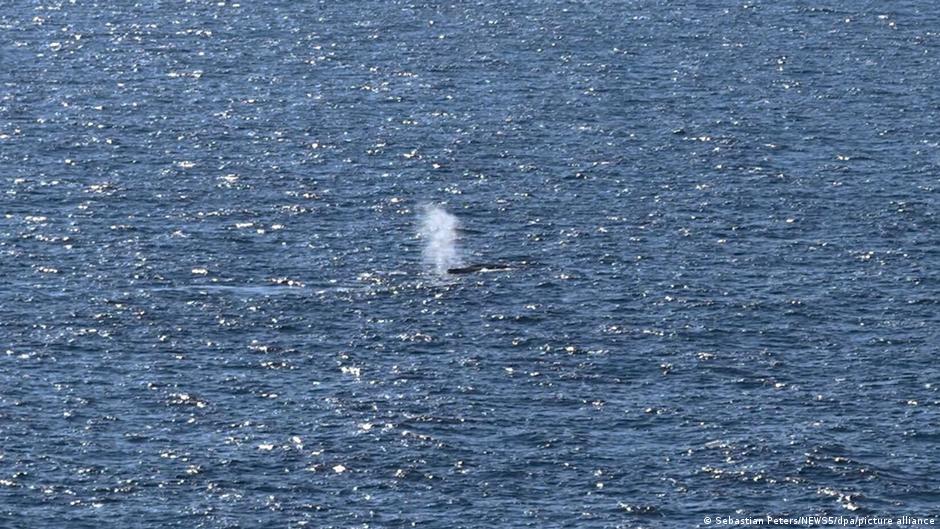
A whale has reportedly been spotted near the Danish island of Anholt, with the local Danish Environmental Protection Agency believing it to have been dead for some time, according to Danish media.
The animal is believed to be a stranded humpback about 10 to 15 meters (about 33 to 50 feet) long, leading to speculation whether it could be Timmy, a humpback whale, Danish media reports.
It was spotted about 75 meters off the coast of Anholt. Officials said they planned to retrieve the whale on Friday.
For several weeks, Timmy remained stranded on the German coast after several successful attempts to free himself, until a final rescue operation brought him to the North Sea.
What do we know about Timmy the Whale?
The young humpback, nicknamed Timmy by German media, was first spotted swimming in the Atlantic Ocean on March 3, far from its natural habitat, off Germany’s Baltic coast.
A series of stranding incidents followed, with his health deteriorating as he remained in shallow water.
German authorities gave up the rescue of the 12-meter marine mammal, believed to be 4 to 6 years old, in early April.
But after public pressure, a private company convinced local authorities to come up with a final rescue plan, which involved placing the whale on a barge and towing it towards the North Sea, after initial attempts using inflatable cushions and pontoons had proved unsuccessful.
What did Timmy’s final rescue mission involve?
The young animal survived the day-long journey from the German coast until it was abandoned about 70 kilometers (43.5 mi) off the coast of Denmark in early May.
Some scientists warned that this latest effort might be too much for the animal, pointing out that its health had been badly damaged after being stranded several times and living in shallow water for almost two months.
Commenting earlier on the possibility of whales stranding on Danish shores, the Danish Environment Ministry said it was not planning any rescue efforts, noting that beaching is a “completely natural phenomenon” and that whales “should not be rescued or disturbed by human intervention.”
Edited by: Shawn Sinico