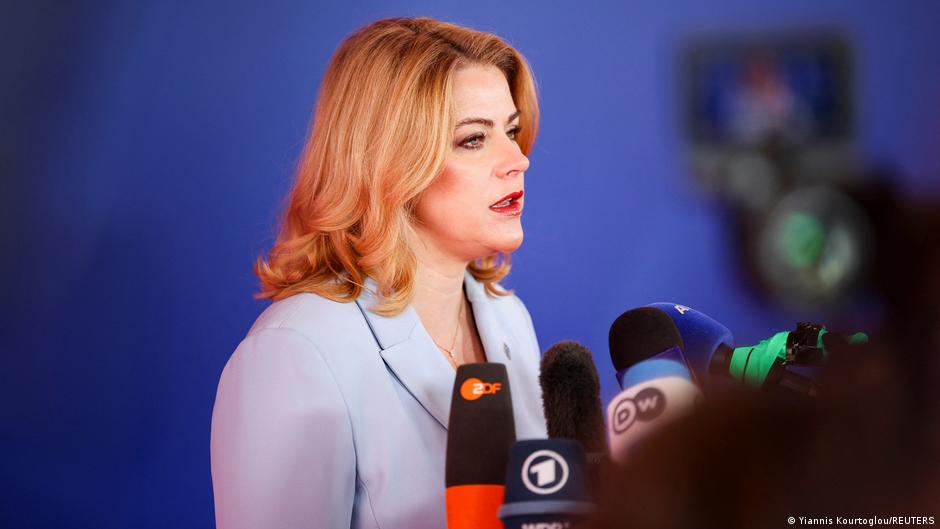
Latvian Prime Minister Ivica Silena said on Thursday she was resigning in reaction to the collapse of her coalition government.
“I am resigning, but I am not giving up,” Silena said in a televised statement.
Silena, of the center-right New Unity party, was left without a ruling majority in parliament until Wednesday, when the left-wing Progressive Party said it was withdrawing its support.
This followed the removal of former Defense Minister Andris Spruds, a member of the Progressive Party, over his handling of incidents of stray Ukrainian drones flying from Russia into Latvia. Two major Russian oil facilities in the Baltic are located near the borders of Estonia and Latvia. The flight path from Ukraine runs along Latvia’s eastern border; Drone defense systems can disrupt the navigation of vehicles.
What did Silena say?
The Prime Minister issued similar comments online about his resignation, blaming his political opponents for the government crisis.
Silina wrote, “My priority now and has always been the well-being and security of the Latvian people. Parties and coalitions change, but Latvia remains.” “At present, political jealousy and narrow partisan interests have taken priority over responsibility. Seeing a strong and professional candidate for the post of Defense Minister, political talkers chose crisis, not solution.”
Silena said he always “behaved responsibly” towards his coalition partners and “kept very different political forces together, because my job was to make sure the country moved forward.”
Silina had forced Spruds to resign, saying that Latvia’s drone defense was not deployed quickly enough to neutralize the threat. He himself assumed the role of Defense Minister on an interim basis.
Progressives argued that Cilla had used Spruds as a scapegoat for broader failures.
One of the stray drones caused a fire at a disused oil storage site in eastern Latvia. These incidents have raised questions on the country’s defense preparedness.
what happens next?
Latvian President Edgars Rinkevics, who is tasked by the constitution with selecting the government leader, will meet with representatives of all parliamentary parties on Friday.
The three-party alliance was already under tension over various policies.
Silena’s centre-right New Unity Party was the largest in the coalition with 25 seats, followed by the agrarian ZZS Union of Greens and Farmers with 16 seats. The Progressives had only nine seats in the Parliament of Riga, but all of them still needed at least one additional vote from outside the main coalition to give the government a slim majority.
With elections already scheduled for October this year, the controversy appears to have led to an early start to the campaign.
Edited by: Roshni Majumdar