Hyperliquid stops relying on a niche solution to integrate into the Coinbase ecosystem.
The user migration process from USDH to USDC promises to be “problem-free.”
Coinbase, the largest cryptocurrency exchange in the United States, has announced this May 14, 2026 its official integration with Hyperliquid to make USDC stablecoin its main aligned trading asset (AQA, for its acronym in English).
This measure represents a structural change in the operation of Hyperliquidthe network of trading most prominent on-chain in the market, by centralizing its capital flow in a regulated asset with high global liquidity.
The transition implies, according to a release from Coinbase, which This company will assume the role of official treasury provider in Hyperliquid, displacing the previous native asset, USDH. That other stablecoin will be deactivated gradually following a brand asset acquisition agreement between Coinbase and the firm Native Markets.
As of this announcement, USDC will not only function as a common stablecoin within the network, but It is established as the fundamental layer for liquiditycollateral and pricing of trading pairs.
According to data reported by Coinbase, USDC already has a massive presence on Hyperliquid, reaching approximately $5 billion in total supply. This represents 100% growth compared to the previous year.
By becoming the implementer of the AQA framework, Coinbase seeks – according to the statement – to eliminate friction in the flow of capital. In an environment that operates 24 hours a day, Using USDC would allow instant transfers and reduce the need for multiple asset conversions. Thus, it is expected to improve efficiency for institutional and retail traders.
Jeremy Allaire, CEO of Circle (issuer of USDC), pointed out In this regard, in his opinion, open and programmable digital dollars are what will drive the future of global finance, positioning Hyperliquid as a key testing ground for this thesis.
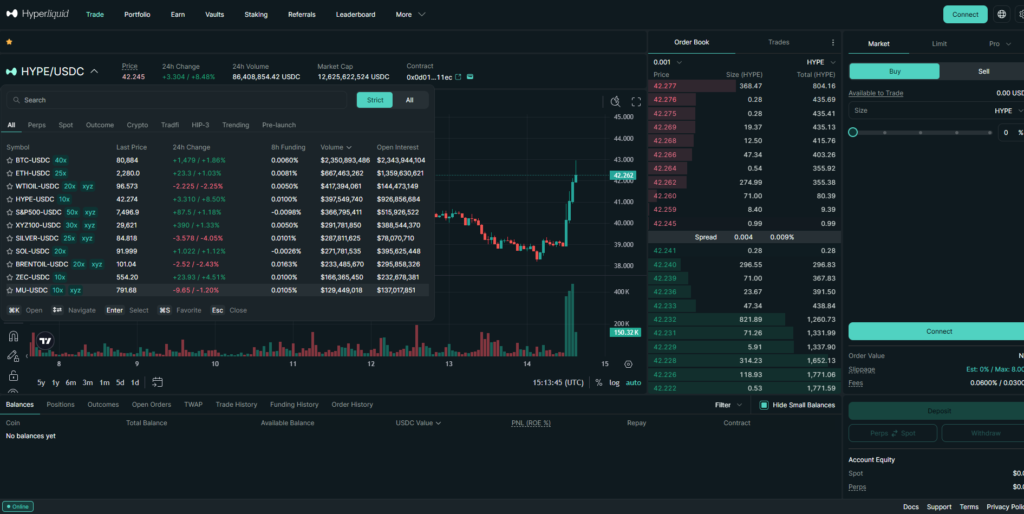
The change is not merely nominal
To date, the Hyperliquid network used USDH as its integrated listing asset. This token was developed by the company Native Markets under the original concept of AQA, designed to create a direct synergy between the growth of the stablecoin and the exchange protocol.
Native Markets’ strategy was to offer a stablecoin that prioritized the needs of the Hyperliquid ecosystem. However, with the rapid growth of the network and the need for deeper integration with global capital markets, the infrastructure has evolved.
The change introduces a technical improvement called AQAv2. Under this new framework, treasury providers, in this case Coinbase, They will share the vast majority of the revenue generated by the performance of USDC reserves with the Hyperliquid protocol. This revenue stream is intended to strengthen Hyperliquid’s Assistance Fund.
In this way, Hyperliquid not only obtains a more liquid and globally accepted asset, but also aims to ensure a sustainable revenue model that directly benefits the development of the protocol.
What will the asset migration look like?
For current users who own USDH, A migration process has been established that is described as “problem-free”. Native Markets and Coinbase have confirmed that USDH remains fully supported at all times. Users will be able to redeem their tokens for USDC through the official dashboard at USDH.com.
USDH markets will remain functional for a limited time, but will progressively close. The completion of these markets will be coordinated with the implementers of the HIP-3 and HIP-1 improvement proposals to ensure that the migration of order books to USDC is completed without affecting user operations.
Native Markets will continue to facilitate secondary liquidity in the USDH/USDC trading pair throughout the transition period. Additionally, collateral reserve certifications will continue to be published regularly to ensure transparency until the last USDH token is removed from circulation.
With this movement, Hyperliquid moves away from reliance on niche solution to fully integrate into Coinbase ecosystem.
HYPE price rises
As a result of this novelty, the price of hyperliquid (HYPE)native governance token of the eponymous platform, has had a rise.
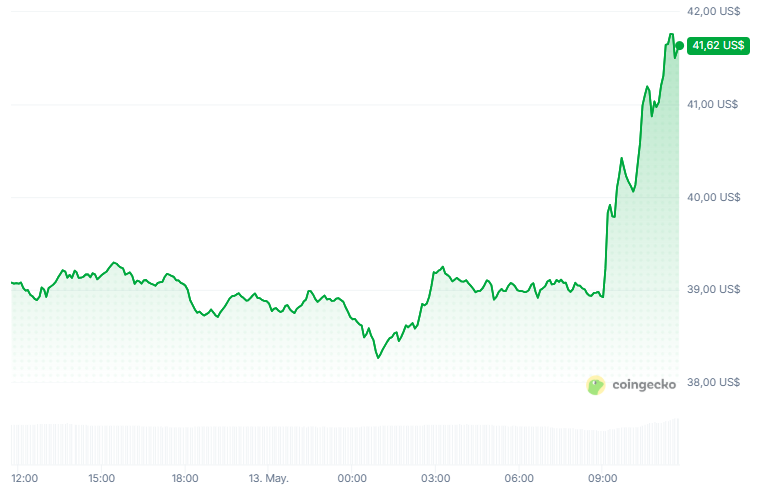
The graph above shows that HYPE had a rise of 6.5% in the last hours, positioning itself at $41.62 at the time of this publication. This momentum is also motivated by other developments, for example, the recent launch of the first HYPE ETF in the US market, as reported by CriptoNoticias.
Not everything is optimism
But, it is worth mentioning that the decision has not been without controversy and debate. On the social network X, the trader Akira Noma wrote with some irony:
Hyperliquid spent a year explaining why USDH is superior to USDC. Today, USDC is the official listed asset and USDH is disappearing. The optimistic interpretation is that ‘the dominant operators came to the table’. The honest interpretation is that the dominant traders simply bought the table. What a good time for decentralization!
Akira Noma, trader.
Another X user, under the pseudonym @Smallro_man, commented: «A governance proposal to create a native stablecoin for Hyperliquid was a disaster and ended up using USDH. Now a centralized company that didn’t even enter this competition buys everything. “It’s not very serious.”
Also Frank Chaparro, director of GSR, pointed out that, in his opinion, “Hyperliquid is progressively eroding the centralized exchange market.”