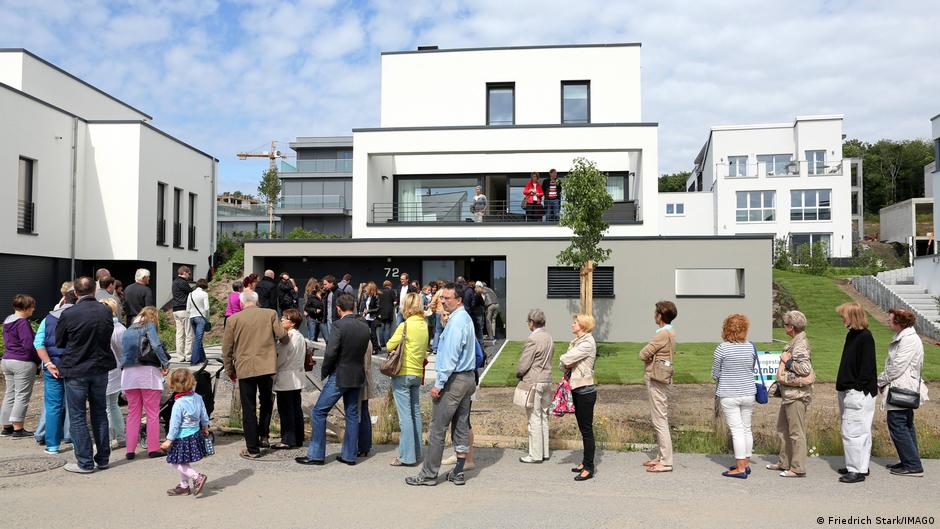
Looking for a three or four room rental apartment in Berlin? No problem for top earners. In May 2026, a major rental platform is listing a unit of more than 100 square meters (1,076 sq ft) for more than €4,000 ($4,680) per month, including heating and other additional costs. The lowest offer is less than €1,000 for 80 square meters – but that unit is in need of renovation and is located on the outskirts of the city.
It is currently almost impossible for renters to find an attractive and affordable apartment in a good location in large parts of Germany. This is especially true in both metropolitan areas and economically strong rural areas.
Nationwide, there is a shortage of about 1.4 million apartments in the lower and middle price ranges, and this limited availability, combined with high demand, is driving prices up.
Germany: a country of pensioners
The population of Germany in 2025 was approximately 83.5 million. Since 1990, it has increased by 3.7 million – an increase almost entirely driven by immigration. At the same time, the number of single-person households has increased. Yet housing supply has not kept pace with these developments.
More than half of Germany’s population lives in rented houses. Tenant-protection laws protect existing contracts relatively well, but the situation is different when it comes to new rentals. According to the latest annual report of Expert Council on Integration and Migration (SVR)Immigrants and people of immigrant background are disproportionately disadvantaged in this process.
The nine-member Council is devoting its work this year to the theme “Scope for development: immigration, housing and participation in society”.
SVR President Winfried Kluth, migration researcher and professor of public law at the University of Halle-Wittenberg, pointed out during the presentation of the report in Berlin that the data evaluated by the Expert Council revealed strong differences between people with and without an immigrant background.
Newcomers often live in small – and often overcrowded – apartments, and are much less likely to be homeowners. More than 50% of people with no migration history live in owner-occupied housing, while less than 33% of those without migration history live in owner-occupied housing. Newcomers to Germany also have to pay a large portion of their income on rent.
Racism and discrimination in the rental market
These challenges are compounded by structural disadvantages: low incomes and large household sizes are key factors. But migration-specific barriers also play a role, as insecure residence status, weak social networks and language barriers make finding housing even more difficult. Refugees typically move to socially deprived areas, where rents are lower or where support networks may already exist.
Additionally, many asylum seekers remain in public housing due to lack of alternatives – even if they are legally allowed to leave. Deputy SVR chair Birgit Glorious said discrimination is another disadvantage people with migration histories face in the housing market: “This also includes racial discrimination, as studies have shown.”
In early 2026, Germany’s Federal Court ruled that a woman who was denied an appointment to view an apartment because of her Pakistani name was entitled to €3,000 in compensation. Born in Germany, she was initially rejected.
To document the discrimination, she contacted the agent again, using different German-sounding names – and immediately received appointments. The woman from Hesse showed that she was treated differently based only on her name.
Immigrants face greater risk of homelessness
To counter discrimination in the housing search, the Expert Council proposes to anonymise the first stage of the application process – usually the request for a viewing appointment. They argue that this will prevent applicants from being filtered based on their name or other personal details.
Under the current circumstances, an increasing number of people are unable to secure their housing. According to the expert council, this has an adverse effect on non-German citizens. In 2024, about 532,000 people will be homeless – more than double the number from two years ago. 86% of those held in shelters did not have a German passport.
Immigrants and their descendants in Germany are more evenly spread across the country than in many other countries, according to the report. “However, social isolation has increased – that is, the clustering of people within specific income groups,” said Kluth, president of the SVR.
“The rich and the poor live together,” he said. “It is also associated with increased immigration into poorer neighborhoods and municipalities, as newly arrived immigrants are, on average, worse off economically – especially in the early period after their arrival.” Poverty and immigration are becoming increasingly interconnected.
This will have consequences – both socially and economically. Jobs are available in economically strong areas, yet affordable housing is scarce. In contrast, housing is cheaper in structurally weaker areas, but jobs and training opportunities are lacking.
This mismatch acts like a blockade: people can’t move to where work is available, and employers can’t find skilled workers because those individuals can’t secure housing. “International experts now say that aid for safe housing is an urgent need,” Kluth said.
city as a focal point
Immigration is highly concentrated in cities. About 60% of people from immigrant backgrounds live in urban areas. In major cities, their share in the population can exceed 40%. When poverty and immigration overlap in disadvantaged neighborhoods, social tensions can arise.
However, the Expert Council stressed, this is not inevitable. Neighborhoods with high proportions of immigrants are not inherently detrimental to integration.
What matters most for successful integration are factors such as local infrastructure, educational opportunities and social networks. Yet these are often lacking – with serious consequences, especially for young people.
Where they live can play a big role in their future, as is particularly visible in the school system: children and adolescents from immigrant backgrounds often attend schools where they are largely intermingled, and these schools are less equipped. This further limits their chances of progress.
space for political action
In the report, researchers recommend expanding housing supply, especially in the area of social housing. Neighborhoods with special support needs should be strengthened in a targeted way – for example, through better funding for child care centres, schools and social institutions.
Employers are also called upon to take responsibility, for example, by actively helping international skilled workers secure housing, or by collaborating with property companies or participating in housing projects.
This article has been translated from German.