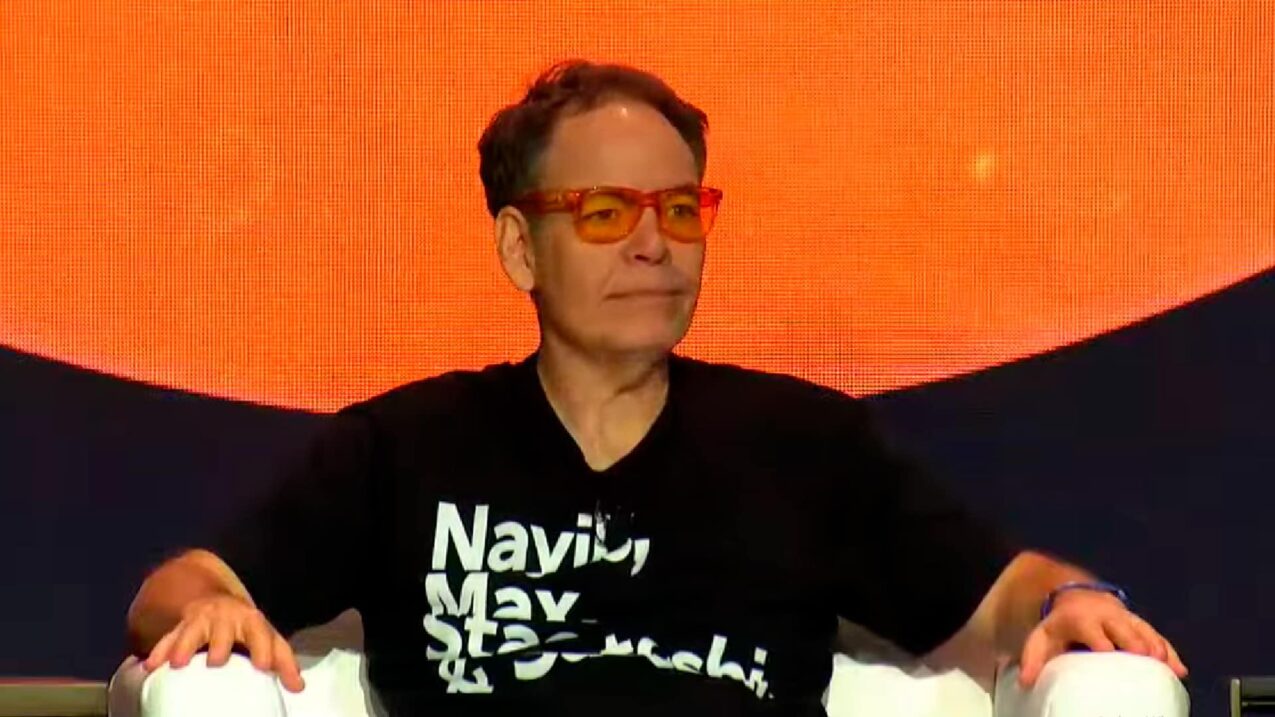
Max Keizer, one of the biggest defenders of Bitcoin worldwide and advisor to Salvadoran President Nayib Bukele, assures that the traditional way of measuring the value of bitcoin (BTC) is obsolete.
For him, it no longer makes sense to evaluate it in dollars, because the dollar—like the rest of fiduciary currencies— loses purchasing power rapidly compared to digital assets.
In a recent interview with Diario El Salvador, Keizer answered a question about their price projections with a counterquestion: “Are you still measuring bitcoin in dollars?”
He stated that “everything goes to zero against bitcoin”: stocks, bonds, commodities, real estate and art. According to his vision, in an environment of persistent global inflation, Bitcoin consolidates itself as “the only commodity perfect”.

This position is supported by current macroeconomic data. Annual inflation in the United States reached 3.8% in April from 2026, the highest level since May 2023driven mainly by the rise in energy prices.
Keizer maintains that interest rates not only will not fall, but could rise, contradicting the expectations of many analysts and entities such as Bank of America, which delayed its cuts forecasts of the Federal Reserve until the second half of 2027.
This is not a new position for Keiser. In previous statements published by CriptoNoticias, he has consistently repeated that Bitcoin represents a protection tool against monetary devaluation and a profound civilizational change.
He has praised El Salvador’s strategy on multiple occasions, highlighting the combination of legal adoption of Bitcoin, the Bitcoin Office and the use of artificial intelligence as a model of financial sovereignty and economic growth for other Latin American countries.
Keizer compares the current Bitcoin price volatility to the wings of an eagle: they constantly rise and fall, but the bird always remains an eagle. Its central message is that Bitcoin does not compete against the dollar on the same boardbut is progressively displacing the fiduciary system.
In previous interviews he has predicted prices significantly higher for this cycle and has warned that expansive monetary policies accelerate the mass migration of wealth towards Bitcoin.
As the regulatory landscape evolves—with President Donald Trump’s recent executive order to integrate digital assets into the U.S. financial system—Keizer’s reflections invite a radical change in mindset.
For his followers, continuing to measure bitcoin in dollars is equivalent to evaluate gold with seashells: a metric of a financial system in transition to a new one.
Keizer maintains that nations that adopt Bitcoin early and strategically will gain significant competitive advantages in the coming decades.
His vision reinforces the idea that bitcoin is not just an investment asset, but a store of superior value in a world where fiat currencies continue to lose strength. This narrative has gained increasing attention among investors, governments and analysts seeking alternatives to global macroeconomic uncertainty.
As the global financial system evolves with greater integration of digital assets, Keizer’s words become more relevant. For him, Bitcoin will consolidate itself as the dominant store of value of the 21st century.
Those who understand this transition early, like El Salvador, according to Keiser, will gain a strategic advantage, while continuing to measure bitcoin in dollars will become increasingly obsolete in the face of the massive migration of wealth towards the digital asset.