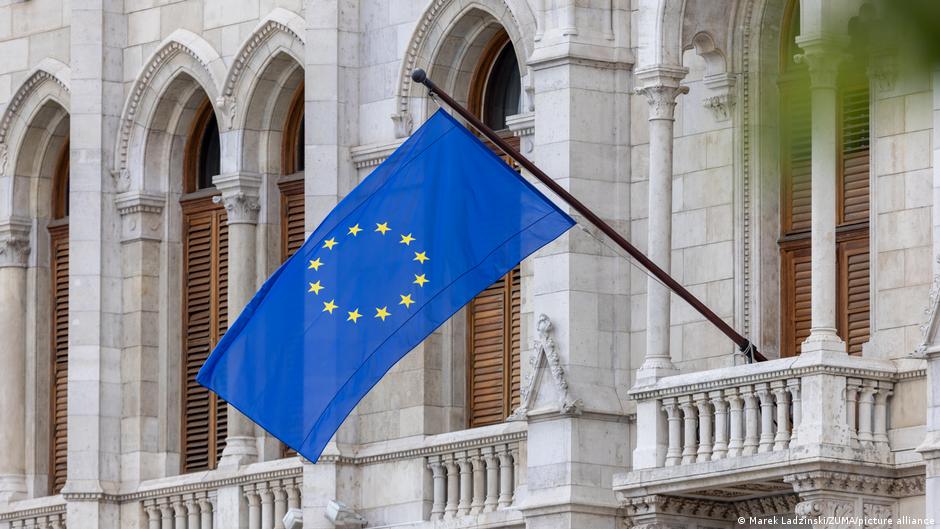
The European Union reached a temporary agreement late Tuesday to remove import tariffs on American goods, a key part of the bloc’s trade deal with the United States.
It kept the EU on track to meet President Donald Trump’s July 4 deadline and avoid higher US tariffs on European goods.
“I am proud to announce that Europe has averted a damaging escalation of transatlantic trade tensions and protected European companies, investments and millions of jobs on both sides of the Atlantic,” Zeljana Zovko, the European People’s Party group’s lead trade negotiator on the U.S. deal, said in an X post announcing the deal.
“Today, the EU delivers on its commitments,” Cyprus Energy, Commerce and Industry Minister Michael Damianos, whose country holds the EU’s rotating presidency, said in a statement announcing the deal.
“It is in the interests of both sides to maintain a stable, predictable and balanced transatlantic partnership,” he said.
What do we know about the US-EU trade deal?
The US-EU trade deal was agreed in July last year after months of tariff uncertainty. Here are some of the most important things to know about it:
- The deal imposes 15% US tariffs on most EU exports
- The EU pledged investments of €514 billion ($596.3 billion) in its biggest trading partner, the United States
- The deal reduces the 25% tariffs imposed on European automakers through April 2025
- Before President Donald Trump’s second term, the tariff on European cars was 2.5%
- The agreement helps the EU avoid a wider trade war that could damage business confidence and consumer spending on both sides of the Atlantic
- Many European political and business leaders criticized the deal, calling it harmful for the 27-member bloc.
- EU initially insisted on 10% lower tariff rate
- In February, EU lawmakers delayed approving the deal amid uncertainty over Trump’s tariff policies.
- The delay follows a US Supreme Court decision that struck down many of Trump’s earlier global tariffs.
- Trump later imposed new tariffs of 15% in response to the court ruling.
What concessions did the EU make?
EU lawmakers softened several demands during talks, including a proposal to suspend favorable tariffs for US exporters if Washington violates the terms of the deal.
The final text gives the US until the end of the year to remove the more than 15% steel surcharge, rather than making it a precondition to the agreement.
The bloc’s lawmakers had also pushed for stronger so-called “sunrise” and “sunset” clauses, under which the EU would cut tariffs only if the US fulfilled its side of the deal and EU tariff concessions expire on March 31, 2028.
The sunrise section was removed entirely, while the sunset was pushed back to the end of 2029, lawmakers said.
“There is a suspension mechanism if the US does not comply with the agreement, there is a monitoring mechanism for the impact on our economy, there are provisions for unfair tariffs on certain products, there is an expiry date for the legislation and the strong involvement of the European Parliament,” said Bernd Lang, head of the parliament’s trade committee.
Edited by: Rana Taha