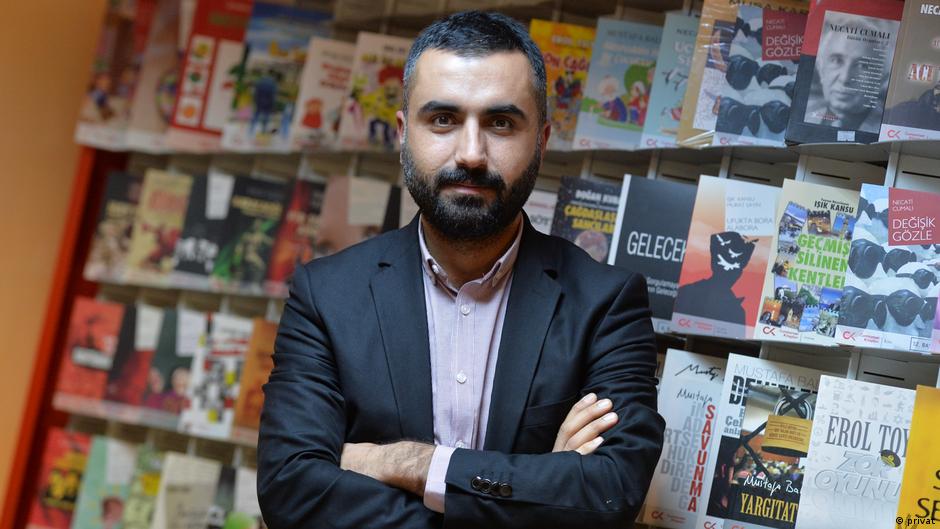
An Ankara court on Thursday opened proceedings against Deutsche Welle reporter Alikan Uludag and released Uludag from custody while the case against him continues.
The next court date is scheduled for September 18.
Uludağ’s lawyer Abbas Yalcin welcomed his client’s release after months of detention, but also argued that even if Uludağ was convicted, “he would not spend 90 days in jail.”
Yalcin said that the period of detention “could be seen as equivalent to or even greater than the sentence issued before conviction.”
“We hope this brings the proceedings to an end and we request an immediate decision to acquit him,” he said.
What is the lawsuit about?
Uludağ was detained in February, accused of insulting President Recep Tayyip Erdogan, spreading disinformation and insulting state institutions or the Turkish state in a total of 22 posts on social media.
“Insulting” or insulting Erdogan is a criminal offense in Turkey, and the longtime Turkish leader has famously been prosecuted on thousands of occasions during his more than two decades in power.
Uludağ – who has continued to focus on controversial issues such as the judicial system, human rights violations and corruption in Turkey’s restrictive media landscape – denied all allegations and said he was reporting impartially.
What did Uludag say in court?
Uludağ was denied a request to appear in court in person, instead appearing via video link, which he called “a violation of my right to a fair defense.” He said he has spent 90 days away from his family and workplace.
He said, “As an independent journalist, I tried to write the truth and protect the public’s right to information. I was repeatedly threatened, but my conscience is clear. I have never done anything as a journalist for which I have to regret. The freedom of press and opinion guaranteed by our Constitution should not be violated.”
Uludağ told the court, “I have not committed any crime, but I have only done my job; I have not insulted anyone and I ask for an acquittal.”
Erol Onderoglu, president of Reporters Without Borders (RSF) in Türkiye, responded online.
“The release of Alikan Uludag brings us joy, yet his detention for 90 days will remain a form of ill-treatment to an investigative journalist,” Onderoglu said. “He should not have spent a single day in detention because of his reporting or his commentary.
Türkiye is one of the world’s worst press freedom index performers
Following Uludag’s arrest, DW Director General Barbara Massing described the allegations against him as baseless. He described his arrest as a “targeted attempt at intimidation” and said his case shows “the extent to which the government is widely suppressing press freedom.”
Turkey, a NATO member and EU aspirant, consistently ranks near the bottom of press freedom indexes, not least because of its track record of jailing critical journalists. In this year’s RSF Press Freedom Index, Turkey slipped four places out of 180 countries to 163rd place, slightly below Iraq and Sudan and slightly above Yemen, Belarus and Myanmar.
Edited by: Shawn Sinico