It seems the 2026 Cannes Film Festival is on his mind.
This year’s festival, which concludes on May 23, features an extraordinary number of films dealing with the experience of life in wartime.
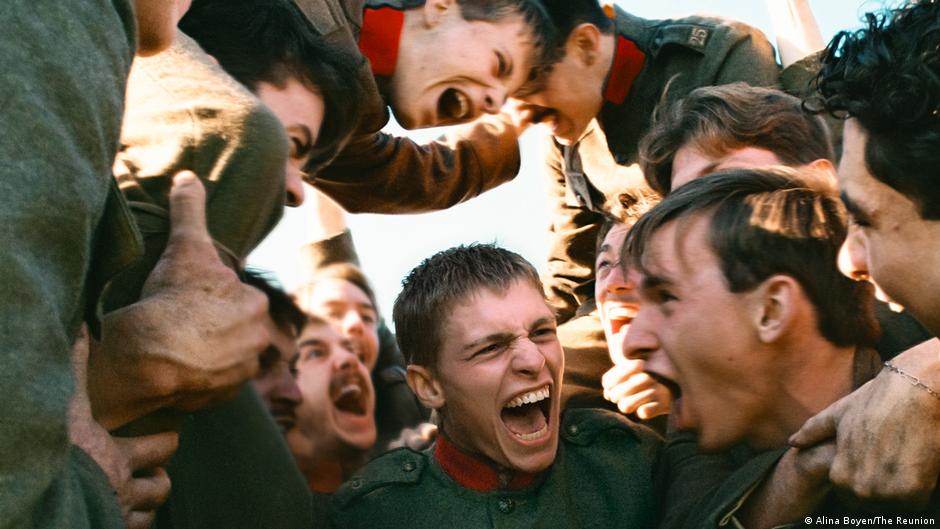
In Lucas Dhont’s Belgian World War I drama “Cowards”, young soldiers in the trenches confront ideas of heroism and masculinity.
“The Visitation,” the latest film from Volker Schlöndorff (“The Tin Drum”), continues the German director’s obsession with World War II and its aftermath, tracing the fate of three families living on a lake near Berlin through decades of turbulent history, from the rise of Hitler to the fall of the Berlin Wall.
There are two French films – “Moulin” and “De Gaulle: Tilting Iron” – about French resistance to the Nazi occupation, while another film, “A Man of His Time,” takes a rare look at French collaboration during the war.
These films, like all historical films, are really about now. The rise of the far right across Europe has European filmmakers horrified and they are looking to the past to find answers, so they can tell stories of how a nation falls victim to fascism, and how people behave under authoritarian rule: some bravely, heroically, others greedy and selfish.
These films deal with the damage that war does to the psyche, and the historical trauma inflicted on those who participated in the killing and those who looked away.
An original, modern perspective on history
Among wartime films, director Emmanuel Marre’s “A Man of His Time” is the most original and most daring.
Essentially a period piece, the film is shot like a dirty indie flick in which 20-somethings in vintage costumes talk and behave like Gen Z as they court Nazi authority as a way to get ahead.
Swann Arlaud, who plays Sandra Hülser’s lawyer in the Oscar-nominated “Anatomy of a Fall,” is an unknown writer and shameless social climber determined to make a career in the Nazi bureaucracy. Marray based him on his great-grandfather, who chose to work for the fascist Vichy regime.
The director’s modern take on the historical tale may be jarring — skipping ’80s hits like Opus’s “Life Is Life” or Alphaville’s “Sounds Like a Melody” over ’40s images — but his message on the banality and malevolence of evil couldn’t be more timely.
Thomas and Erica Mann on a post-Holocaust road trip
Paweł Pawlikowski’s “Fatherland” is a post-war film.
The German-language drama from the Polish director of “Ida” and “Cold War” follows Nobel Prize-winning German writer Thomas Mann and his daughter, novelist and anti-fascist activist Erica Mann, as they embark on a road trip across divided Germany during the Cold War.
Thomas Mann is eager to secure its literary legacy in the “new Germany” (both East and West), arguing that the beauty of German art and literature could survive the horrors of the Holocaust. Erica thinks her father’s well-crafted sentences are fig leaves covering the ugly reality of a civilization gone monstrous.
A thriller depicting corruption in Putin’s Russia
Exiled Russian director Andrey Zvyagintsev’s “Minotaur” is one of the few Cannes films this year that takes a straightforward look at modern-day conflict.
This political thriller is ostensibly the story of a corrupt businessman who discovers that his wife is unfaithful and tracks down her lover to confront him. (It is a loose adaptation of Claude Chabrol’s “The Unfaithful Wife” from 1969.)
But the story is set against the backdrop of Russia’s full-scale invasion of Ukraine. The businessman is tasked with supplying men from his payroll for military recruitment, knowing that they will be cannon fodder. It’s not long before he finds his wife’s lover, his hands covered in blood and – in a gruesome but masterfully cinematic sequence worthy of Hitchcock – murders him.
This is Putin’s Russia, a quick talk with the mayor and the murder investigation is quickly covered up. The executive goes back to his comfortable life, his wife safely trapped – like his fellow Russian citizens, Zvyagintsev is saying – in the embrace of his patriarchal master.
“Minotaur” is Zvyagintsev’s first film made outside of Russia and his first since recovering from a near-fatal case of COVID-19 that left him stranded in a hospital in Hanover, Germany, with 90% of his lungs damaged and unable to move or feel his limbs for several months. It is also his most overtly political film.
Anyone who missed the more nuanced dismantling of institutional corruption in the director’s previous two films — “Leviathan” (2014) and “Loveless” (2017) — would need willful blindness to miss his full-on attack on the Putin regime here and the complicity of those inside the country who look the other way while murders are carried out in his name.
It was one of the most powerful and important films at Cannes this year, and is the clear frontrunner for the Palme d’Or.
Edited by: Elizabeth Grenier