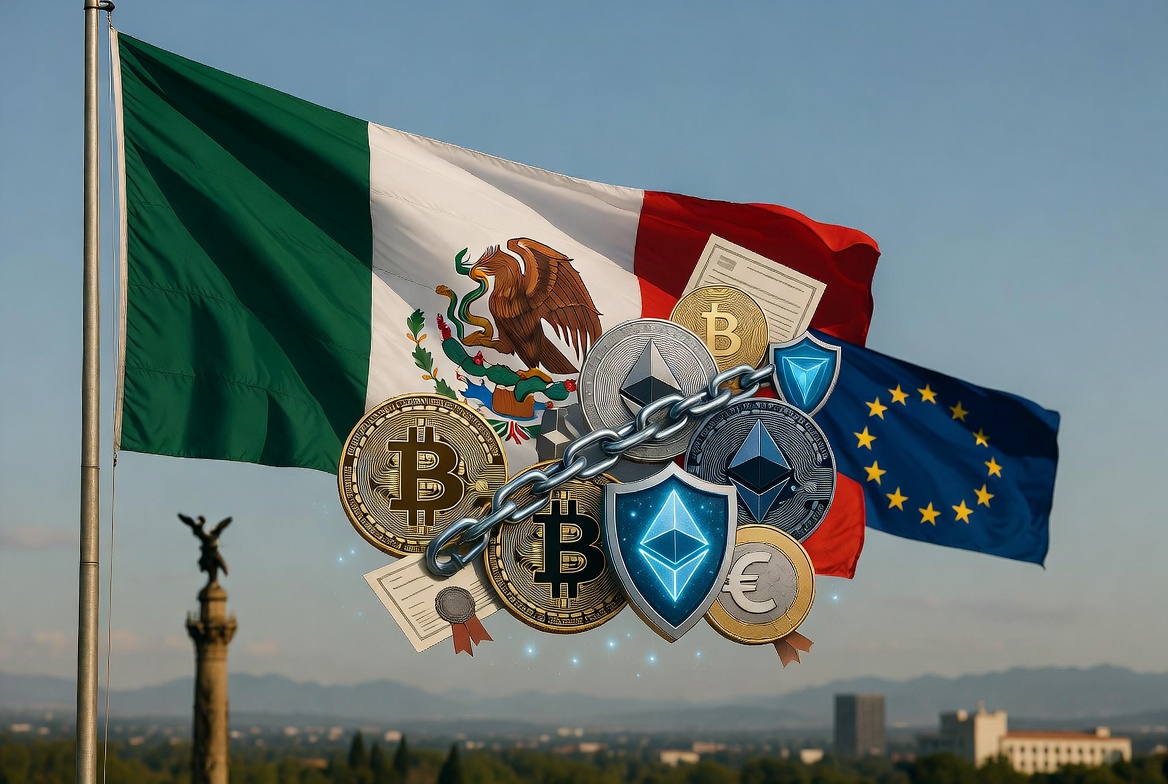
The declaration was made within the framework of the first bilateral Strategic Dialogue.
Kaja Kallas held a separate meeting with the Secretary of Security, Omar García Harfuch.
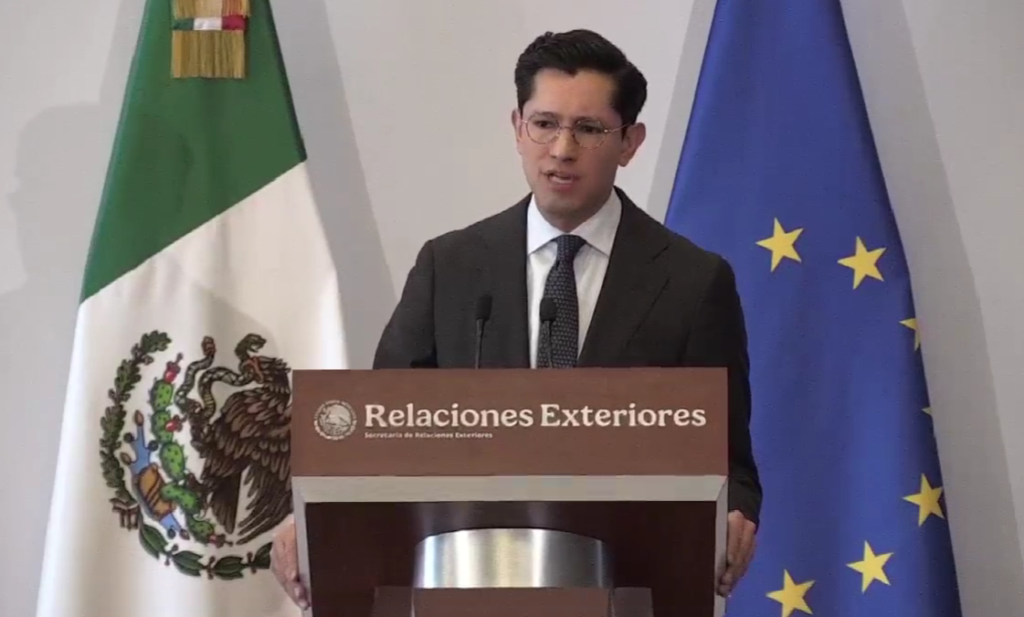
Within the framework of the VIII Mexico-European Union Summit held this week, Foreign Minister Roberto Velasco Álvarez and the High Representative of the EU for Foreign Affairs and Security Policy, Kaja Kallas, announced the intention to strengthen bilateral collaboration on financial security.
The main focus includes the fight against money laundering and illicit use of cryptocurrencies by transnational criminal organizations. During the press conference on May 21, the Chancellor Velasco Álvarez declared:
We have talked today about how there are criminal organizations that are carrying out activities at a global level, such as money laundering, of course also what has to do with the use of cryptocurrencies for this type of illicit activities. So we intend to maintain a dialogue and seek possibilities for cooperation to address these types of threats and activities.
Roberto Velasco, Foreign Minister of Mexico
This declaration marks a concrete step towards a greater coordination between Mexican and European authoritiesparticularly with Europol. The objective is to improve the exchange of financial and tactical intelligence to track illicit flows in decentralized networks or as they are also known, “blockchain”, and other digital assets.
The initiative is part of the signing of the Modernized Global Agreement, which updates the commercial and political relations between Mexico and the EU in force since 2000.
For the cryptocurrency ecosystem, the announcement is relevant but not surprising. The European Union has developed one of the most advanced regulatory frameworks in the world with the MiCA regulation, which imposes registration, transparency and anti-laundering obligations on cryptoasset service providers.
Mexico, for its part, has strengthened its anti-money laundering (AML) regulations through the Financial Intelligence Unit (UIF) and has been incorporating reports of operations with virtual assets.
Experts from the research firm Chainalysis point out that the use of cryptocurrencies by organized crime usually focuses on stablecoins and transactions on centralized exchanges or DeFi protocols with little oversight.
According to historical data from the aforementioned researchers, although the percentage of illicit volume in cryptocurrencies is low (generally below 1% of the total), the absolute amounts are significant at around $154 billion and require specialized on-chain analysis tools.
In the particular case of Mexico, this is not the first time that there has been talk of increasing efforts against the illicit use of cryptocurrencies. In March of this year, CriptoNoticias reported that the country was making progress in tightening its controls against money laundering and terrorist financing in the cryptocurrency ecosystem. The above according to SumSub’s State of the Crypto Industry 2026 report.
Mexico-EU cooperation could translate into joint training programs, information exchange protocols and better capabilities to identify wallets and addresses linked to criminal activities, always respecting privacy and human rights frameworks.
Analysts in the cryptocurrency sector such as Caroline Malcolm, former Vice President of Global Policy at Chainalysis, consider that these types of international alliances are necessary to avoid global regulatory fragmentationwhich could generate regulatory arbitrage and havens for illicit capital.
However, they warn that balance is key: tightening controls without discouraging innovation or legitimate adoption of so-called “blockchain technology,” which is actually only one part of Bitcoin technology.
The dialogue announced by Foreign Minister Velasco represents a pragmatic and collaborative approach. This is the deepening of already existing joint work against transnational financial crime. Success will depend on the practical implementation of these commitments in the coming months.