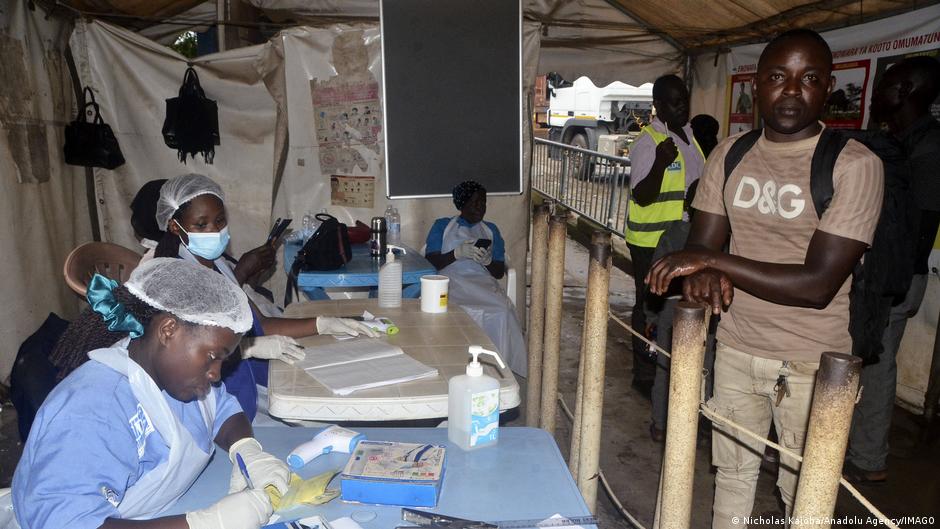
Uganda’s health ministry has reported two new cases of Ebola, bringing the total number of infections in the East African country to seven.
The ministry said in a statement that the two new cases are health workers at a private facility in the capital, Kampala.
“Both patients have been admitted to the designated treatment unit and are now being cared for,” it said, adding that teams are now tracing people who had contact with the two individuals.
The cases in Uganda are linked to an outbreak in neighboring Democratic Republic of Congo, where the UN health agency says more than 900 cases have been recorded.
More than 200 people are believed to have died.
Congo declared an outbreak on May 15 due to the Bundibugyo strain, for which there are no approved vaccines or treatments.
Most cases are concentrated in the country’s eastern Ituri province, as well as North Kivu and South Kivu.
How did the virus spread in Uganda?
Uganda’s first cases involved two Congolese nationals who crossed the border, prompting the country to suspend public transport with its neighbor last week.
Three more infections were confirmed on Saturday – a Ugandan driver, a health worker and a Congolese woman.
Ugandan President Yoweri Museveni has urged Ugandans to “stop shaking hands” to avoid spreading the virus.
The World Health Organization has declared the outbreak a public health emergency of international concern.
Ebola is a deadly virus that can spread through direct contact with the bodily fluids of an infected person. This can cause severe bleeding, vomiting and organ failure.
The virus has killed more than 15,000 people across Africa over the past 50 years.
Edited by: Richard Connor