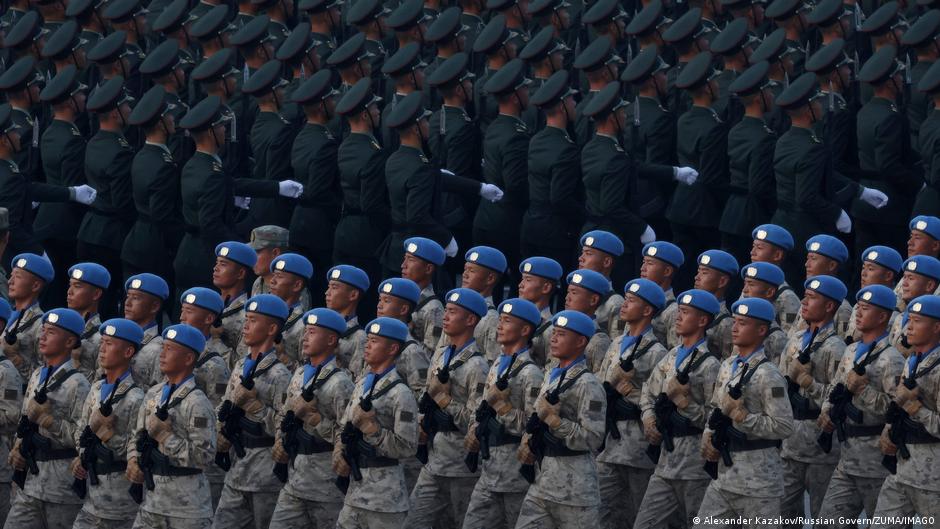
Stockholm International Peace Research Institute (SIPRI) said on Monday that international peacekeeping missions are under threat due to global geopolitical standoff, funding issues and dwindling numbers of personnel.
Missions managed by the United Nations have been particularly affected, a sipri study Said.
The analysis found that just under 79,000 personnel were deployed in international peacekeeping missions at the end of 2025, its lowest point in 25 years and 49% less than in 2016.
A ‘perfect storm’
“If things continue this way, we could see multilateral conflict management dramatically weakened and institutions like the United Nations almost completely sidelined,” said Jair van der Lijn, director of SIPRI’s peacekeeping and conflict management program.
Van der Lijn said, “The result is likely to be more conflicts, and these conflicts are likely to have an even more severe impact on civilians as states abandon long-established norms.”
He said the peacekeeping crisis was caused by “a perfect storm of funding, political and geopolitical factors.”
SIPRI said the UN had to make “deep headcount cuts” after major donor countries failed to meet their financial commitments, resulting in a funding shortfall of $2 billion (€1.7 billion).
Under President Donald Trump, the US has cut its aid programs and considered reducing its commitments to international organizations and institutions such as the United Nations and the World Health Organization.
The study also said that the UN Security Council’s “radical demands and veto threats from permanent members” have “complicated decisions about renewing operational mandates.”
As an example, it pointed to the US demand to end the United Nations Interim Force in Lebanon (UNIFIL) despite repeated violations of the ceasefire between Israel and Lebanon.
There remains widespread support for peacekeeping operations
SIPRI warned that the increasing operational challenges facing the UN mean that international crisis responses are increasingly taking the form of “unilateral, bilateral and ad hoc arrangements that are often more militarized and more directly influenced by the self-interest of the states involved.”
But despite the challenges, the collapse of the international peacekeeping and conflict management system is not a foregone conclusion, said SIPRI senior researcher Claudia Pfeiffer Cruz, pointing to widespread support for missions across the United Nations.
“UN peacekeeping operations enjoy widespread support in principle,” he said. “However, to sustain multilateral conflict management, states will need to go beyond expressions of support – they will need to provide predictable funding and create sufficient political space to enable effective multilateral responses.”
Edited by: Sam Dusan Inayatullah
Don’t let algorithms hide news. If you rely on our team for reliable reporting, please take a moment Select us as your favorite source on Google by clicking here and pressing the “Star” or “Favorite” buttonThat’s why you’ll always see our verified news first.