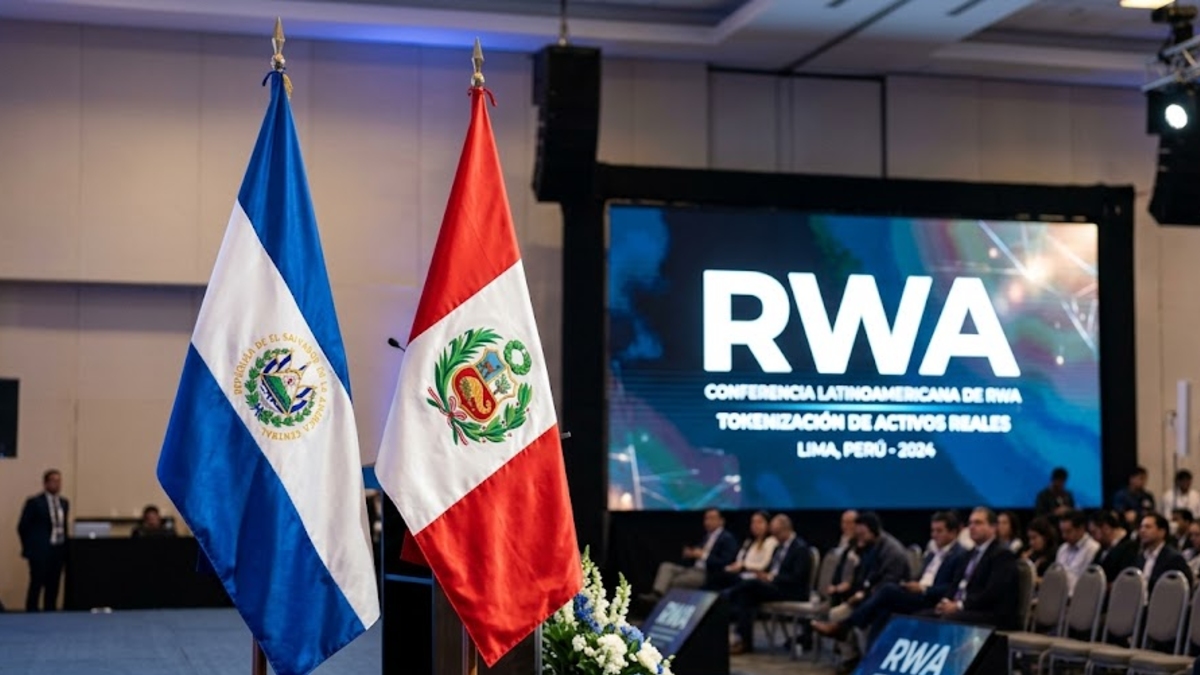
The Peruvian regulator, Juan Pichihua, believes it is important to democratize access to the securities market.
Juan Carlos Reyes, from the CNAD, says that tokenization allows this democratization to materialize.
The Superintendency of the Securities Market (SMV) of Peru and the National Commission for Digital Assets (CNAD) of El Salvador held a high-level meeting to evaluate the tokenization of real assets (RWA).
The central objective was to explore this technology based on distributed records as a way to democratize the traditional stock market, seeking to reduce operating costs and expand access to small and medium-sized businesses (SMEs), as well as traditionally marginalized sectors in rural areas of the Andean country.
Juan Pichihua Serna, superintendent of the SMV of Peru, highlighted the importance strategic to reduce the costs of entry to the capital market for the general population. For his part, the president of the CNAD of El Salvador, Juan Carlos Reyes, pointed out that the tokenization of securities It is the ideal tool to materialize this inclusionsince it allows the fractionalization of assets and provides greater liquidity and transparency through secondary markets.
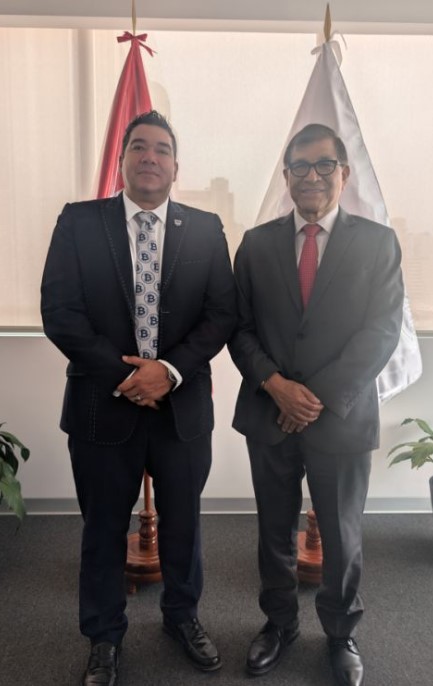
“The future of financial inclusion in the region is built on three pillars: digitalization, regulatory compliance and institutional tokenization,” Reyes said in a post on LinkedIn. “Our strategic priority remains clear: cut through the speculative noise and focus all efforts on tokenized products that operate under the most rigorous regulatory oversight,” he added.
For its part, Pichihua emphasized the “instructive” nature of the leadership, knowledge and experience that El Salvador has been accumulating in the digital world and the tokenization of values. In his opinion, this is “a sure means of expansion and democratization of the stock market.”
The institutional approach occurs after more than three years of the implementation of the Digital Asset Issuance Lawwhich regulates the operation of the sector in the Central American country.
This technical dialogue with Peru is part of a regional cooperation strategy that the CNAD has been developing in South America. As a recent precedent, the Salvadoran organization formalized an alliance with the Central Bank of Uruguay (BCU) by signing a Memorandum of Understanding to share experiences in the supervision of digital currencies.
Likewise, on May 12, 2026, technical specialists from El Salvador gave a seminar in Buenos Aires to the National Securities Commission (CNV) of Argentina, focused on the supervision of real-world assets and traceability in decentralized networks, as reported by CriptoNoticias.
The adoption of infrastructures based on the digital currency protocol and tokenization poses the technical challenge of adapting a regulatory framework born in a pro-bitcoin environment to the traditional and banked financial systems of the region.
However, meetings and exchanges between regulators from Peru, Argentina and Uruguay suggest a trend towards the search for technological solutions that complement the banking system and reform financing channels in Latin America.