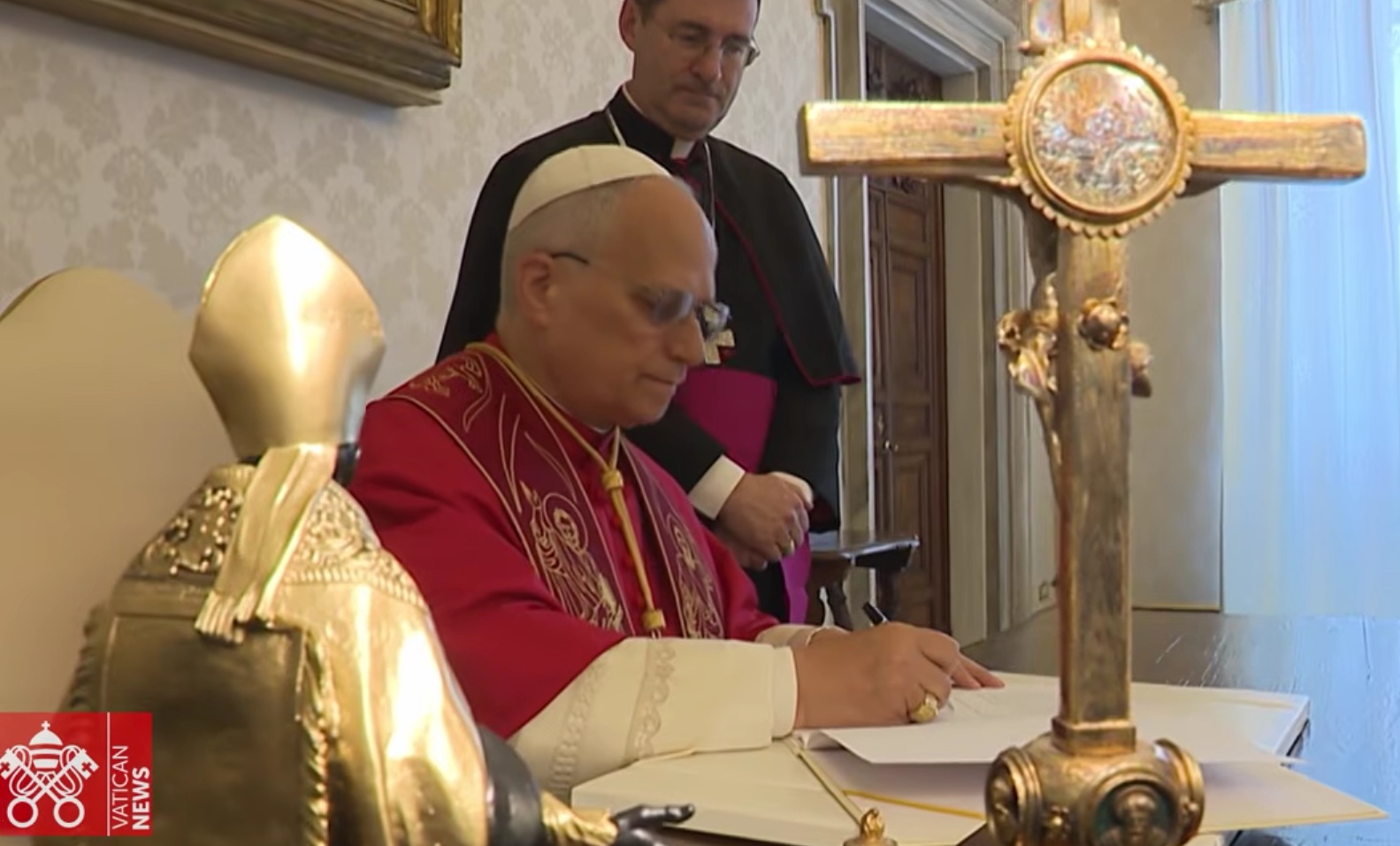
The leader of the Catholic Church warns that intermediation has generated abuses and global crises.
In his Magnifica Humanitas he contextualizes digital innovations within the Social Doctrine.
In his first encyclical, Magnificent Humanitaspublished today, May 25, and dedicated mainly to the ethical challenges of artificial intelligence (AI), Pope Leo XIV tangentially addresses the transformations in the economic and financial sphere driven by digitalization.
The pontiff takes up previous reflections of the Magisterium to warn about the risks of financial intermediation that has become disconnected from ethical and anthropological foundations.
He document indicates that “finance has become increasingly important in recent years and has seen significant innovation, even after the introduction of cryptocurrencies.”
He then cites verbatim considerations from the Magisterium of his predecessors, particularly from the encyclicals, which highlight how financial intermediation, “having been disconnected from appropriate anthropological and moral foundations, has not only produced obvious abuses and injustices, but has also proven capable of creating systemic crises throughout the world.”
This reference does not constitute a new specific doctrine on cryptocurrencies or fintechbut a contextual update. Leo XIV integrates it into his broader analysis of the power of technologies and private actors in the digital economyunderlining the need for finances to serve the common good and human dignity, in line with the Social Doctrine of the Church.
The tone is one of continuity, technological innovation, including cryptocurrencies, does not escape the traditional ethical principles that demand that the economy be at the service of the person and not the other way around.
At this point it is worth defining what is financial intermediation? Financial intermediation is the process by which financial institutions such as banks, savings banks, credit cooperatives, fintech or investment funds, act as intermediaries between those who have surplus money (savers or investors) and those who need funds (companies, families, governments or entrepreneurs). It is the “bridge” that connects savings with investment or credit.
Background and opinions on the Pope’s position
The main question comes from the document “Oeconomicae et pecuniariae quaestiones” (Considerations for an ethical discernment on some aspects of the current economic and financial system), published in May 2018 by the Congregation for the Doctrine of the Faith and the Dicastery for the Service of Integral Human Development, with the approval of Pope Francis.
In this text, an ethical criticism is made of speculation, opacity and disconnection from the real economy, elements that remain valid in the face of the rise of digital assets. Leo XIV takes it up again to remember that advances such as Cryptocurrencies do not alter the fundamental moral requirement: Finances must contribute to social justice and avoid generating instability that especially affects the most vulnerable.
Analysts highlight that this mention reinforces the cautious stance of the Church towards innovations financial institutions that could accentuate inequalities or concentrate power in few hands, a risk parallel to that seen with AI. However, the document does not offer detailed regulation or a specific condemnation of cryptocurrencies, but instead invites continued ethical discernment.
Against this backdrop, alternatives such as Bitcoin, conceived in 2008 after the financial crisis, have emerged over the years. The digital asset proposes a decentralized system that seeks reduce dependence on traditional intermediaries and “trusted third parties”allowing direct transactions between people through what has been called “blockchain technology” which is nothing more than Bitcoin technology, as reported by CriptoNoticias.
Although it represents an innovation that challenges the classic model of financial intermediation, it also generates debates about volatility, speculation and accessibility. In this way, Leo XIV’s encyclical invites calm discernment: evaluating whether these technologies really strengthen human dignity or only displace risks to new actors.