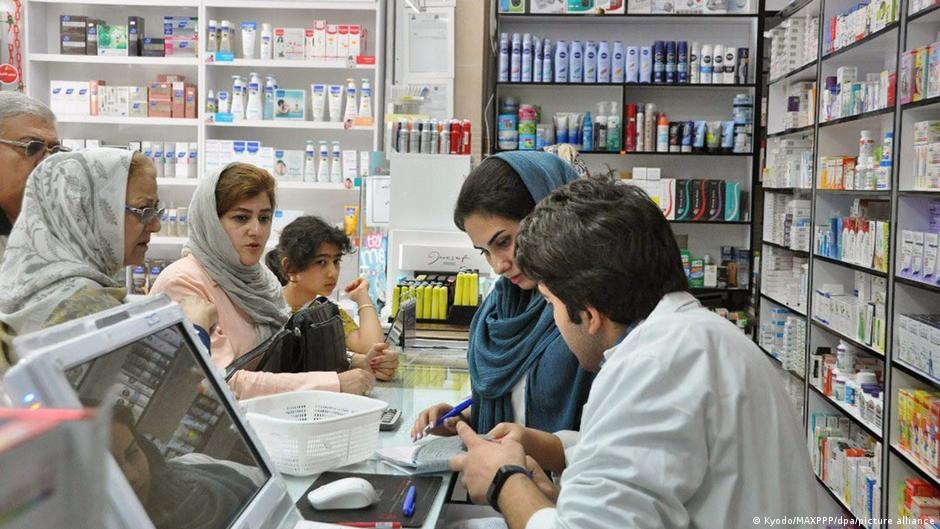
Sanctions, currency instability and long-running pressure on insurers have made access to medical treatment difficult in Iran for years.
Now, the war initiated by the US and Israel appears to have deepened tensions by disrupting regional supply routes, damaging parts of Iran’s health infrastructure and putting new pressure on an already fragile pharmaceutical market.
The consequences are affecting everyday life for many Iranians: from patients searching multiple pharmacies for medicine to doctors seeing people discarding prescriptions they can no longer afford.
Supply Chain and Sanctions
For a country like Iran, which depends on imported raw materials and foreign-made drugs for its pharmaceutical system, delays and high transportation costs quickly lead to domestic shortages and rising prices.
However, transportation is only part of the problem. Even if drugs are technically exempt from sanctions, banking and payment restrictions can still make purchases slow, complicated, and expensive.
That financial sticking point has plagued Iran’s pharmaceutical sector for years. It becomes even more harmful during wartime. Rising prices, disrupted supply chains, damaged infrastructure and declining purchasing power are reinforcing each other.
Iranian officials have tried to show calm, arguing that strategic reserves and domestic production have prevented a full-scale collapse. But the picture described by patients, doctors and industry leaders is more disturbing.
Hadi Ahmadi, spokesman for the Iranian Pharmacists Association, warned that the war could create new shortages of materials needed for drug production, including aluminum and petrochemical inputs.
Even where drug stocks still exist, manufacturing may be difficult in the future if there is a shortage of industrial feedstock and packaging materials.
Some patients are giving up
Its effect is already visible in clinics and pharmacies. An Iranian general practitioner told DW that some medicines have effectively disappeared since the war, while others become available only intermittently or at greatly inflated prices.
An Iranian cardiologist told DW that prices have become so high that some patients stop buying the medicines they need.
One of his patients told DW that a pharmacy was keeping the anti-platelet drug Osvix in a safe. The patient said that medicines that used to be rare are now technically available, but are so expensive that many people cannot afford them.
These may be individual accounts, but together they reflect a broader pattern. The crisis is no longer limited to rare or highly specialized therapies. This is beginning to affect regular treatment as well.
People set out in search of treatment
A relative of an elderly diabetic patient in the northern city of Rasht told DW that insulin was being rationed and being sold at six times the price since last week.
Another patient who requires daily medication for a chronic condition told DW that she only has enough medication to last 18 days.
He said, “For six weeks, I have been searching pharmacies, going from one to another in the hope of finding it, and every time I get the same answer: ‘We don’t have it.’
“I only need one medication, and even that has filled my life with stress. I can’t imagine what people go through if they need multiple medications, or if they are living with a serious or terminal illness.”
Some patients now use social media and private messaging groups to alert each other when a pharmacy has a particular drug in stock.
And before the war, some families relied on relatives abroad to send medicine from neighboring countries or Europe through informal networks. Now, with strict restrictions and weak communication channels, those fallback options also seem to be closed.
Edited by: Wesley Rahn