26 May 2026
Quad countries agree on mineral sharing, Indo-Pacific surveillance and more
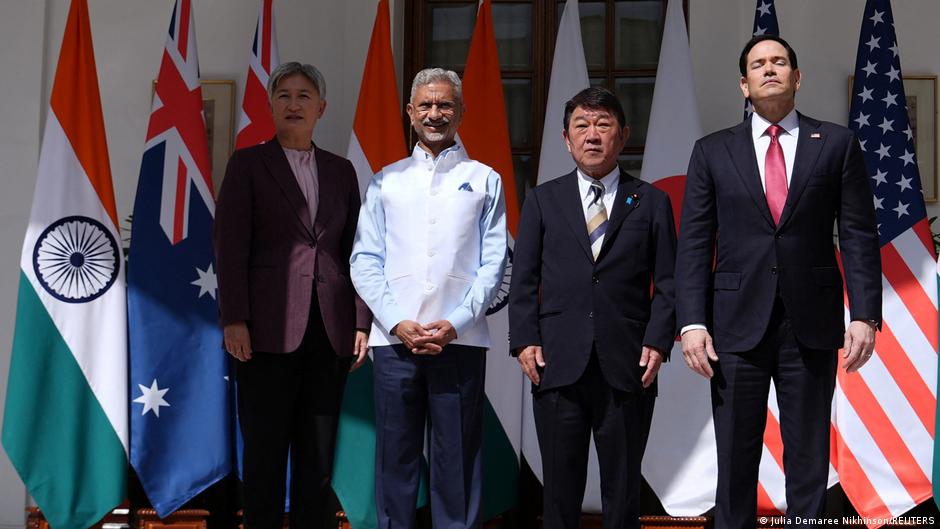
US Secretary of State Marco Rubio announced several initiatives among the Quad countries to strengthen the group’s dominance over the Indo-Pacific, including shared surveillance of the waters.
“I’m very pleased today … that we have real, concrete accomplishments that we can announce to our countries and to the rest of the world,” Rubio said in New Delhi, calling the alliance a “partnership of action.”
The statement came after the foreign ministers of the US, India, Japan and Australia gathered in New Delhi for a brief meeting on Tuesday morning.
The surveillance initiative aims to integrate the monitoring capabilities of the four countries and share near-real-time data on ship movements, including commercial vessels.
Rubio also announced an Indo-Pacific energy security initiative aimed at strengthening regional fuel supply chains. The agreement assumes special significance amid disruption in energy supplies due to the blockade of the Strait of Hormuz following the US-Israeli attacks on Iran.
Rubio said the US will host the Quad energy security forum later this year.
The group will also work with Fiji to upgrade port infrastructure in the Pacific islands, which will be the Quad’s first joint infrastructure project.
The four countries also agreed on a “critical minerals framework,” Rubio said at a joint briefing, without giving further details. “The framework will strengthen critical mineral supply chains in mining, processing and recycling. Coordination in the Quad helps reduce vulnerabilities and supports long-term economic security.” US Ambassador to India Sergio Gore said on
Ahead of the meeting, Rubio had said Washington wanted the Quad grouping to move beyond talk to action. The alliance is seen as a counter to China’s growing influence and has gained importance amid changing geopolitical alliances and recent conflict.
“We are deeply committed to this partnership. It is a cornerstone of our global strategy as a nation,” he said.
These four countries represent approximately 30% of the world’s GDP and approximately 2 billion people.
Speaking about the Strait of Hormuz, Australian Foreign Minister Penny Wong said the Indo-Pacific is facing “severe economic strains” and warned that any closure of the Strait would have serious consequences for regional energy security.
“We recognize the importance of maintaining the principle of freedom of navigation and our opposition to any tolling proposal,” Wong said, referring to Iran’s plan to impose fees on ships passing through the Strait of Hormuz.