The notification of the file was made this Monday by publication in the BOE.
Prediction markets are considered games of chance in Spain and require a particular license.
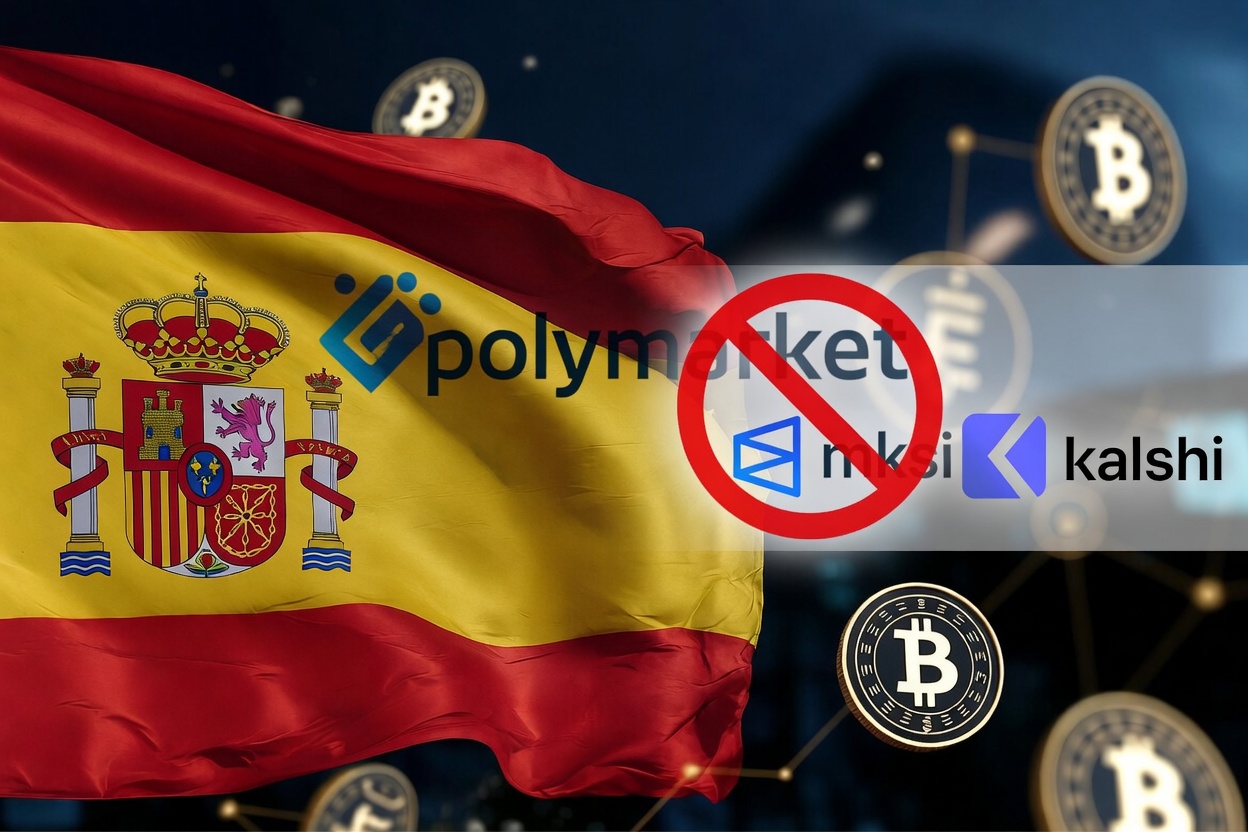
The Ministry of Social Rights, Consumption and Agenda 2030 opened a sanctioning file against the prediction market platforms Polymarket and Kalshi and ordered their precautionary block in Spain for operating without the license required for gambling activities.
According to the official statementpublished this Monday, May 25, both platforms would be offering betting services on future events without having the authorization of the General Directorate of Gambling Regulation (DGOJ). The notification was made through the Official State Gazette (BOE) after not being able to contact operators directlybased abroad.
For this reason, they require administrative licensing, user verification systems, protection of minors, measures against money laundering and responsible gaming tools.
Polymarket, in particular, is one of the most popular platforms in the cryptocurrency ecosystem. It operates on the Polygon network and uses the USDC stablecoin for its prediction contracts, allowing users to buy and sell shares on election results, economic indicators, sporting or geopolitical events, as reported by CriptoNoticias.
Kalshi, for its part, works with a similar model although more focused on regulated markets in the United States. The DGOJ classifies these prediction markets as games of chance when they involve bets on uncertain outcomes.
Regulatory debate on the closure of Polymarket
This decision revives the debate between technological innovation and consumer protection. While the Spanish authorities defend the need to regulate these platforms to have guarantees and avoid risks associated with gambling, there are other sectors that argue that decentralized prediction markets represent an advanced tool for discovering information and market prices more efficiently than traditional mechanisms.
This is the position of Kiko Llaneras, head of data at the Spanish newspaper El País, who recently wrote: «These platforms offer instant intelligence. […] With three minutes in Polymarket you have a reasonable estimate.
And he added: «Markets with money also have virtues. […] What does not make sense is to amputate the entire instrument for its worst uses.
Polymarket gained special relevance after the 2024 United States presidential elections, where its operating volumes exceeded at times to those of large traditional betting houses. This growth has generated both enthusiasm among investors and analysts and concern among regulators.
The sanctioning procedure, whose resolution is estimated to take three to four months, includes the technical blocking of the websites, which will become effective in the coming days. It is possible that this Tuesday, May 26 or Wednesday, May 27, Spanish users will still be able to enter the platform, before the block is executed.
Users trying to access will see a message warning that it is an unauthorized operator. With this measure, Spain aligns itself with a stricter regulatory trend towards platforms that combine elements of gaming, finance and cryptocurrencies.
In Latin America, countries such as Argentina, Brazil and Colombia have also blocked the platform for their fellow citizens.
The case highlights the challenges European regulators face in balancing user protection with the development of new financial technologies in an increasingly globalized market.