The upcoming implementation of the regulatory framework for Virtual Asset Service Providers (PSAV) in Uruguay, projected for the end of the year after a public consultation phase, will generate a radical paradigm shift in the country.
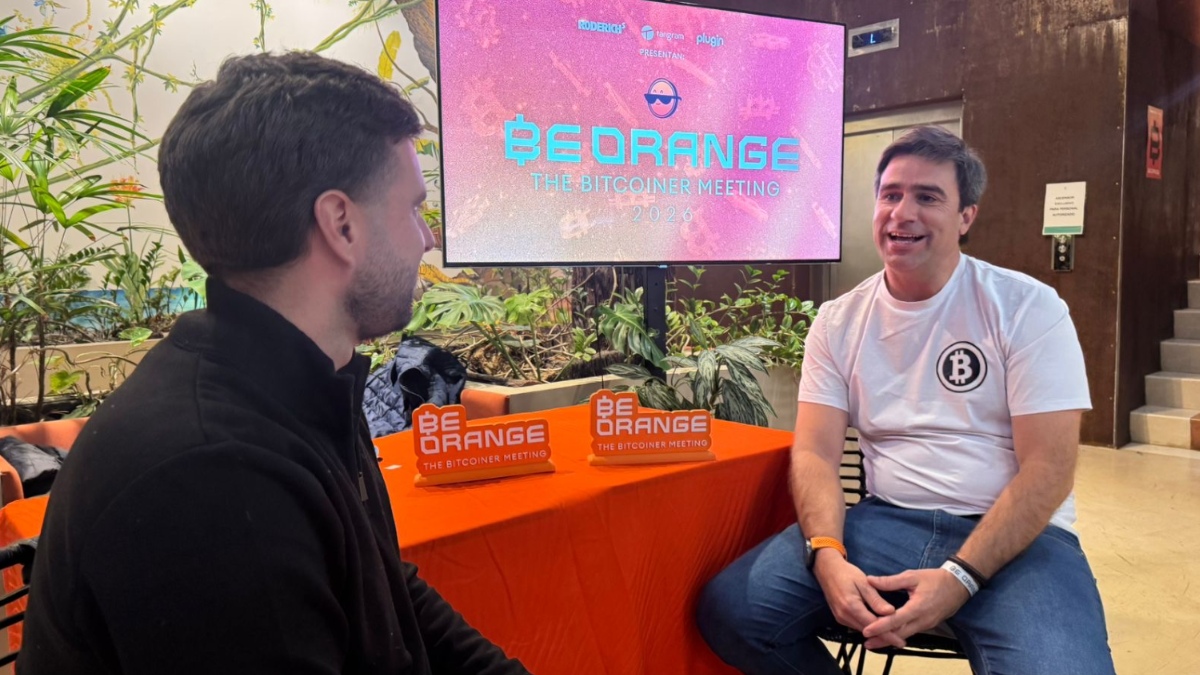
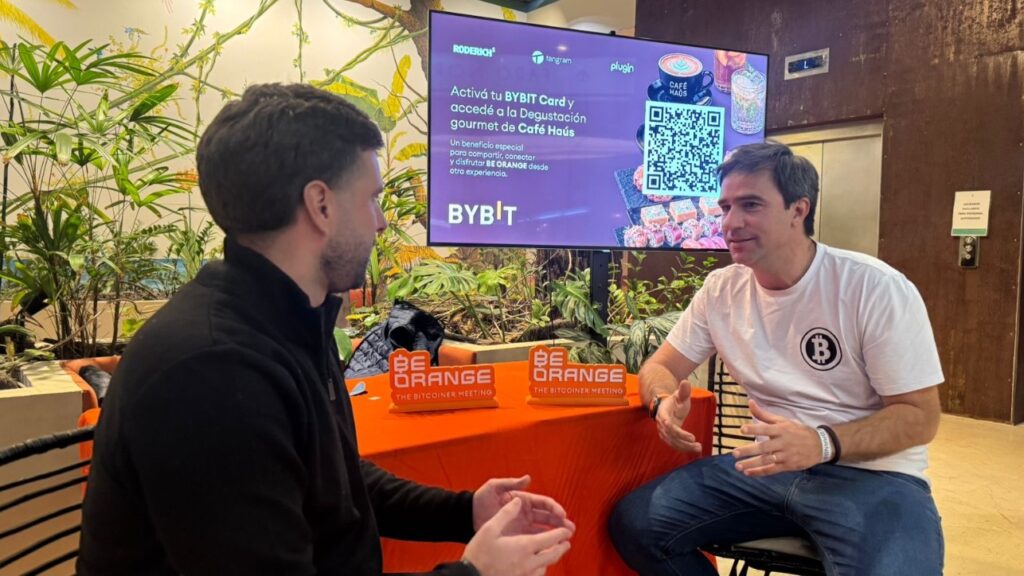
This was stated by Martín Benítez, vice president of the Fintech Chamber of Uruguay and founder of Cripto Guardian, in an exclusive interview for CriptoNoticias within the framework of the Be Orange event, held in Montevideo, the Uruguayan capital, last Sunday.
According to the manager, the regulatory project, whose new version It was published in Marchwill boost the maturity of investors, cleanse the reputation of the sector and open the door for traditional banks to incorporate digital currency into their services.
Benítez stressed that the Central Bank of Uruguay (BCU), together with the Superintendency of Financial Services (SSF), is in the final stage of the development of the project and explained that the result of the last public consultation they carried out has yet to arrive. projecting that the regulations will come into effect by the end of the year.
This legal advance is expected by the 90% of the Uruguayan population that has not yet interacted with the ecosystem due to mistrust, the specialist suggested. As you can see, now that there will be regulation, There will be more incursion by people and companies.
“I think that is going to help there be a change, a shift in image,” said Benítez.
Banking integration and the end of closed circuits
In the enthusiast’s view, the new regulatory scenario promises to transform citizens’ relationship with digital money. He thus recalled that global banks with subsidiaries in Uruguay, whose headquarters in Spain, France or Brazil already operate with digital assets, They have indirectly pushed to replicate these services at the local level.
Benítez described this phenomenon directly: “It’s going to be a paradigm shift that crypto was bad when you called your bank and now the bank is going to call you and say: ‘Hey, call me for a loan, don’t you want to buy crypto?‘So that’s going to be a radical change.’
In his opinion, this framework will also allow local platforms to make the leap from experimental closed-loop wallets to an open ecosystem. With hundreds of thousands of users ready on these applications, affirms that the flow of transactions will gain massiveness.
For Benítez, this will function as a progressive adoption bridge, allowing users to take a first step with a “safety harness” before migrating to more advanced solutions.
From the union level, Benítez recalled that the Fintech Chamber of Uruguay organized discussion tables to adapt the requirements that the BCU planned to demand from companies in the industry. For him, The main victory was the flexibility of financial guarantees for the startups.
“The guarantees were prohibitive for startups and companies like the ones we have here, that you could not ask for the guarantees that are requested from a bank. Your business does not admit having 300 thousand dollars of guarantee to leave nailed,” Benítez said, detailing that the regulator listened to these complaints to allow a tiered scheme.
The risks of ignorance and the importance of self-custody
Despite the regulatory optimism, Benítez warned about the conceptual errors that both retail investors and corporations make in handling cryptocurrencies. In the retail sector, he criticized the reliance on exchange-traded funds (ETFs), which are traditional financial products that simulate exposure to bitcoin, but without granting actual ownership.
“Many invest in bitcoin in different ways. Or they buy an ETF and believe that they have BTC. And in reality they bought a mirror, a simile, a representation,” he stated.
For the specialist, the use of investment funds such as BlackRock’s IBIT exposes people to human and liquidity risks unnecessary, considering the native properties of the technology.
“If one wanted to buy oil, well, okay, let’s go for ETFs because I can’t have a barrel of oil in my house. But in crypto you can, so let’s take advantage of the benefit,” he argued.
In the business sector, the panorama shows severe deficiencies in the custody of funds. He explained that it is common to see local firms that accumulate sums of between 200,000 and 300,000 dollars in centralized exchange houses such as Binance, leaving them exposed to network congestion or hacking.
Faced with this, Benítez promotes collaborative self-custody through multi-signature vaults, configured under security schemes of two of three keys. This institutional infrastructure prevents the total loss of digital assets in the event of the death of a manager, disputes between partners or the departure of a financial executive.
The fiscal mystery and the exclusion of stablecoins
The debate around the success of the law focuses on two critical points: tax policy and the scope of regulated financial tools. The General Tax Directorate (DGI) of Uruguay has not yet established a clear positionwhich generates fear in the private sector that excessive taxation will destroy the work of regulators.
“The DGI has not spoken yet. That will be where we shoot ourselves in the foot if taxes are established on profits, on ownership. That is a mystery that has not yet been revealed,” said the director of the Fintech Chamber.
He added that tax rules should focus on realized profits so as not to scare away investors in a global market: “I am very afraid that after all this effort we made, regulator, cameras, actors, everything, we will end up liquidating it in the end with a 20% property tax. We throw away all the garbage and people leave.”
On the other hand, he questioned that the current regulations left stablecoins and the tokenization of real assets (RWA) out of the initial structure. However, he recalled that the government plans to send complementary projects to remedy this absence. once the PSAV procedures have been completed.
Benítez considers it vital to regulate this segment, remembering the previous problems that Uruguay had with informal collective investment schemes such as “la vaquita”. With proper legislation, he says, the country could channel global investments through “tokenized cows or bricks.”
Uruguay faced with the opportunity to be a hub regional
Uruguay is currently middle of the table in adoption rates of Latin America, a position that Benítez describes as “logical” due to the country’s macroeconomic stability, unlike the high inflation contexts that They promote the use of digital assets in Argentina or Venezuela out of necessity.
And although the technical and legal compliance framework will require companies to have compliance manuals, operations officers and structured guarantees in the coming months, Benítez’s recommendation for entrepreneurs is to start designing its internal structures from now on, but with caution.
The combination of legal certainty, inflation under control and the implementation of this PSAV regulation would give Uruguay a unique competitive advantage to attract foreign capital. especially from the River Plate region.
With these tools, Benítez concluded, the Uruguayan financial center has the necessary elements to consolidate a regional cryptocurrency center and honor its historical nickname of being the “Switzerland of America.”