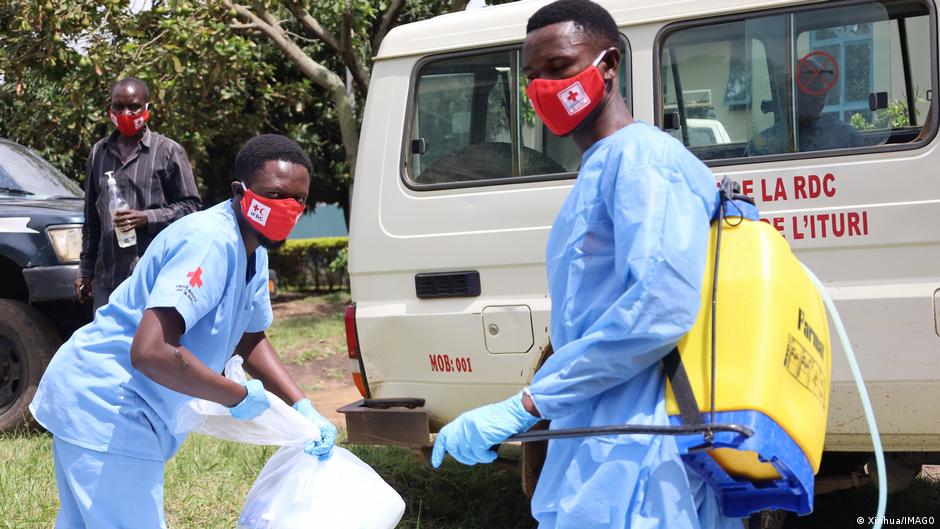
A new Ebola outbreak is spreading in the Democratic Republic of Congo. Genetic evidence suggests that it was spreading for weeks, possibly months, before it was discovered. The strain is current, and much remains unknown about its specific behavior.
Understanding why the virus spreads starts with how it enters the body. Unlike respiratory viruses that spread through the air, Ebola requires something more direct.
How does Ebola virus enter the body?
The virus requires direct access through the mucous membranes in the mouth, nose or eyes, or through cuts and wounds on the skin. Intact skin provides a barrier, but any breach becomes an entry point.
David Hayman, an epidemiologist at the London School of Hygiene & Tropical Medicine who first studied Ebola in 1976, describes transmission in practical terms: “The Ebola virus Spread from person to person through body fluids. So that means from blood, from saliva, possibly from stool, from urine, and now we know even in individuals who have recovered through semen.”
The virus targets these specific routes because they provide direct access.
Infected people shed large amounts of virus in these fluids.
Healthcare workers who handle bodily secrets without protection face particular risks.
In the late stages of the disease, when viral load peaks, family members caring for sick relatives are also highly vulnerable.
What happens inside? a systemic attack
The virus does not attack suddenly.
Bodo Plachter, professor of virology at the University of Mainz in Germany, explains the mechanism: “The virus will always replicate at the site of entry in the lymph nodes, but then it spreads throughout the body and is carried by cells through the bloodstream to different organs.”
Crucially, it first targets the body’s immune defenders – the same cells designed to recognize and destroy invaders. Once disabled, the immune system is unable to fight back.
The result is devastating: The viral load becomes very high, and healthcare workers and family members face exposure to exceptionally high concentrations of infectious material.
Symptoms: how the disease progresses
Heyman, who has been looking at Ebola medically and epidemiologically for decades, describes a disease that hides itself.
Early symptoms are almost indistinguishable from common diseases.
He explains: “The initial signs and symptoms are like any other minor illness, like a cold, infection, even malaria. Then, in some cases, people start feeling better. After that, they start having a hemorrhagic disease where blood starts coming out from various holes in the body.”
That apparent recovery is the trap. By the time the disease is clearly diagnosed, patients are at peak infectiousness. He says, “The people who are most infectious are the people who have the most viruses in their saliva or body fluids that infect. So, if the blood of a person working with a patient is contaminated, it will be full of virus.”
This timing creates a serious vulnerability: healthcare workers and family members face the greatest risk when the diagnosis is made clear.
Why does Ebola remain contagious even after death?
Death does not make the virus harmless. When someone dies from Ebola, their corpse contains high levels of viable virus. Bodily substances including blood, tissue fluids, and intestinal secretions remain present. Therefore the body remains moist, especially in hot and humid climates.
Heyman explains what happens: “There’s a ritual of cleansing the body and doing other things.”
He added, “And that virus is present in body secretions and fluids that people may come in contact with.” “And usually, the body is still quite warm, and the virus is still alive.”
The virus persists as long as it remains wet in bodily fluids.
At the molecular level, Placher describes a virus as a complex structure of many macromolecules bound together by moisture. “If someone dies, there is still enough fluid available in their body, so the virus remains stable inside the body.”
This is why the timing of funeral practices matters. In parts of West Africa, families wash and handle bodies within a few days of death – the time when the virus is most dangerous.
What comes next in an outbreak of disease
It is difficult to stop this outbreak. People traveling across borders spread the virus to other countries, while traditional burial practices involve contact with infectious bodies.
Heyman explains: “It will be very difficult to stop because of the mobility of people, because of the misunderstandings about burials and the violence that occurs, because of the civil war, and because of people’s lack of trust in the area to outsiders.”
“Misconceptions about burial” are linked to specific practices. Safe approaches exist: gloves and masks, and careful handling and washing of carcasses. These require community acceptance and involvement of local leadership.
History offers a counterargument. In 1977, the second Ebola outbreak in Congo was contained when a doctor recognized it early and properly isolated the patient. No further cases came to light.
But the current situation is more complex. The outbreak is occurring in areas with significant population movement and ongoing conflict.
The research itself is hampered. The virus can be studied safely only in high-level biosafety laboratories, of which there are very few globally. For this outbreak strain, key questions remain unanswered.
Both experts point out what matters: early detection, proper infection control, and community understanding. But in areas characterized by mobility, conflict, and skepticism, achieving all three simultaneously may be exceptionally difficult.