
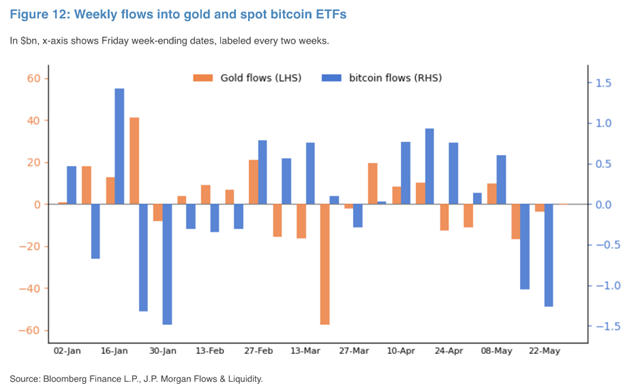
Recent capital outflows in bitcoin (BTC) and gold ETFs reflect a cooling of the so-called bet against monetary depreciation, according to a report published on May 28 by JPMorgan. The bank interprets that part of the market would be reducing exposure to assets considered safe havens due to expectations of a possible agreement between the United States and Iran.
According to analysts led by Nikolaos Panigirtzoglourecent flows suggest a broad withdrawal of positions linked to macroeconomic hedging and geopoliticsrather than a capital rotation from bitcoin to gold.
The so-called “bet against monetary depreciation” (debasement trade) refers to investment strategies focused on assets like bitcoin and gold to protect against inflation, weakening of fiat currencies, geopolitical tensions and macroeconomic deterioration.
According to JPMorgan, bitcoin ETFs saw steeper outflows than gold ETFs during the last two weeks. The bank also pointed out that the same behavior is observed in the futures markets, where institutional investors have reduced exposure in both assets.
One of the most relevant movements occurred in BlackRock’s bitcoin spot ETF, IBIT, which recorded departures for 527.8 million dollars in a single dayits second worst day since the fund’s launch.
Collectively, US bitcoin spot ETFs accumulated net outflows of approximately $733.4 million on May 27, its largest daily withdrawal since January 29, according to data from SoSoValue.
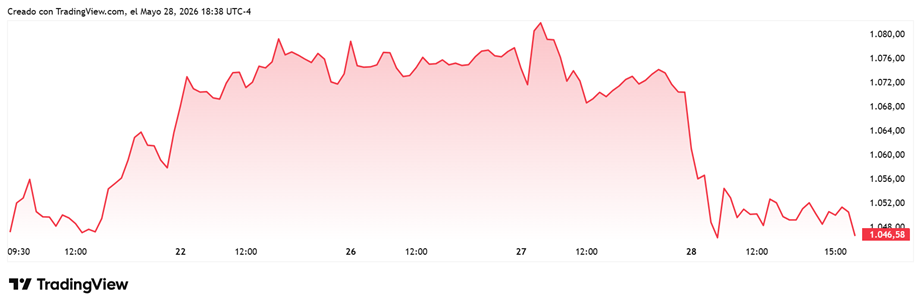
JPMorgan indicated that bitcoin had gained prominence within this hedging narrative since the start of the conflict in Iran, even surpassing gold in terms of flows into ETFs. However, the bank considers that The recent reduction in perceived risk in the Middle East would have weakened some of that positioning.
Analysts also pointed to a slowdown in activity traders momentum, such as CTAs, whose positions in bitcoin and gold have lost strength in recent weeks.
It is worth noting that JPMorgan’s current interpretation contrasts with the position that the bank expressed months ago. In May 2025, its analysts argued that bitcoin was gaining ground against gold within this hedging narrative, driven by greater inflows into ETFs and growing institutional interest.
At that time, JPMorgan even projected greater bullish potential for bitcoin during the second half of the yearsupported by factors such as corporate accumulation, state adoption and institutional demand, as reported by CriptoNoticias.
Although JPMorgan interprets the recent movements as a temporary moderation of the appetite for macroeconomic hedges, the flows observed during recent weeks They do not necessarily imply a structural change in the lawsuit for bitcoin. Market behavior continues to depend largely on the global geopolitical and monetary context, so possible additional tensions, changes in monetary policy or deteriorations in negotiations between the United States and Iran could once again modify the flow of capital towards assets considered safe havens.