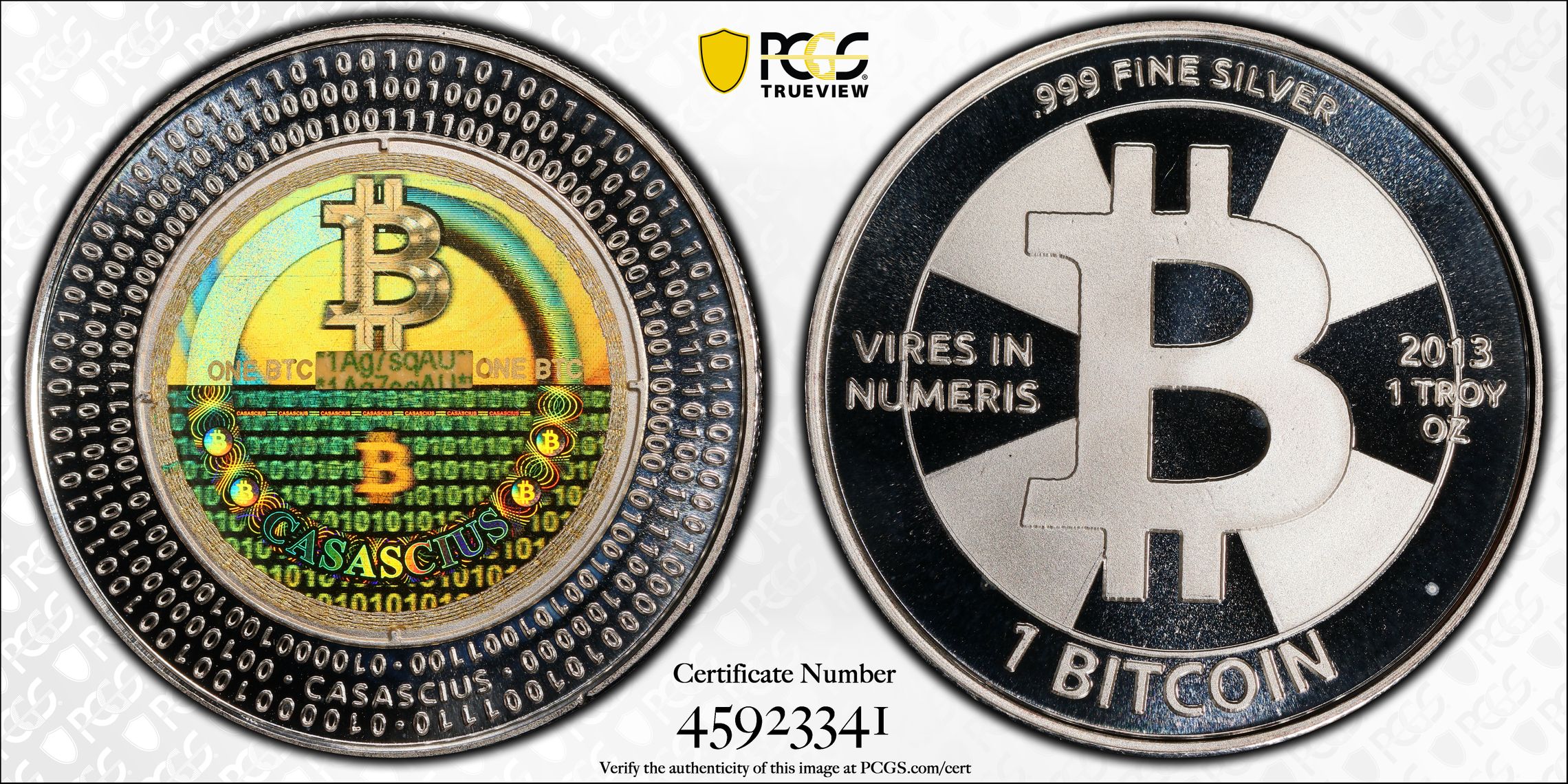
A physical 1 BTC Casascius coin, identified as S2-COIN-1-2012, was recently redeemed after lying untouched for over a decade. The movement was recorded on the Bitcoin network when the private key stored under the security hologram was used to transfer the funds.
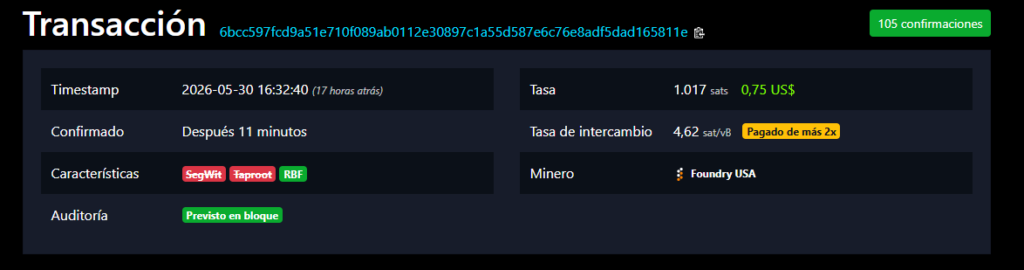
The operation was detected by on-chain monitoring systems and the sweep of the address was recorded by the transaction: 6bcc597fcd9a51e710f089ab0112e30897c1a55d587e6c76e8adf5dad165811e, included in Bitcoin block 951751 on May 30, 2026.
The private key of a 1 BTC Casascius coin minted in 2012 was used to transfer the funds to a modern address. Fountain: Mempool.
The exchanged piece corresponds to a Series 2 coin issued in 2012. At that time, bitcoin It was generally quoted between 5 and 15 dollars per unitvery far from the $73,000 that the BTC contained in the currency represented at the time of its redemption; That is, it increased approximately 7,300 times its value. This means that the stored asset multiplied its value thousands of times during the nearly 14 years it remained sealed.
Transaction data shows that the owner moved virtually all of the bitcoin to a modern SegWit address, paying a commission of less than one dollar.
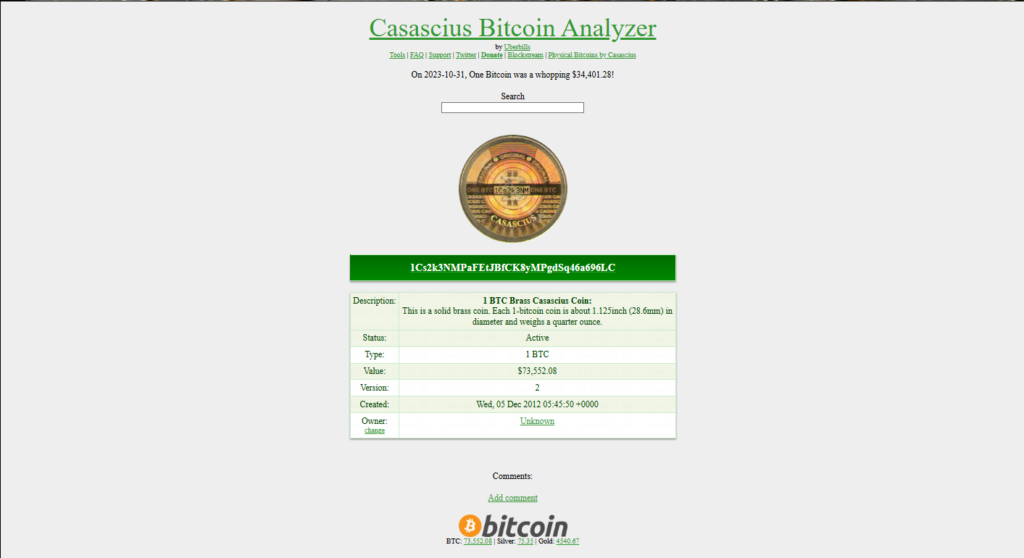
Detecting the redemption of a Casascius coin requires combining network data with historical records of these pieces. Between 2011 and 2013, each coin was associated with a known public address, generally of type Legacy P2PKH, the oldest format of Bitcoin and recognizable because it begins with the number “1.” Specialized crawlers compare network transactions with those databases. When an address linked to a Casascius moves funds for the first time after years of inactivity, analysts consider that the physical currency has been redeemed.
Specialized trackers make it possible to identify these pieces and follow the status of the stored bitcoins. Fountain: Casascius Bitcoin Analyzer.
Casascius coins are considered relics of the early years of bitcoin. They were created by Mike Caldwell between 2011 and 2013 as a way to physically store bitcoins. Each piece contained a private key hidden under a tamper-proof hologram and was linked to a public address where the funds were deposited. As long as the seal remained intact, the coin retained both its numismatic value and the bitcoin stored inside.
The debate between keeping or redeeming a Casascius piece was reflected in a case that occurred in June 2025. At that time, collector John Galt decided to remove the seal from a physical bar that stored 100 BTC. As he later reported on Reddit, Keeping an asset worth more than $1 million under their custody had become increasingly complicated.until he finally decided to sell it for more than USD 10 million.
His experience illustrates one of the challenges facing early bitcoin investors. Although thousands of Casascius coins have already been opened to claim the funds (like 1,000 BTC coins, where only 5 exist) to date more than 7,000 1 BTC coins have been opened and more than 12,000 are active, for a total of 20,237 rare 1 BTC coins created, according to data of the Casascius tracker. For many owners, keeping these sealed pieces represents a long-term bet on bitcoin, but it also means living with the uncertainty of deciding when – or if ever – to reveal the private key and convert the asset into liquidity.