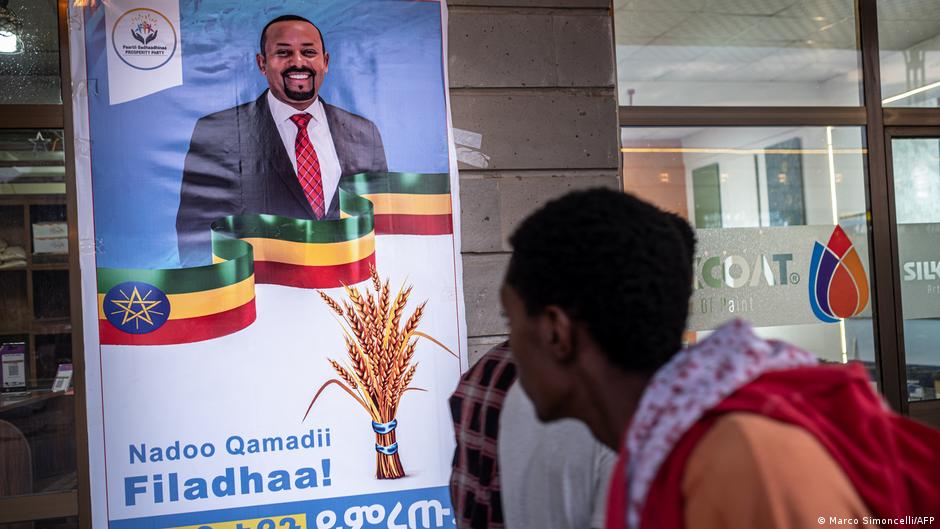
Voting began in Ethiopia on Monday in an election that is widely expected to extend the rule of Prime Minister Abiy Ahmed’s Prosperity Party (PP).
Voting began at 6 a.m. local time (0300 GMT) and citizens formed long queues to have their voices heard at the ballot box. Ethiopians voted amid a heavy military presence in the national capital Addis Ababa.
Voters will select more than 500 members of the House of Representatives who will then vote to select the Prime Minister.
About 50 million people in the country of 130 million are registered to vote. However, no elections are being held in the northern region of Tigray due to ongoing conflict between regional and federal authorities.
low opposition election
Prime Minister Abiy’s PP is expected to gain a majority of seats, paving the way for his third term in office.
In power since 2018, Abiy, 49, won 96% of the seats in the 2021 election.
Meanwhile, the opposition is divided into more than 40 parties and is running on meager financial resources. In many constituencies, the PP is running unopposed.
Opposition parties and analysts have warned that this election will be less open than previous democratic exercises, as the opposition and the country remain divided over internal conflicts and ethnic differences.
Abiy, who won the Nobel Peace Prize for improving relations with neighboring Eritrea in his early years in power, has faced growing criticism for authoritarian practices and a clampdown on dissent.
Democracy stressed due to internal conflicts
“This election is likely to be the least competitive of the seven national elections held since the introduction of multi-party democracy in 1991,” Ahmed Soliman and Abel Abate Demisi of the Chatham House think tank wrote last week.
“Many of those challenging the ruling PP will not contest the elections,” Chatham House said. “Some are in exile, some are banned, some are jailed, and many may have little incentive to abandon their armed struggle against the government. This severely disrupted political landscape and the electoral process are tantamount to a typical bargain.”
Ethiopia’s economy remains a bright spot on the continent as one of the fastest growing countries in the world. However, internal conflicts in Tigray and the country’s two most populous states – Oromia and Amhara – have strained democracy.
National reconciliation emerged as one of the key pre-poll themes along with the government’s pledge to launch major development projects. Opposition parties focused on social justice and strengthening democratic institutions.
Edited by: Natalie Muller
Don’t let algorithms hide news. If you rely on our team for reliable reporting, please take a moment Choose us as your favorite source on GoogleThat’s why you’ll always see our verified news first.