
A $15 million bet on the prediction market, Polymarket came into dispute after Strategy announced on June 1, 2026 the sale of 32 bitcoin (BTC) made at the end of May. The conflict revolves around whether the operation meets the conditions of a prediction market that asked if the company would sell BTC before the end of that month.
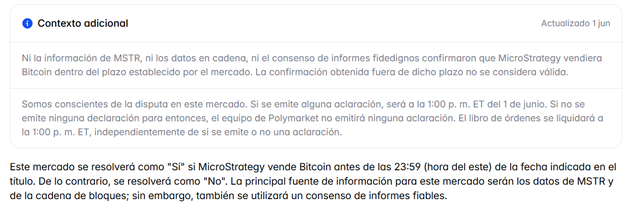
The controversy was activated in one of Polymarket’s most operated markets on Strategywhere users bet on events linked to their bitcoin holdings. The contract stated that the answer would be “Yes” if the company sold any amount of BTC before 11:59 pm (ET) on May 31, 2026.
The problem arose after the event was disclosed. As reported by CriptoNoticias, Strategy sold 32 BTC for approximately USD 2.5 million, at an average price of USD 77,135 per unit. The operation was executed in the last days of May, but was publicly known on June 1, when the market had already closed.
This difference between execution and disclosure is the axis of the conflict. While some of the participants maintain that the market condition was met within the established deadline, others argue that the fact was not verifiable before expirationso it should not be considered valid for resolution.
Polymarket markets linked to Strategy’s bitcoin holdings have racked up tens of millions of dollars in volume, driven by the high interest generated by its moves as the largest corporate holder of BTC. In this case, the set of contracts related to sales and purchases of the company exceeds the USD 80 million in total volume.
The specific affected market currently remains in the dispute phase (“In Review“) within Polymarket. The initial resolution proposals in favor of the “No” have been challenged, which activated the protocol conflict resolution mechanismbased on the UMA optimistic oracle system. In these cases, the process can extend for several days until a final decision is reached.

Market rules establish that resolution must be based on information from Strategy (MSTR), data on-chain and reports considered credible. However, Polymarket added a clarifying note on June 1 stating that there was not sufficient confirmation within the deadline at the time of closingwhich fueled the dispute between interpretations.
The outcome of the case could have broader implications for Polymarket. As prediction markets linked to publicly traded companies grow, it becomes increasingly relevant to define whether resolution should be based on the date an event occurs or the moment it becomes public. The final decision could set a precedent for future disputes related to corporate announcements and regulatory disclosures.