
According to the Zcash Foundation, the stoppage was intentional due to the update.
Multiple browsers reflect that the Zcash network is paralyzed.
Multiple block explorers, including Zcash Explorer, Blockchair, Block Explorer and 3xpl, have not recorded activity on the Zcash network since 05:27 UTC on June 3, when the last block was allegedly mined. At the closing of this note, the chain, according to these sites, has not produced new blocks for more than 5 hours.
Zcash Explorer data shows 97 unconfirmed transactions in the mempool (the list of pending operations waiting to be included in a block), some of them submitted minutes before this note was published. As long as the chain does not process blocks, those transactions are not credited.
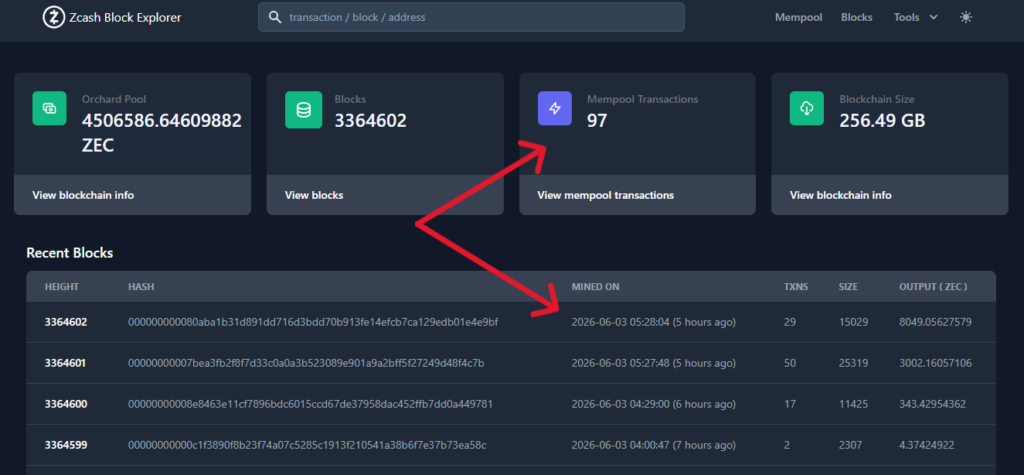
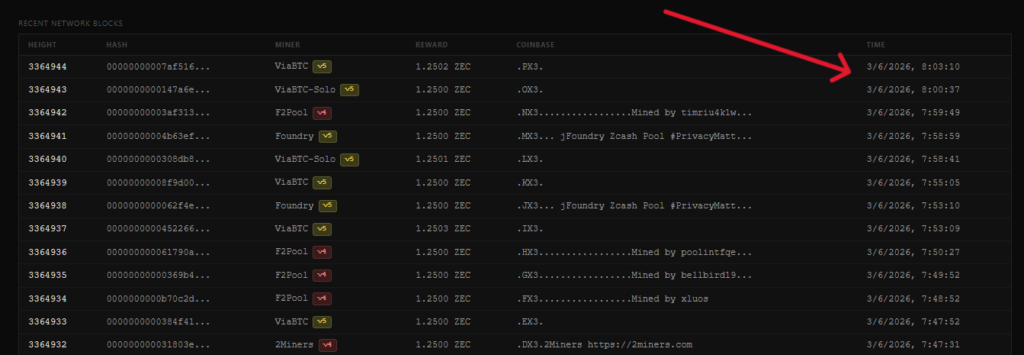
However, Mert Mumtaz, CEO and co-founder of Helius (a Solana infrastructure company), in response to a user on explained that the network is not paralyzed: «We did not realize it because it is completely false. Network is not down, explorer is using a shitty node. “It’s working perfectly.”
Block explorers rely on nodes to read and display the state of the chain, so an outdated or poorly synchronized node could show the network stopped although the rest continues to operate normally. The founder of Helius based his claim on data from the Zecmining Pool mining pool, which reflects that Zcash is operational, as seen in the following image with recently processed blocks:
A Zcash update from the previous day, in the background
On June 2, the Zcash Open Development team, maintainer of the network, recognized a vulnerability in the Orchard pool (Zcash’s most modern private transaction layer) and applied an emergency update at the protocol levelas reported by CriptoNoticias.
According to a cryptocurrency analyst known in X as Railgoonwhat happened today, June 3, in the browsers that reflect the stopped network has a direct explanation in that sequence: Miners and developers would have frozen the Orchard pool (which concentrates about 31% of the total ZEC supply, about 4.5 million of the 16.7 million coins in circulation) to prevent the vulnerability from being exploited before the fix was ready, and then they executed a hard fork of the protocol.
Railgoon argued that Zcash was “intentionally partially stopped” and that at the time of its publication it had already recovered.
The desynchronization displayed by multiple browsers could be a residual effect of that process, according to Railgoon. The user noted that several wallets, including Cake Wallet and Zodl Wallet, would also have been out of sync during the fork.
The Zcash update caused a desynchronization in its ecosystem
Two statements published on June 3 by Zcash Open Development and the Zcash Foundation confirmed that the crash recorded by multiple browsers was not an independent failure, but corresponded to the activation window of the update identified by the name ‘NU6.2’ (which corrected the Orchard test loop).
After the update, explorers and wallets that had not updated their nodes before that block They remained in the previous chain and showed the paralyzed networkalthough the main chain continued to operate.
Both statements confirmed that There is no evidence that the vulnerability found in the Orchard pool has been exploitedthat the funds remained safe throughout the process and that the total supply of ZEC was unchanged. NU6.2 fully restored Orchard transactions with the corrected circuit and permanently closed the vulnerability that the June 2 emergency patch had provisionally contained.