
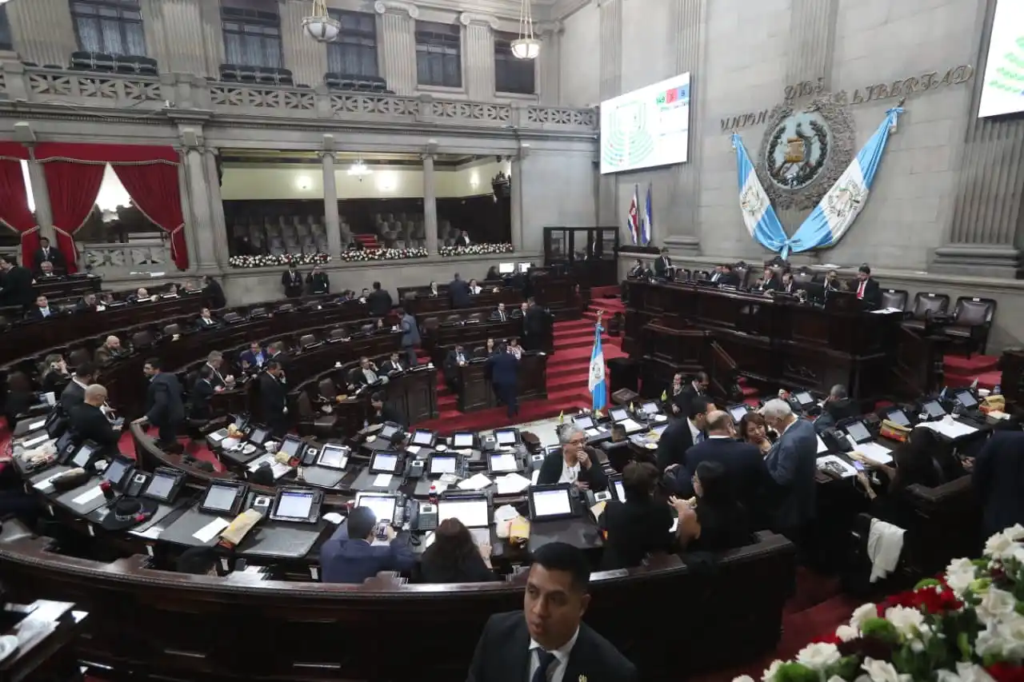
The Congress of the Republic of Guatemala approved the Comprehensive Law for the Prevention and Repression of Money Laundering or Other Assets and the Financing of Terrorism, identified as Decree 15-2026.
The legislators approved with 147 votes in favor of a total of 160 deputies. The law advanced in the third debate after an extraordinary session and will come into force three months after its publication in the Official Gazette.
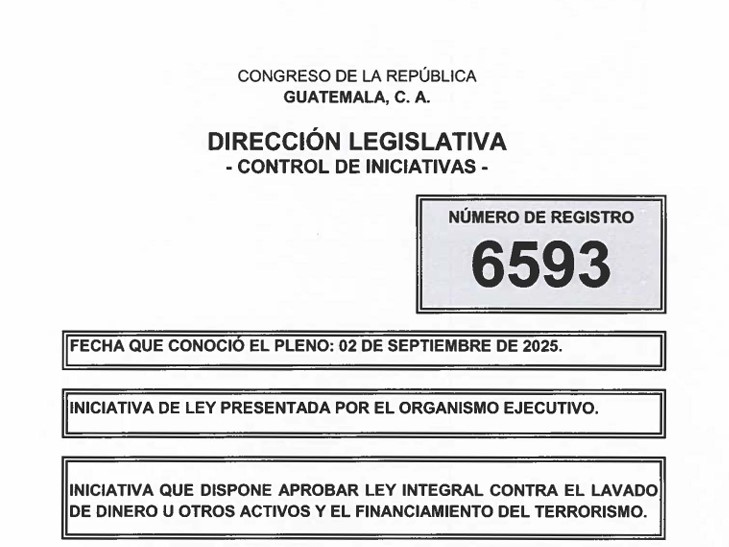
This new regulation, which was initially presented in September 2025, updates a legal framework that was 25 years old and explicitly includes, for the first time in the history of the Central American country, the cryptocurrency sector under the direct supervision of the State.
Exchange platforms, custody firms and virtual asset service providers They will be considered obligated subjects before the Special Verification Administration (IVE).
The legislation repeals previous decrees established in 2001 and 2005 with the purpose of unifying financial control policies and complying with the recommendations of the Financial Action Task Force (FATF).
The decision responds to the obsolescence of previous legal tools in the face of the dynamics of the current market and the emergence of new digital assets in the global economy. With this, the Guatemalan authorities seek to strengthen the country’s international credibility among investors and the correspondent banking system.
Although the decree is still awaiting its official publication and the development of its technical regulations, the text defines that the preventive approach will move from traditional banking to all economic activities.
Virtual Asset Service Providers (PSAV) must adapt their operations and assume the same administrative responsibilities as banks and other regulated entities.
According to him legislative document reviewed by CriptoNoticias, the regulations will regulate specific activities within the cryptocurrency ecosystem, such as exchange, custody, transfers, the issuance of virtual assets and the management of trading platforms.
The inspection and identification (KYC) required by the authorities will be strictly applied for the prevention of money laundering and terrorist financingso it does not prejudge or guarantee the obtaining of automatic commercial licenses to operate.
Regulated providers will have to register with the Superintendency of Banks through the Special Verification Intendancy. Failure to comply with this registration will result in administrative sanctions ranging from $500 to $500,000. depending on the severity of the fault.
Firms in the cryptocurrency sector will be forced to implement a risk-based approach. This includes the creation of a prevention manual with financial crime mitigation policies, the appointment of a compliance officer from senior management and the execution of periodic internal and external audits, as required by the FATF.
Another critical point of the legislation is the prohibition of anonymity in transactions with digital assets. Platforms must apply strict due diligence or know-your-customer policies, which requires identifying and verifying the identity of the user and the final beneficiary through trusted sources before establishing any commercial relationship.
Likewise, the regulations require that controls be more rigorous when processing operations with technologies that make it difficult to trace funds.
In terms of reporting, cryptocurrency companies will report directly to the IVE any unusual transaction that lacks an obvious economic or legal basis through a Suspicious Transaction Report. Likewise, the obligation to maintain a daily record and periodically report on any cash transaction that exceeds $10,000 or its equivalent in national currency is established.
The new Guatemalan law designed to mitigate money laundering and that addresses cryptocurrencies, destroyed initiative 6538 which, as this media reported, sought to regulate the use of bitcoin (BTC) and other digital assets in the country. In fact, information about that bill is no longer available in the transparency portal of the Congress of Guatemala.
The adaptation to Decree 15-2026 generates a debate in the business environment due to the considerable increase in operational and compliance costs for companies that previously operated outside the supervision radar under the FATF standard. The fine print and technical thresholds that will govern the daily operations of digital asset providers will be defined once the Executive Branch issues the complementary regulations.