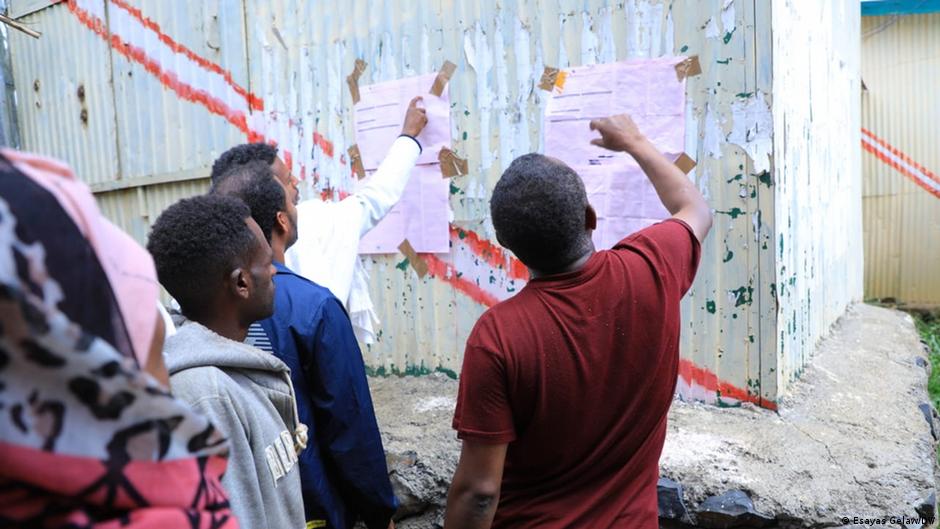
Ethiopia’s recent parliamentary elections have been described as ‘generally peaceful’ despite some parts of the country being excluded due to insecurity.
Ethiopia is Africa’s second most populous country, and about 50 million people were registered to vote in the June 1 election. However, voting was postponed in at least 140 constituencies due to insecurity in the two most populous regions – Amhara and Oromia.
Voting was also suspended in Tigray, the fourth most populous region, with election organizers citing “adverse conditions”.
Mixed reactions to Ethiopian elections
Despite the suspension of votes in some areas, a joint statement by the African Union Election Observation Mission and Intergovernmental Authority on Development (IGAD)The election was described as peaceful.
Former Vice President of Uganda and Head of the IGAD Observer Mission, Speciosa Wandira-Kazibwe, said, “The IGAD Mission extends its warmest congratulations to the Government and people of Ethiopia for the generally peaceful and orderly conduct of the electoral process.”
Wandira-Kazibwe believes that the peaceful conduct of elections puts Ethiopia on the path to “stability, constitutionalism and democratic progress”.
There were mixed reactions among political parties on the results on voting day. “Overall, the situation was positive, with no major problems reported,” said Ethiopian Citizens for Social Justice (EJEMA), based in the southern Ethiopia regional state.
But the Alliance for Ethiopian Unity and the Kucha People’s Democratic Party, Submitted a complaint to the National Electoral Board of Ethiopia (NEBE), accusing some of its members of being disenfranchised.
“Our constituency was unable to exercise its constitutional right to elect its representatives,” Bandira Belachev of the Kucha People’s Democratic Party told reporters. The party requested for cancellation of elections in Kucha constituency based on the claims.
No strong challenge to Ethiopia’s ruling party?
Although election results are expected 10 days after voting, many observers and analysts have predicted a landslide victory for Prime Minister Abiy Ahmed’s ruling Prosperity Party.
The Prosperity Party currently holds 457 out of 547 seats in the House of Representatives and is expected to retain its hold on power.
“We have a very fragmented, weak opposition that cannot pose a serious threat to the ruling party,” Bizuneh Yemenu, an analyst at Queen’s University in Belfast, told DW.
He said the power imbalance between the Prosperity Party and opposition parties could make the election uncompetitive.
However, the head of the Ethiopian People’s Revolutionary Party (EPRP), Mistressilasie Tamerat, disagrees with the narrative of a ‘weak’ opposition.
“If the opposition had been weak, there would have been no challenge to the government,” she told DW, the youngest candidate in this year’s election.
The Coalition for Ethiopian Unity (CEU), a coalition of five political parties calling for this year’s election, has criticized the electoral process, saying it was rigged and that the results should be rejected.
“We issued a press release yesterday that we will not accept whatever results we get even if we win. We certainly cannot expect democratic and free and fair results if the process is rigged,” Tamerat, whose party is part of the CEU, told DW.
In Ethiopia’s 2005 elections, opposition parties expressed similar concerns, and rejected the election results, leading to widespread protests across the country. In 2010, opposition parties took the ruling party, the Ethiopian People’s Revolutionary Democratic Front (EPRDF), to court over allegations of election rigging.
It is not yet clear what action current opposition figures, especially CEU, will take once the results are announced.
What’s next for Ethiopia after the elections?
Beyond claims of rigging, security challenges remain. For some analysts, the fact that voting was suspended in parts of Amhara, Oromia and Tigray indicates the impact of unresolved conflicts.
If the Prosperity Party wins another five-year mandate, Prime Minister Abiy Ahmed’s government will be under pressure to prioritize peacebuilding.
“I hope they will use the coming five years to really bring what the majority of the country’s people really need and deserve, which is peace and security,” Yemenu told DW.
Contributed by Azeb Tadesse-Han
Cai Nebe’s editing