The attack on Iran began on February 28, when the US and Israel launched joint airstrikes targeting military and strategic sites in the Islamic Republic.
Key facilities of the Iranian armed forces were destroyed, and many senior political and military figures, including Supreme Leader Ayatollah Ali Khamenei, were assassinated.
Iran’s Assembly of Experts elected Khamenei’s son Mojtaba as the country’s new supreme leader.
Tehran responded to the US-Israeli attacks with massive retaliatory strikes, deploying missiles and drones against Israel, US military bases, and other targets in the Gulf region.
Iran also closed the Strait of Hormuz – a key waterway between the Persian Gulf and the Gulf of Oman – through which about 20% of global oil and gas exports passed before the conflict, as a geopolitical pressure tool.
Fragile peace, flexible power structures
A fragile ceasefire only came into effect on 8 April, initially reducing hostilities, but violations continue almost daily.
“I don’t see any structural change in the Islamic Republic over the last 100 days,” said Iran expert Mohammad Gedi, a lecturer at George Washington University who specializes in Middle Eastern politics and international relations.
“Before the war, there were deep divisions among the political elite, and the gap between the state and society widened significantly after the government cracked down on dissent,” Ghedi told DW.
Ghedi said the war has helped to reduce some of these divisions, both between the elite and between the state and society.
He cautioned against interpreting current stability as a sign of permanent consolidation, saying, “The level of solidarity we see among political elites today is relatively rare in the post-revolutionary period. That solidarity has been one of the main sources of resilience.”
“The Islamic Republic still faces major challenges, including crises of legitimacy, effectiveness and delivery. As concerns about security and survival are discussed, these underlying problems become more visible again and make governance more difficult.”
Night meetings and fading hope
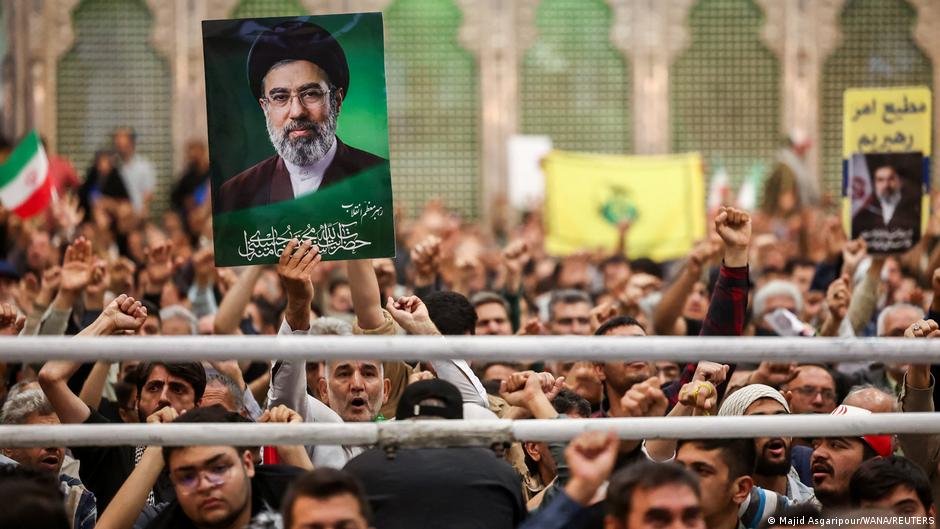
The Iranian regime has mobilized its supporters, who for more than three months have gathered in cities and villages across the country to show support for its political system and leaders.
A Tehran resident who does not participate in the rallies said they were noisy affairs. “It’s almost impossible to sleep before 11 p.m.,” he told DW. “There’s a lot of noise outside, and it’s tiring.”
A women’s rights activist who also lives in the Iranian capital said the nightly gatherings were intended to show that the Islamic regime had regained control of the streets following a January crackdown by Iran’s clerical rulers on anti-government protests.
“Many people are still angry about the brutal crackdown on protests,” the 42-year-old man told DW, speaking on condition of anonymity. “Almost everyone in my circle knows someone who has been shot, injured, or arrested.”
He said that since the war began and the bombing began, “hardly anyone still believes in positive change.”
For many disillusioned with Iran’s political system, the idea of war initially seemed like a quick and easy path to regime change. In January, while security forces reportedly shot thousands of protesters, US President Donald Trump promised that help would arrive.
During the nearly six-week US–Israeli war with Iran, densely populated Iranian cities were bombed several times a day.
“Tonight an entire civilization will die, never to be brought back again,” Trump wrote on his online platform Truth Social on April 7.
“It was horrific. I still don’t know how we endured all this,” the worker told DW.
In addition to military targets, the attacks also hit major industrial facilities throughout Iran, including steel and petrochemical plants. The production halt in these sectors has triggered chain reactions, forcing dozens of dependent businesses to suspend operations.
Caught between increasing poverty and intensifying oppression
Thousands of jobs have already been lost, leaving thousands more workers fearing for their livelihoods.
Inflation has exceeded 50%, severely reducing people’s purchasing power. With a legal minimum wage as low as €75 ($87) per month, many Iranians can barely afford even basic services.
According to Amnesty International, since the beginning of the US-Israeli airstrikes, “Iranian authorities have arbitrarily arrested more than 6,000 people, including protesters, journalists, lawyers, human rights defenders, dissidents, and members of ethnic and religious minorities”.
“During the same period, authorities imposed decades-long sentences and prisons against individuals and carried out at least 39 political executions,” the rights organization said. Informed.
Many Iranians said they also faced frequent arbitrary police checks and roadblocks, during which cell phones and cars were searched.
“At these checkpoints, many people have been arrested simply because of their social media posts,” said human rights activist Shiv Nazar Ahari.
As a member of the Human Rights Reporters Committee, a grassroots activist organization, Ahari has documented violations in Iran. According to Amnesty International, because of his work, he has been repeatedly arrested and served several prison sentences. She now lives in Slovenia.
“The current level of repression is extremely serious,” Ahari said. “It is often not even clear who is making the decisions or which institution is in control – and this uncertainty can be the worst part.”
After an 88-day nationwide internet shutdown, access was partially restored in late May, but many services remain restricted, making communication with the outside world difficult.
“In recent days, we have learned that most of the people arrested in connection with the nationwide protests in January are still in jail,” Ahari said.
“Public attention is focused on executions at the moment, which is certainly extremely important. But the available information shows that even people with no prior criminal record are being given prison sentences of at least four to five years – and in many cases more than ten.”
This article was originally written in German.