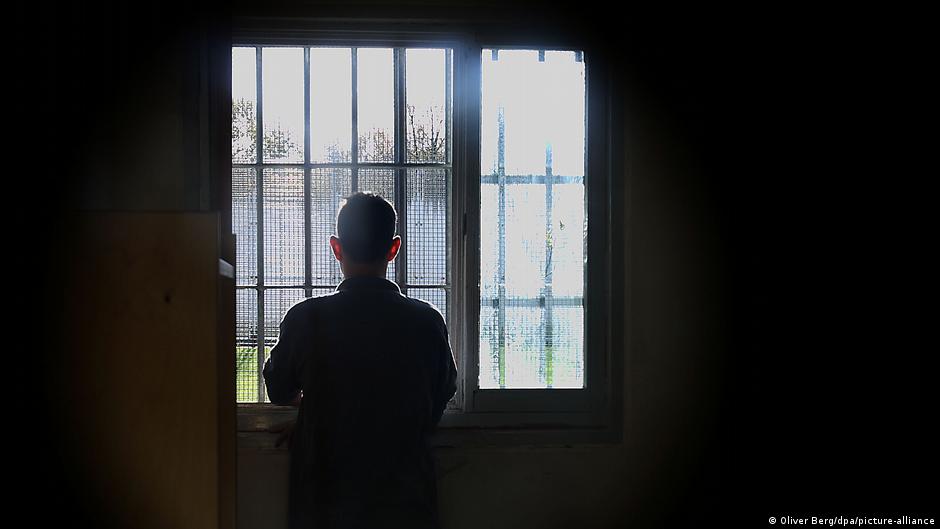
Children aged 13 and 14 must still be in school. But in Sweden, young teenagers are being recruited by criminal networks to carry out attacks and order murders – even shooting people in broad daylight.
Under Swedish law, people under the age of 15 are not criminally liable, a fact that is being exploited by organized crime and gang members who often operate out of sight. Under current laws, children cannot be convicted as criminals, but instead fall under the jurisdiction of social services and youth welfare.
But in its fight against rising gang violence and organized crime, Sweden is looking to tighten its legal tool set. Parliament has already approved a measure allowing 15 to 17-year-olds convicted of serious crimes to serve prison sentences in specially adapted juvenile units.
In addition, the government plans to lower the age of criminal responsibility to 13 years on a trial basis, especially for serious crimes. This would apply to crimes such as murder, manslaughter, aggravated bombing or other crimes with very high minimum sentences.
Parliament will vote on the reform in mid-June and the outcome will be reviewed again after five years.
Denmark: a failed model?
The debate about the age of criminal responsibility is not limited to Sweden.
In 2010, Denmark lowered the age of criminal responsibility from 15 to 14 under a conservative government. Two years later, the reform was reversed. The research showed that the lower age limit failed to have any deterrent effect. In contrast, affected youth were more likely to reoffend and perform worse in school.
As a result, Denmark is now seen by many experts as a cautionary example. Criminalizing children at an early age does not automatically solve the problem of youth violence. In the worst case scenario, contact with the criminal justice system can draw youth deeper into the criminal environment.
Netherlands: Prosecution from age 12, but no adult prison
Compared to other EU countries, the Netherlands and Ireland have the lowest ages of criminal responsibility. In the Netherlands, children can be prosecuted as early as the age of 12.
In Ireland, the general age of criminal responsibility is also 12 years old. However, for the most serious crimes – including murder, manslaughter, rape and serious sexual offenses – children as young as 10 or 11 can be held criminally responsible.
A lower age limit does not automatically mean the same harsh prison sentence as in the adult justice system. In the Netherlands, the maximum juvenile detention sentence for children aged 12 to 15 is one year. For 16- and 17-year-olds convicted of serious crimes, the maximum juvenile sentence is generally two years, with only limited exceptions. Education, supervision and rehabilitation measures remain the primary focus even during detention.
In Germany and Spain, a child at the age of 12 is not legally responsible if he commits a serious crime. This does not mean that the state is powerless. Youth services, family courts and protective measures can intervene. In some circumstances, secure placement is possible – but not as a criminal punishment in the legal sense.
In a situation of risk the child is not treated as a criminal, but as a minor. This focus is particularly evident in Spanish law. Children under the age of 14 do not fall under juvenile criminal law, but within the framework of child protection.
The number of teenagers behind bars is increasing in Italy
Another approach focuses more on the child’s environment. Italy’s so-called Cavino decree increases pressure on parents who are neglecting supervision and school attendance obligations. In cases of severe school absenteeism, parents may even face criminal consequences.
However, Italy does not completely mirror the Swedish approach. This decree has also tightened juvenile justice. Meanwhile, critics say that since its introduction, the number of young people in juvenile detention has increased significantly.
For many EU countries, the age of 14 remains the central benchmark. Austria also sticks to this standard. Children under the age of 14 are not criminally responsible. Yet there may still be consequences for offenses, such as meetings with police and parents, warnings, involvement of youth services or educational measures.
The lower age of criminal responsibility in Europe does not automatically mean adult-style punishment. Juvenile courts, special facilities, educational interventions and protective measures are generally a priority.
What does science say?
Europe’s widespread reluctance to punish the very young broadly coincides with research in developmental psychology. Children and young teens are more responsive to immediate rewards, peer pressure, and emotional validation. Impulse control, considering long-term consequences, and planning ahead are skills that develop slowly.
As a result, the effectiveness of traditional prevention among 13-year-olds is limited. The possibility of a future prison sentence competes with immediate rewards such as money, recognition, a sense of belonging, or playing a role. In other cases, it may compete with the child’s fear of a gang.
For this reason, experts caution against trying to tackle youth crime solely through a lower age of criminal responsibility and harsher penalties.
Gangs immediately reconsider their strategies
There is also a practical concern: Criminal organizations adapt rapidly. If Sweden lowers the age of criminal responsibility for serious crimes to 13, gangs may attempt to recruit even younger children. In that case, the problem will not be solved – in fact, even young children may become targets of criminal networks.
The main question is not only at what age a child can be punished. Equally important is whether the state can crack down on the adults who direct and organize these crimes.
Many experts doubt that the Swedish government’s plans will achieve their intended goals. Sweden’s parliamentary justice committee, the bar association and several civil society organizations have strongly criticized the proposal. If Parliament approves the measure, 13-year-olds could face prison sentences at the end of the summer.
This article was originally written in German.